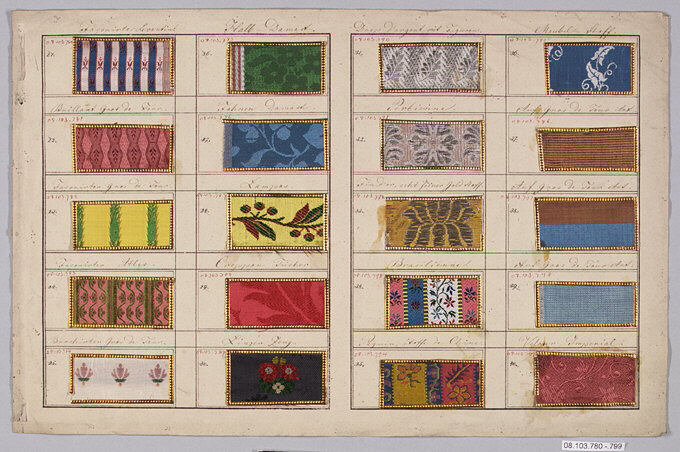
The Ribbon: A Study in Global Heritage and Artisanal Mastery
At Katherine Fashion Lab, the ribbon is not merely a trim—it is a foundational element of couture storytelling. In this standalone analysis, we examine the ribbon as an artisanal material, tracing its lineage across global heritage to understand how this seemingly humble strip of fabric has been elevated into a medium of profound expressive power. The ribbon, in its myriad forms, embodies a paradox: it is both a universal cultural artifact and a deeply personal, handcrafted luxury. For the modern couturier, mastering the ribbon means reconciling tradition with innovation, and this study provides the strategic framework for doing so.
Global Heritage: The Ribbon as a Cultural Archive
The ribbon’s journey begins in the ancient world, where it served as a symbol of status, spirituality, and connectivity. From the silk ribbons of imperial China—woven by hand on looms that required generations of knowledge—to the intricate passementerie of 18th-century French courts, the ribbon has always carried the weight of its origin. In Japanese culture, the obi-jime (a decorative cord) shares the ribbon’s function of binding and adorning, while in the Andes, handwoven ribbons known as cintas are dyed with natural cochineal and indigo, telling stories of community and landscape. Each tradition imbues the ribbon with a distinct vocabulary: the Milanese satin ribbon speaks of Italian precision, while the Chantilly lace ribbon whispers of French romanticism.
For Katherine Fashion Lab, leveraging this global heritage means moving beyond superficial inspiration. The ribbon must be sourced with provenance in mind—a hand-dyed silk ribbon from Varanasi, for instance, carries the spiritual resonance of Indian craftsmanship, while a woven grosgrain from a family atelier in Lyon embodies centuries of technical refinement. The couturier’s role is to honor these origins, not as a curator of museum pieces, but as an alchemist who transforms heritage into contemporary form. This requires deep research into the material’s cultural context: the ribbon as a dowry item in Eastern Europe, the ribbon as a military badge in Britain, or the ribbon as a protest symbol in modern activism. Each layer of meaning enriches the design narrative.
Artisanal Material: The Hand of the Maker
At the core of this study is the ribbon as an artisanal material. Unlike mass-produced ribbons, which are extruded through automated looms at relentless speed, artisanal ribbons are born from the hand of the maker. This distinction is critical for luxury positioning. The artisanal ribbon is characterized by irregularities—a slight variation in weave, a subtle unevenness in dye, a hand-stitched edge that reveals the artisan’s touch. These imperfections are not flaws; they are signatures of authenticity, much like the brushstroke in a painting or the grain in a hand-carved wood panel.
Katherine Fashion Lab’s approach to the artisanal ribbon involves three key pillars: material sourcing, technique preservation, and experimental iteration. First, sourcing must prioritize direct relationships with heritage workshops. For example, a silk ribbon from a Kyoto-based obi weaver uses a shibori resist-dye technique that cannot be replicated by machine. Second, technique preservation demands that these traditional methods are documented and adapted for couture applications. The hand-woven ribbon from a Venetian bead loom may require months of apprenticeship to master, but the resulting texture—a dense, jewel-like surface—is unmatched. Third, experimental iteration pushes the artisan to innovate within their craft. A ribbon woven with metallic threads from a Florentine gold-beater can be reinterpreted as a structural element, not just a decorative one.
The materiality of the ribbon also extends to its tactile and visual properties. A hand-dyed ribbon in madder root will age differently than a synthetic one, developing a patina that tells time. A hand-embroidered ribbon with zardozi work from India offers a raised, dimensional surface that catches light in unpredictable ways. These qualities are essential for couture, where the garment is meant to be experienced up close, in motion, and over years of wear.
Strategic Applications: From Trim to Tectonic Structure
The ribbon’s potential in couture extends far beyond its traditional role as a trim. At Katherine Fashion Lab, we categorize ribbon applications into three strategic tiers: accentuation, construction, and transformation.
Accentuation is the most familiar use: ribbon as a bow, a border, or a tie. Yet even here, artisanal ribbon elevates the ordinary. A hand-painted silk ribbon used as a waist sash becomes a focal point, its gradient of color shifting with the body’s movement. A woven jacquard ribbon with a hidden pattern—visible only at certain angles—adds a layer of discovery.
Construction is where the ribbon becomes structural. By weaving multiple ribbons together, or by using them as tension elements in a garment’s architecture, the couturier can create forms that are both fluid and rigid. For instance, a ribbon lattice hand-stitched onto a silk organza base can mimic the strength of a corset while retaining the breathability of a net. This technique, drawn from Medieval European cord-lacing, is reimagined for contemporary silhouettes.
Transformation is the most advanced tier, where the ribbon itself becomes the garment. A single continuous ribbon—perhaps a 50-meter length of hand-dyed velvet—can be pleated, twisted, and draped to form a dress with no seams. This approach, reminiscent of Japanese obi construction, requires an intimate understanding of the ribbon’s weight, stretch, and memory. The result is a piece that is both minimal and monumental, a testament to the material’s inherent strength.
Case Study: The Global Heritage Ribbon Gown
To illustrate these principles, consider a hypothetical Katherine Fashion Lab creation: the Global Heritage Ribbon Gown. This garment begins with a base ribbon from a Berber weaver in Morocco, woven from organic wool and dyed with henna and pomegranate. This ribbon is used as the structural spine of the gown, running vertically from shoulder to hem. Interwoven with it are silk ribbons from a Kyoto workshop, hand-dyed in a katazome pattern of indigo and white. These ribbons form a lattice across the bodice, echoing the geometry of Islamic tilework. At the waist, a Chantilly lace ribbon from a French atelier is gathered into a cascading bow, its floral pattern linking to the natural dyes of the Moroccan wool.
The gown’s hem is finished with a hand-embroidered ribbon from a Lucknow artisan, using chikankari stitching to add a delicate, almost invisible weight. The entire construction is hand-sewn, with no machine stitches visible. The result is a garment that is not just a dress, but a map of global craftsmanship—a wearable archive that speaks to the ribbon’s role as a bridge between cultures.
Conclusion: The Ribbon as a Luxury Imperative
For Katherine Fashion Lab, the ribbon is a strategic asset in the luxury market. In an era of fast fashion and digital production, the artisanal ribbon offers a counterpoint: it is slow, rare, and deeply human. By investing in global heritage and artisanal materials, the couturier can create pieces that are not only beautiful but meaningful. The ribbon, in its infinite variety, reminds us that luxury is not about excess, but about intention. Every handwoven thread, every natural dye, every artisan’s signature is a statement of value. In this standalone study, we have seen that the ribbon is more than a material—it is a methodology for excellence.