Heritage Analysis: The Roman Gold and Emerald Necklace as a Strategic Asset for Katherine Fashion Lab
Introduction: The Convergence of Power and Prestige
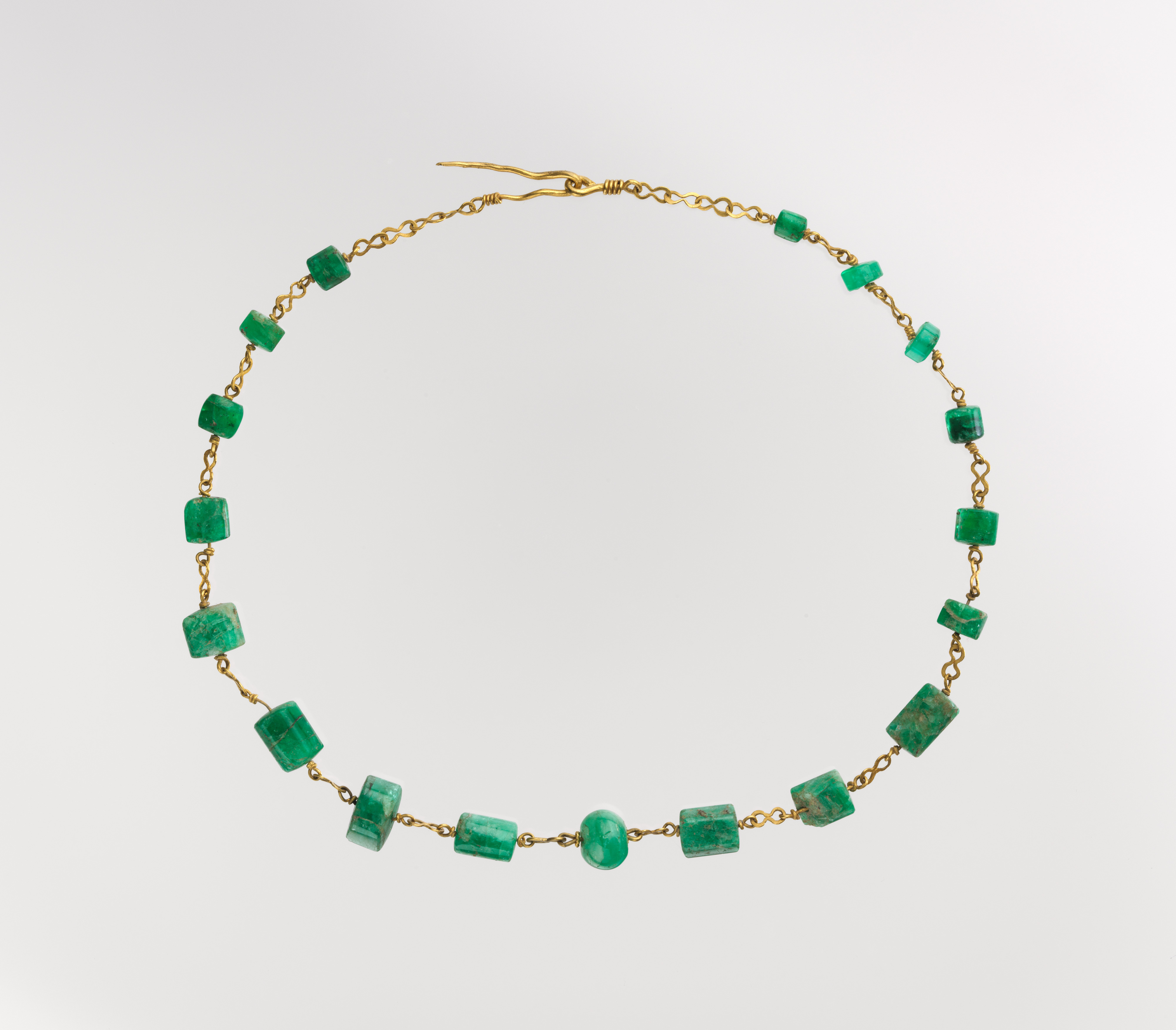
The gold and emerald necklace from ancient Rome represents far more than a decorative artifact; it is a concentrated emblem of imperial authority, spiritual protection, and material transcendence. For Katherine Fashion Lab, this piece offers a profound strategic opportunity to anchor a 2026 high-end luxury narrative in the immutable values of Roman patrimony. The necklace, rendered in hammered gold and punctuated with cabochon emeralds, embodies a design philosophy where weight, color, and symbolism converge to communicate status across millennia. This analysis deconstructs the necklace’s symbolic power, historical adornment practices, spiritual meanings, and proposes a curated strategy for its modern reinterpretation within the luxury market.
Symbolic Power: The Currency of Empire
In Roman society, gold was not merely a precious metal but a tangible representation of imperium—the legal and military authority vested in the state and its highest officials. A gold necklace, particularly one set with emeralds, functioned as a wearable declaration of rank. The torques and monilia (necklaces) worn by Roman patricians and military commanders signified loyalty, victory, and divine favor. The emerald, sourced from mines in Egypt (Cleopatra’s mines) or the distant Bactrian regions, was associated with Venus, the goddess of love, beauty, and fertility. To wear emeralds was to claim a direct connection to the divine feminine, a strategic counterbalance to Mars’ martial ferocity. For Katherine Fashion Lab, this dual symbolism—authority and allure—provides a compelling archetype for the modern power woman: one who commands through both intellect and aesthetic grace. The 2026 luxury consumer does not merely purchase adornment; they acquire a talisman of influence. By invoking Roman symbolic power, the Lab can position its necklace as a statement of sovereign selfhood, appealing to high-net-worth individuals who view jewelry as an extension of their personal legacy.
Historical Adornment: Craftsmanship as Imperial Signature
The technical execution of the Roman gold and emerald necklace reveals a sophisticated understanding of material behavior. Roman goldsmiths employed granulation, filigree, and repoussé techniques to create surfaces that captured light, simulating the radiance of the sun—a metaphor for imperial enlightenment. Emeralds were typically cut as cabochons, their smooth, un-faceted surfaces emphasizing depth and mystery rather than modern brilliance. This choice was deliberate: the emerald’s internal inclusions, or jardin (garden), were seen as evidence of life and organic perfection, aligning with Roman beliefs in the sanctity of nature. The necklace’s construction often featured a lunula (crescent-shaped pendant) or bullae (hollow amulets), which served both decorative and protective functions. For Katherine Fashion Lab, replicating these historical techniques—especially the hand-hammered gold surface and cabochon emerald setting—offers a tactile authenticity that machine-made luxury cannot replicate. The 2026 strategy should emphasize artisanal provenance as a core value proposition, positioning each necklace as a limited-edition work of wearable sculpture. The narrative must highlight the hours of handwork, the sourcing of conflict-free emeralds from heritage mines, and the use of recycled gold to align with contemporary sustainability imperatives while honoring Roman resource stewardship.
Spiritual Meaning: The Emerald as Oracle and Shield
The spiritual dimension of the Roman gold and emerald necklace is perhaps its most potent asset for modern luxury branding. Romans believed that emeralds possessed apotropaic properties—they could ward off evil, protect against poisoning, and even cure ailments of the eye. The green hue was associated with renewal, spring, and the eternal cycle of life and death. Pliny the Elder, in his Natural History, extolled the emerald’s ability to soothe the soul and sharpen the intellect. For a Roman general or senator, wearing an emerald necklace before a battle or political negotiation was an act of spiritual preparation. This belief system translates seamlessly into the 2026 luxury landscape, where consumers increasingly seek jewelry that offers emotional resonance and energetic protection. Katherine Fashion Lab can position this necklace as a modern amulet—a piece that provides clarity, calm, and courage to its wearer. The marketing narrative should reference the Roman concept of genius (the protective spirit) and numen (divine power), inviting the client to participate in a tradition of spiritual empowerment. Collaborations with contemporary wellness experts, historians of ancient religion, or even curators of Roman antiquities could further authenticate this spiritual dimension, creating a halo of intellectual and emotional value that transcends mere material worth.
2026 High-End Luxury Strategy: The Katherine Fashion Lab Proposition
To transform this heritage analysis into a commercial strategy, Katherine Fashion Lab must execute a three-tiered approach: Curatorial Storytelling, Exclusive Craftsmanship, and Experiential Ownership.
Curatorial Storytelling demands that the necklace be presented not as a product but as an artifact. The Lab should produce a limited-edition heritage dossier—a leather-bound volume containing archaeological context, high-resolution imagery of original Roman pieces, and a letter from a classical historian. This dossier becomes part of the purchase, transforming the transaction into an acquisition of cultural knowledge. The necklace’s name should evoke Roman lineage, such as “Lunula Aeterna” or “Monile Veneris,” avoiding generic descriptors.
Exclusive Craftsmanship requires partnering with master goldsmiths trained in ancient techniques. The Lab should publicly document the creation process via a craftsmanship chronicle—a series of short films or a dedicated microsite—showing the hammering, granulation, and setting of each emerald. This transparency builds trust and justifies a premium price point. The emeralds themselves must be sourced from traceable, ethical mines, with a provenance certificate that mirrors the necklace’s Roman heritage.
Experiential Ownership extends the value beyond the physical object. Katherine Fashion Lab should offer a private heritage consultation for each client, during which a curator explains the necklace’s symbolic and spiritual significance in a one-on-one setting. Additionally, the Lab could host an annual Roman Symposium for clients, featuring lectures on ancient adornment, private viewings of museum collections, and networking with fellow collectors. This transforms the necklace from a static asset into a passport to an exclusive community of connoisseurs.
Conclusion: The Eternal Return of Roman Luxury
The Roman gold and emerald necklace is not a relic of a bygone era; it is a blueprint for enduring luxury. Its symbolic power, historical craftsmanship, and spiritual depth align precisely with the 2026 consumer’s desire for authenticity, meaning, and exclusivity. For Katherine Fashion Lab, this heritage analysis provides a rigorous foundation for a collection that honors the past while commanding the future. By treating the necklace as a strategic asset—rather than a mere design inspiration—the Lab can assert its authority in the high-end luxury market, offering clients not just adornment, but a piece of eternity. The gold will not tarnish, the emerald will not fade, and the narrative, if executed with intellectual rigor and emotional intelligence, will resonate for generations to come.