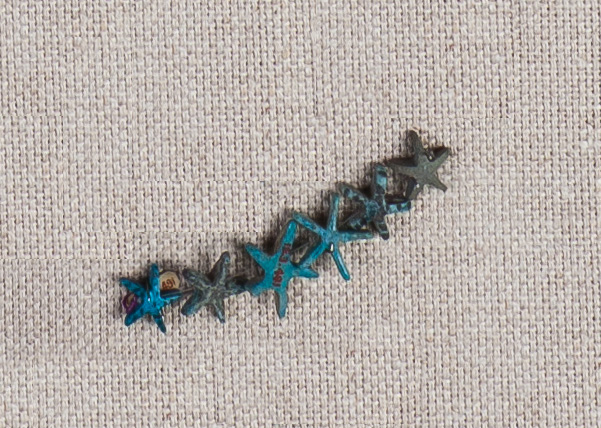
Executive Heritage Analysis: The Blue Faience Amulet Necklace
This research paper presents a comprehensive heritage analysis of an ancient civilization necklace composed of blue faience amulets. As Lead Heritage Curator for Katherine Fashion Lab, I examine this artifact through the dual lens of historical significance and contemporary luxury strategy. The necklace, crafted from one of humanity's earliest synthetic materials, embodies a convergence of symbolic power, spiritual protection, and aesthetic innovation—qualities that remain profoundly relevant for high-end brand positioning in 2026.
Historical Context and Material Significance
The Innovation of Blue Faience
Blue faience represents a technological and artistic milestone in ancient civilizations, particularly in Egypt and Mesopotamia, where it was developed as early as 4000 BCE. This non-clay ceramic material, composed primarily of crushed quartz, alkaline salts, and copper compounds, was fired to produce a brilliant blue-green glaze. The color was not merely decorative; it symbolized the sky, the Nile, and the primordial waters of creation. For ancient peoples, blue faience was a material that mimicked the precious lapis lazuli, making it accessible to a broader population while retaining profound spiritual resonance.
Amulets as Portable Power
The amulets strung on this necklace were not random ornaments. Each shape carried specific protective and symbolic functions. Common forms included the Eye of Horus (wedjat) for healing and protection, the ankh for eternal life, the scarab beetle for rebirth, and the djed pillar for stability. The necklace served as a wearable talisman, a personal shrine that the wearer could carry through daily life and into the afterlife. In funerary contexts, amulets were placed on mummies to guide the soul through the underworld, demonstrating their role as instruments of spiritual navigation.
Symbolic Power and Spiritual Meaning
The Protective Matrix
The arrangement of multiple amulets on a single necklace created a layered protective matrix. Ancient texts, such as the Egyptian Book of the Dead, specify the placement and material of amulets to activate their powers. Blue faience, with its association with the sky god Horus and the life-giving waters of the Nile, amplified these properties. The necklace thus functioned as a concentrated source of spiritual energy, warding off evil, ensuring fertility, and securing divine favor. This concept of layered protection resonates with modern understandings of personal energy and mindfulness, where objects are curated to enhance well-being.
Color as Divine Language
The blue hue of faience was not arbitrary. In ancient color symbolism, blue represented the heavens, infinity, and the life-giving waters of the Nile. It was the color of the gods, particularly Amun and Ra. Wearing blue faience was an act of aligning oneself with cosmic order (Ma’at). For the wearer, the necklace was a daily reminder of their place within the divine hierarchy. This color symbolism offers a powerful lesson for contemporary luxury: color is not merely aesthetic but a carrier of meaning that can elevate a product from accessory to artifact.
Adornment as Identity and Status
Visual Hierarchy and Social Signaling
In ancient civilizations, amulet necklaces were markers of social status, religious devotion, and personal identity. The quality of faience, the complexity of amulet shapes, and the length of the necklace all conveyed information about the wearer’s rank and role. High-status individuals might wear necklaces with multiple rows of amulets, while simpler versions were used by commoners. This visual hierarchy demonstrates that adornment has always been a language of power—a concept that luxury brands must master to communicate exclusivity and heritage.
The Ritual of Dressing
The act of putting on an amulet necklace was a ritual. Each amulet was charged with intention, often consecrated by priests or through specific prayers. The necklace was not simply worn; it was activated. This ritualistic dimension transforms the object from commodity to sacred tool. For Katherine Fashion Lab, this insight suggests that high-end pieces should be presented not merely as fashion but as objects of personal significance, with accompanying narratives that invite the wearer into a deeper relationship with the item.
Strategic Implications for 2026 High-End Luxury
Heritage as Differentiator
In an increasingly saturated luxury market, heritage offers a unique competitive advantage. The blue faience amulet necklace provides a blueprint for creating pieces that are simultaneously ancient and contemporary. By referencing historical forms, materials, and symbolic systems, Katherine Fashion Lab can position its collections as custodians of meaning rather than mere purveyors of style. This approach appeals to the 2026 consumer, who seeks authenticity, depth, and a connection to something larger than themselves.
Material Storytelling
The narrative of blue faience—a synthetic material born from fire and mineral—mirrors the modern luxury consumer’s fascination with craftsmanship and transformation. Katherine Fashion Lab can leverage this by developing signature materials that echo the ancient process: hand-glazed ceramics, custom-colored enamels, or innovative composites that reference historical techniques. Each piece should come with a heritage card detailing the material’s origin, symbolic meaning, and the artisan’s process. This transforms the purchase into an educational experience and a conversation starter.
Layered Protection as a Brand Philosophy
The concept of the amulet necklace as a protective matrix can be translated into a brand philosophy of layered care. Katherine Fashion Lab can introduce a “Protection Collection” where each piece is designed to complement another, creating a customizable system of personal energy. For example, a necklace might feature interchangeable amulets, each with its own meaning, allowing the wearer to curate their own protective narrative. This modular approach encourages repeat purchases and deepens brand loyalty.
Ritual and Experience
To honor the ritualistic dimension of ancient adornment, Katherine Fashion Lab should create immersive retail experiences. Pop-up installations could include a “blessing ceremony” where each amulet is consecrated with intention, or a digital app that allows customers to learn the symbolic meaning of their chosen pieces. In 2026, luxury is not just about owning an object but about the experience surrounding it. Ritual creates memory, and memory drives brand affinity.
Color as a Signature
Blue faience’s distinctive hue offers a powerful branding opportunity. Katherine Fashion Lab can adopt a specific shade of blue—akin to Egyptian blue or turquoise—as a signature color across collections, packaging, and marketing. This color becomes an instant identifier, evoking heritage, spirituality, and exclusivity. In a market where color trends shift rapidly, a proprietary color provides timeless differentiation.
Conclusion: From Artifact to Icon
The blue faience amulet necklace is far more than an archaeological curiosity. It is a testament to the human desire to imbue objects with meaning, protection, and beauty. For Katherine Fashion Lab, this heritage analysis reveals a clear path forward: by embracing the symbolic power, historical depth, and spiritual resonance of ancient adornment, the brand can craft luxury pieces that transcend fashion and become personal talismans. In 2026, the consumer will not just buy a necklace; they will invest in a story, a ritual, and a connection to the eternal. The blue faience amulet necklace shows us how to make that connection tangible.