The Sampler: A Tapestry of Technique and Memory
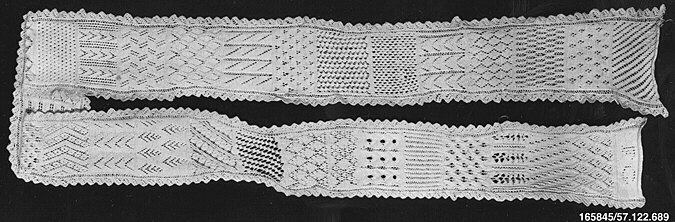
Within the curated archives of Katherine Fashion Lab, certain pieces transcend their material form to become profound studies in cultural syntax. The subject of this analysis, codenamed Sampler, is one such artifact. Originating from a conceptual nexus of Global Heritage, and rendered in the humble yet profound materials of wool and knitted lace, this standalone study is not merely a garment but a three-dimensional manuscript. It interrogates the very foundations of sartorial communication, positioning the sampler—traditionally a practice ground for stitch and alphabet—as the central metaphor for fashion's role in encoding identity, skill, and collective memory. This analysis deconstructs Sampler as a strategic exercise in material literacy, where every stitch performs a dual function: as a technical act and as a carrier of intangible heritage.
Deconstructing the Protocol: Wool and Knitted Lace as Foundational Data
The material selection for Sampler is a deliberate, strategic choice that establishes its intellectual framework. Wool, one of humanity's oldest textiles, represents raw data—the foundational, unprocessed thread of global heritage. It is ubiquitous, democratic, and warm, carrying within its fibrous structure histories of trade, husbandry, and domesticity. By contrast, knitted lace is processed information; it is algorithm made manifest. The transformation of a continuous strand of wool into a complex, openwork fabric through a series of loops (knits and purls, yarn-overs and decreases) mirrors the transformation of raw cultural experience into coded narrative. This combination creates a powerful dialectic. The wool provides the substrate, the enduring material memory, while the knitted lace inscribes upon it a specific, delicate, and potentially fragile logic. The standalone nature of the study forces us to examine this protocol in isolation, appreciating its internal coherence before considering its place in any broader "collection." It asserts that to understand the whole of heritage, one must first become fluent in the syntax of its smallest components.
The Stitch as Lexicon: Embroidery's Narrative and Knitting's Logic
Historically, a sampler was a pedagogical tool, a repository of stitches and motifs a maker had mastered. Sampler the garment expands this concept to a global scale. It does not replicate a specific regional pattern but synthesizes the very idea of pattern-making across cultures. The knitted lace elements may reference the mathematical precision of Shetland shawls, the intricate floral motifs of Orenburg lace, or the geometric filet structures of Mediterranean needlework. However, it refrains from direct quotation. Instead, it presents these influences as a unified, abstracted language. Each hole in the lace, each textured cable, each change in gauge functions as a morpheme—a unit of meaning within the garment's grammatical structure.
This approach challenges the often-romanticized, monolithic view of "heritage" in fashion. Sampler posits that heritage is not a static library of motifs to be plagiarized, but a living, combinatorial language. The wearer or observer becomes a decoder, engaging in an act of active literacy. The standalone context is crucial here; without the distraction of a thematic runway or a seasonal narrative, the viewer's entire focus is directed to this dialogue between the wool's earthy materiality and the lace's intricate code. The piece asks: What stories are held in a slip-stitch? What migration patterns are encoded in a particular mesh density? The analysis becomes archaeological, layer by layer, loop by loop.
From Domestic Archive to Strategic Silhouette: The Couture Proposition
The genius of Sampler lies in its translation of this dense, conceptual framework into a compelling couture proposition. This is not a museum display but a wearable hypothesis. The silhouette, while secondary to the material study, is strategically resolved to frame the textile's narrative. It likely employs a clean, architectural form—perhaps a columnar dress or a structured cape—that acts as a neutral canvas, allowing the textile to be the sole protagonist. The construction would demand the highest level of technical prowess, treating the knitted lace not as an appliqué but as a structural, load-bearing element. Seams are meticulously placed to align with the pattern's rhythm, and the weight of the wool is expertly balanced against the airiness of the lace.
This execution elevates the domestic, often feminized, crafts of knitting and lace-making to the pinnacle of haute couture's technical hierarchy. It performs a critical value-chain transformation, taking processes historically associated with the private, unpaid sphere and repositioning them as complex, intellectual, and luxury-grade arts. In doing so, Sampler makes a powerful statement about the economics of knowledge and skill. It argues that the most profound heritage is often held in the hands, not in the palaces, and that couture's future may depend on its ability to curate and amplify these decentralized, global archives of making.
Conclusion: A Standalone Manifesto for Fashion's Mnemonic Future
As a standalone study, Sampler concludes not with a definitive answer, but with a resonant, open-ended question about fashion's capacity as a mnemonic technology. It demonstrates that couture can be a medium for critical thought as much as for beauty. By leveraging the universal familiarity of wool and the coded complexity of knitted lace, it builds a bridge between the tactile and the cerebral, the local and the global, the past and the present. This piece serves as a core tenet of the Katherine Fashion Lab philosophy: that the most innovative path forward is often found through a deep, analytical engagement with the past's material intelligence. Sampler is not a relic; it is a prototype. It suggests that the future of meaningful luxury lies in garments that are not simply worn, but read, each one a unique compilation of the world's enduring, stitched poetry. In its quiet, profound way, it redefines heritage not as a source of nostalgia, but as an active, dynamic, and endlessly recombinant database for the most human of arts.