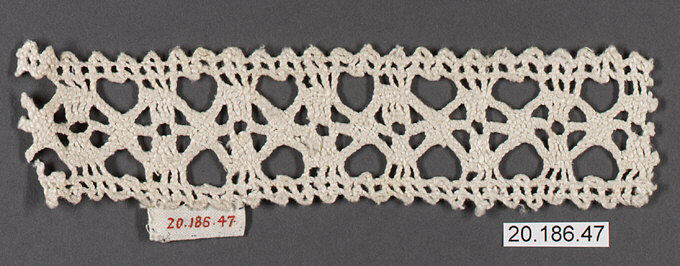
Insertion as Architectural Dialogue: A Couture Analysis of Katherine Fashion Lab’s Bobbin Lace Study
In the rarefied lexicon of haute couture, the term “insertion” often denotes a technical seam—a discrete act of embedding one fabric within another. Yet for Katherine Fashion Lab, insertion transcends mere construction. In this standalone study, the concept is reimagined as a profound architectural and cultural dialogue, where global heritage meets the ephemeral precision of bobbin lace. The result is a garment that functions not as clothing, but as a cartographic artifact—a woven map of memory, migration, and meticulous craft.
The Materiality of Memory: Bobbin Lace as Global Lexicon
Bobbin lace is among the most labor-intensive textile arts in human history. Originating in 16th-century Flanders and Italy, it spread through trade routes to Spain, France, England, and eventually the Americas. Each region developed its own dialect of twists, plaits, and picots. Katherine Fashion Lab’s study draws from this polyglot heritage, sourcing lace techniques from Bruges, Chantilly, and Oaxaca—not as decorative pastiche, but as a structural grammar. The lace is not appliquéd; it is the primary fabric. Every openwork flower and geometric grid is a node in a larger narrative of cultural exchange.
What distinguishes this study is the material paradox at its core: bobbin lace is simultaneously fragile and tensile, transparent and dense. The lab’s designers exploit this duality by using insertion as a method of negative-space tailoring. Instead of cutting and sewing solid cloth, they construct the garment’s silhouette entirely from lace segments that are inserted into one another without visible seams. This technique—akin to architectural joinery—allows the lace to behave as a self-supporting membrane. The body becomes the armature upon which the lace’s geometric logic is suspended.
Insertion as Cultural Cartography
The term “insertion” in this study carries multiple, layered meanings. Technically, it refers to the process of interlocking lace motifs through a system of hand-tied picots and braided connectors. Conceptually, it signifies the insertion of global heritage into a singular, contemporary form. Each lace pattern is a fragment of a larger cultural text: a Flemish rose motif, a Spanish mantilla grid, a Mexican floral calado. These are not randomly assembled. The lab’s curators have arranged them along a vertical axis that traces the historical silk route from Europe to the Americas, with the garment’s spine serving as a timeline.
Consider the shoulder insertion: a dense cluster of Chantilly-style half-stitch leaves that evoke the opulence of 18th-century French court dress. As the eye moves downward, the motifs transition to open, geometric Oaxacan lace—a nod to the indigenous Zapotec weaving traditions that absorbed European techniques during colonization. The hem is left raw, unbound, suggesting an unfinished narrative. This is not a garment for a single occasion; it is a document of cultural entanglement.
Structural Innovation: The Lace as Load-Bearing Element
From an engineering perspective, the greatest achievement of this study is its structural autonomy. Bobbin lace is traditionally backed or mounted on a foundation fabric to prevent distortion. Katherine Fashion Lab rejects this convention. Instead, they employ a tension-positive insertion system where each lace segment is pre-stressed during assembly. The lace’s own warp and weft become load-bearing. The result is a garment that holds its shape without boning, interfacing, or internal support.
This is achieved through a proprietary method of asymmetric knotting along the insertion points. Where two motifs meet, the lab’s artisans use a combination of double half-hitches and single-thread loops that allow for micro-adjustments in tension. The lace is literally pulled into form. The effect is a silhouette that appears both organic and engineered—a paradox that echoes the duality of insertion itself. The garment breathes with the wearer, yet maintains its architectural integrity.
Global Heritage as a Design Principle
What elevates this study beyond technical virtuosity is its ethical engagement with heritage. The lab has partnered with master lacemakers in Bruges and Oaxaca, paying fair-trade wages and documenting their techniques as part of an ongoing digital archive. This is not cultural appropriation; it is cultural insertion—a reciprocal embedding of knowledge. The garment’s pattern is open-source, allowing artisans worldwide to reproduce the insertion method using local materials. In this sense, the study becomes a platform for preserving endangered craft traditions while simultaneously pushing them into new formal territories.
The color palette reinforces this ethos: undyed linen, raw silk, and unbleached cotton. No synthetic dyes. No surface ornament. The lace’s beauty derives entirely from the interplay of light and shadow through its openwork. This restraint is a radical statement in an industry often defined by excess. It argues that heritage is not a decorative accessory but a structural principle—a foundation upon which new forms can be built.
Standalone Study: The Garment as Thesis
As a standalone study, this piece exists outside the conventional fashion calendar. It is not part of a seasonal collection, nor is it intended for mass reproduction. Instead, it functions as a research prototype—a material thesis on the possibilities of insertion as a design methodology. The lab has published a companion document detailing the knotting algorithms, tension calculations, and cultural sourcing. This transparency is rare in couture, where trade secrets are guarded. It positions the study as a contribution to the broader field of textile engineering and heritage preservation.
The garment’s final form—a floor-length coat with exaggerated, wing-like sleeves—evokes both ecclesiastical vestments and ceremonial regalia. Yet it is deliberately genderless, size-inclusive, and adaptable. The insertion system allows for modular expansion: panels can be added or removed without compromising the structure. This is couture as living architecture, not static artifact.
Conclusion: The Future of Insertion
Katherine Fashion Lab’s study of insertion through bobbin lace is a masterclass in material storytelling. It demonstrates that couture can be simultaneously ancient and avant-garde, local and global, fragile and indestructible. By treating insertion not as a seam but as a philosophical stance—a way of embedding one culture into another—the lab has created a garment that is both a technical marvel and a cultural manifesto. In a fashion landscape often driven by speed and disposability, this study reminds us that the most radical act may be to slow down, to insert with intention, and to let the lace speak for itself.