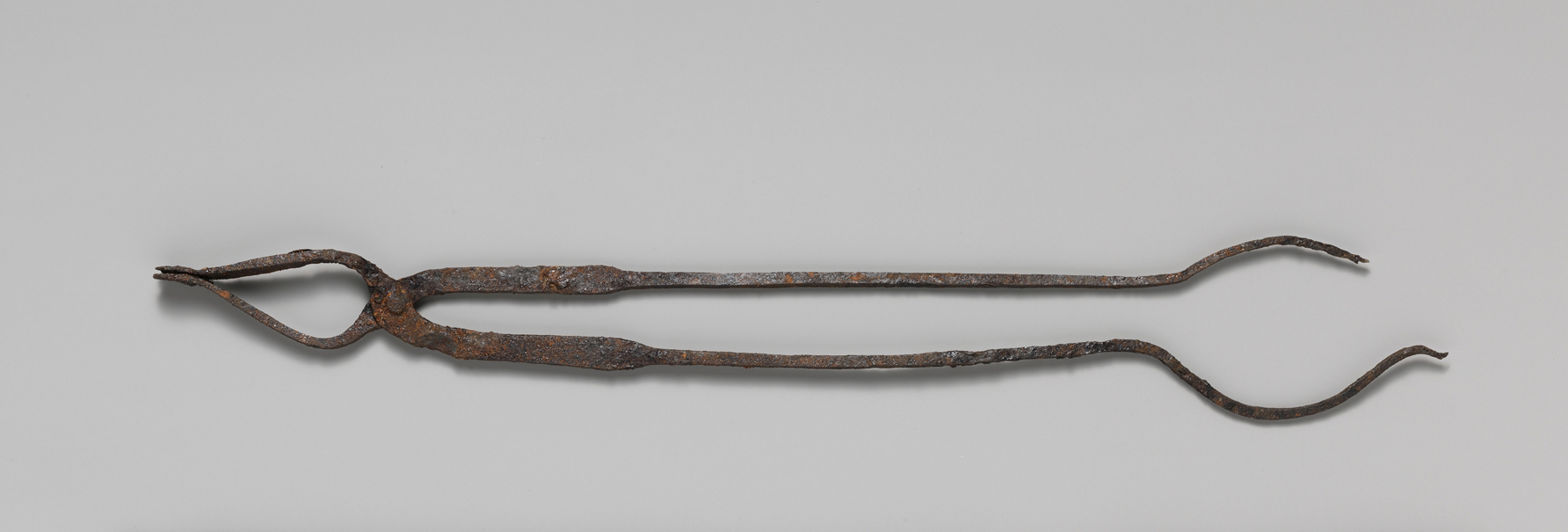
Heritage Analysis: The Etruscan Iron Fire-Tongs
In the annals of ancient metallurgy and symbolic craft, the Etruscan civilization stands as a beacon of refined artistry and profound spiritual expression. The iron fire-tongs, a seemingly utilitarian object, emerge as a potent artifact for Katherine Fashion Lab’s 2026 high-end luxury strategy. This analysis deconstructs the tongs’ symbolic power, historical adornment, and spiritual meaning, translating these elements into a sophisticated brand narrative that resonates with discerning clientele seeking depth beyond material opulence.
Symbolic Power: The Forge as a Nexus of Authority
The Etruscan iron fire-tongs were not mere tools; they were instruments of transformation. In Etruscan cosmology, fire was a liminal element—both destructive and generative, a bridge between the mortal and the divine. The tongs, as the mediator between the human hand and the sacred flame, embodied control over chaos. Their iron composition, a material associated with the god Sethlans (the Etruscan equivalent of Hephaestus/Vulcan), signified earthly power tempered by divine will. For Katherine Fashion Lab, this symbolism translates into a luxury narrative of curated authority. The tongs represent the ability to shape raw elements—whether materials, trends, or personal identity—into refined, lasting form. In a 2026 context, where luxury consumers crave authenticity and mastery, the fire-tongs become a metaphor for the brand’s role as a guardian of heritage and a shaper of future aesthetics.
Historical Adornment: The Aesthetics of Utility
Etruscan artisans elevated the mundane to the magnificent. Iron fire-tongs from excavated tombs, such as those in the Regolini-Galassi tomb at Cerveteri, reveal intricate detailing: incised geometric patterns, animal motifs (often lions or griffins), and handles shaped like human hands or mythological creatures. This adornment was not superfluous; it was a declaration of status and cultural identity. The tongs were often placed in burial chambers, accompanying the deceased as symbols of their earthly role as a paterfamilias or priest. The aesthetic choices—bold lines, symmetrical forms, and the juxtaposition of iron with bronze or gold inlays—demonstrate a sophisticated understanding of material contrast. For Katherine Fashion Lab, this historical adornment informs a 2026 design language: functional minimalism elevated by artisanal detail. The brand can reimagine the fire-tongs’ motifs in jewelry, hardware, or textile patterns, offering clients a tangible connection to Etruscan craftsmanship. The use of iron, once a humble metal, becomes a statement of understated luxury—an antidote to ostentatious gold and diamonds.
Spiritual Meaning: The Tongs as Ritual Instruments
Beyond their physical utility, Etruscan fire-tongs held profound spiritual significance. In Etruscan religion, fire was central to divination and purification rituals. The tongs were used to handle sacred offerings, such as animal hearts or incense, during ceremonies to appease gods like Tinia (the sky god) or Uni (the goddess of fertility). The act of grasping with tongs was a ritual of separation—the human hand, considered impure, could not directly touch the divine. The tongs thus became a sacred intermediary, a tool of spiritual transmission. This concept resonates deeply with luxury’s contemporary turn toward meaning. In 2026, high-end consumers seek objects that facilitate personal transformation—a piece of jewelry that marks a milestone, a garment that embodies a mindset. The fire-tongs’ spiritual role offers Katherine Fashion Lab a powerful archetype: the brand as a conduit for the client’s inner fire, enabling them to handle life’s transformative moments with grace and power. The tongs’ design, with its dual pincers, can symbolize balance and duality—the tension between holding and releasing, control and surrender—central themes in modern luxury storytelling.
2026 High-End Luxury Strategy: Translating Heritage into Desirability
To integrate the Etruscan iron fire-tongs into Katherine Fashion Lab’s 2026 strategy, the brand must move beyond mere visual appropriation. The following strategic pillars are recommended:
1. Material Narrative: Iron as the New Rare
In an era of sustainability and raw aesthetics, iron offers a counterpoint to traditional luxury materials. Position iron as a metal of provenance and permanence. Collaborate with contemporary blacksmiths to create limited-edition pieces—cufflinks, belt buckles, or sculptural accessories—that echo the tongs’ forms. Emphasize the material’s Etruscan roots through storytelling campaigns that highlight the ritual of forging, from ore extraction to final polish. This aligns with the 2026 trend of “honest luxury,” where the object’s creation process is as valued as its final form.
2. Symbolic Codes: The Grip and Release Motif
Develop a signature design element inspired by the tongs’ pincer mechanism. This motif can appear in clasp closures, ring settings, or garment fastenings. The dual prongs, when opened, suggest invitation; when closed, they signify protection. This visual language can be trademarked as the “Etruscan Grasp”—a subtle yet recognizable symbol of the brand’s heritage. In marketing, use this motif to convey themes of empowerment: the wearer is both held and freed by the design.
3. Ritualistic Experience: The Fire-Tongs as a Brand Touchpoint
Create an immersive brand experience around the concept of “the forge.” Introduce a private atelier service where clients participate in a symbolic “forging” ceremony—selecting raw materials, witnessing the crafting process, and receiving a personalized talisman. This ritual echoes the Etruscan use of tongs as intermediaries between the mortal and the divine. For 2026, luxury is increasingly experiential; offering a moment of transformation positions Katherine Fashion Lab as a purveyor of not just objects, but meaningful passage.
4. Color and Texture Palette: The Patina of Time
The iron fire-tongs’ oxidized surfaces, with their deep grays, rusted oranges, and charcoal blacks, inspire a 2026 color story. Incorporate these tones into ready-to-wear collections, leather goods, and packaging. The patina, a testament to age and use, becomes a design feature—celebrated rather than erased. This aligns with the luxury consumer’s growing appreciation for imperfection as authenticity. Textures such as hammered metal, brushed steel, and raw linen can echo the tongs’ tactile history.
5. Exclusivity Through Provenance
Each piece referencing the fire-tongs should come with a digital heritage certificate, detailing its Etruscan inspiration and the specific symbolic elements used. This adds a layer of intellectual and emotional value, appealing to the 2026 client who seeks to own a story as much as a product. Limited drops, tied to astronomical events (e.g., solstices, which the Etruscans revered), can create scarcity and deepen the spiritual resonance.
Conclusion: The Eternal Ember
The Etruscan iron fire-tongs, forged in a civilization that revered the transformative power of flame, offer Katherine Fashion Lab a rich lexicon of symbolic power, historical adornment, and spiritual meaning. By translating these elements into a 2026 luxury strategy, the brand can differentiate itself through depth, authenticity, and ritual. The tongs remind us that true luxury is not about possession but about handling the sacred with intention. In a world of ephemeral trends, the iron fire-tongs endure—an eternal ember waiting to be rekindled by those who understand that the most profound designs are those that connect us to the forces that shape our lives.