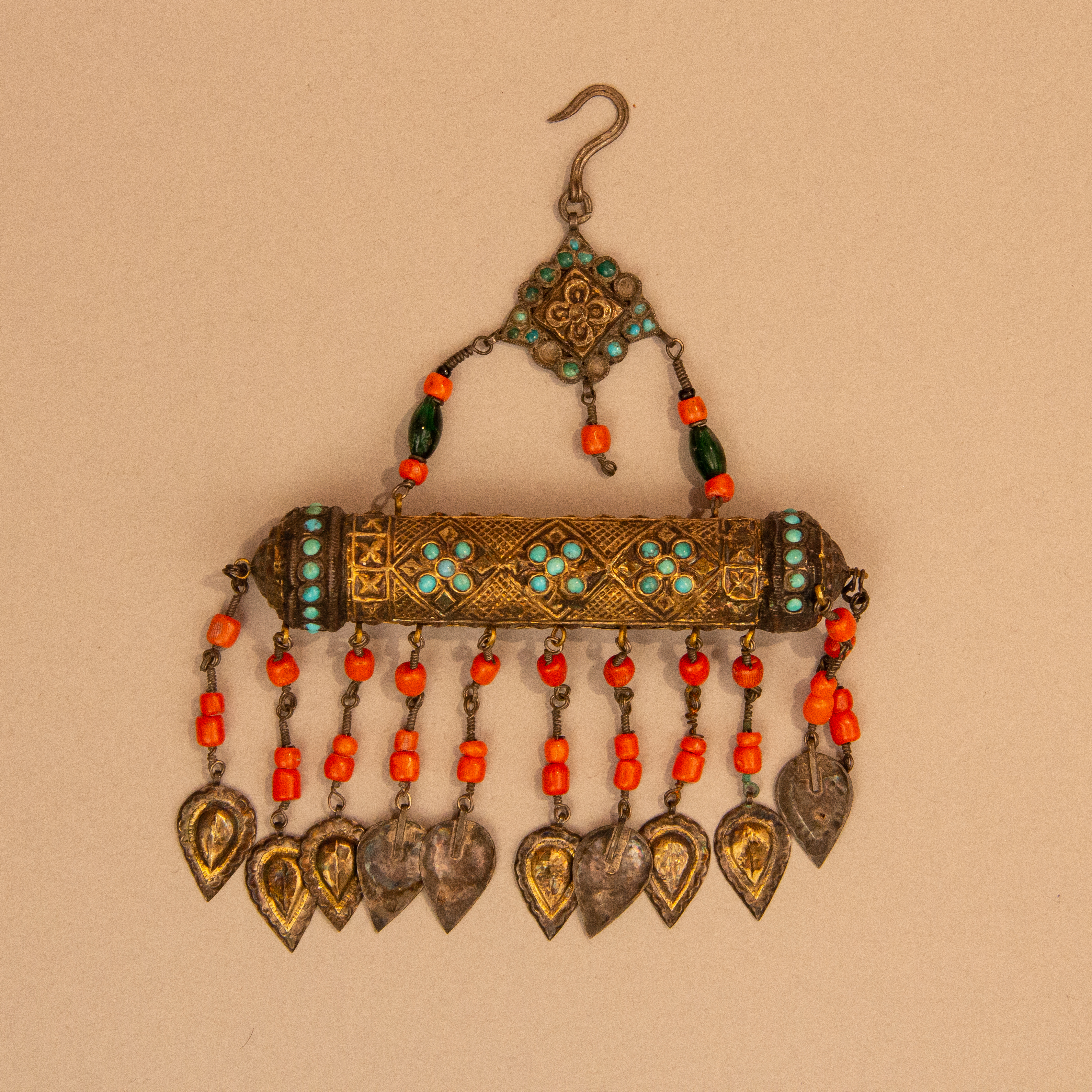
Heritage Analysis: Amulet Case, One of a Pair
Introduction: The Object as a Conduit of Power
The amulet case, one of a pair, represents an exquisite intersection of spiritual protection, material wealth, and cultural identity within an ancient civilization. Crafted from silver, coral, turquoise, and glass, this object was not merely decorative but served as a portable sanctuary—a vessel for sacred inscriptions, herbs, or relics intended to shield its wearer from malevolent forces. For Katherine Fashion Lab, analyzing this artifact offers a strategic blueprint for embedding symbolic depth into high-end luxury offerings for 2026. This paper examines the amulet case’s symbolic power, historical adornment practices, spiritual meanings, and proposes a luxury strategy that leverages heritage as a competitive advantage.
Symbolic Power: The Amulet as a Microcosm of Cosmic Order
In ancient civilizations, amulet cases functioned as microcosmic representations of cosmic protection. The silver casing, often associated with lunar deities and reflective purity, was believed to repel negative energy. Coral, a material sourced from the sea, symbolized life force and regeneration, while turquoise—a stone revered for its sky-blue hue—represented divine favor, health, and prosperity. The inclusion of glass, a material that mimics precious stones, suggests a democratization of spiritual access, as glass could be crafted to imitate lapis lazuli or carnelian, thereby making protective symbolism available to broader social strata.
Strategically, this symbolic layering offers Katherine Fashion Lab a template for narrative-driven luxury. Each material in the amulet case tells a story of protection, vitality, and celestial connection. For a 2026 collection, this translates into a design philosophy where every element—from metal to gemstone—carries a deliberate, culturally resonant meaning. The amulet case’s power lies not in transparency but in its hidden contents; similarly, luxury brands can cultivate exclusivity through concealed symbolism, inviting consumers to engage with the object’s deeper narrative.
Historical Adornment: The Body as a Sacred Canvas
The amulet case was typically worn on a necklace or attached to garments, positioning it at the heart or solar plexus—points considered energetically vulnerable. In ancient societies, adornment was not merely aesthetic but functional; jewelry served as armor against spiritual and physical harm. The pairing of these cases suggests a symmetrical balance, reflecting the ancient belief in duality—light and dark, masculine and feminine, protection and vulnerability. Silver, coral, and turquoise were chosen not only for their beauty but for their perceived durability and rarity, signaling status and access to trade networks.
For Katherine Fashion Lab, this historical context underscores the ritualistic dimension of adornment. In 2026, high-end consumers increasingly seek objects that offer psychological comfort and identity affirmation. The amulet case model suggests a return to jewelry as a talisman—pieces that are worn daily, not just for occasions. The brand can position its collections as “protective luxury,” where each piece is designed with intentional geometry and material symbolism. The pairing of objects also introduces the concept of complementary ownership, encouraging clients to acquire sets that enhance personal or relational narratives—a powerful driver for repeat purchases and brand loyalty.
Spiritual Meaning: From Protection to Personal Transformation
Spiritually, the amulet case embodies the transition from external protection to internal transformation. The act of placing an object inside the case—such as a prayer, a herb, or a gemstone—was a ritual of empowerment. The wearer was not passive; they actively curated the amulet’s power based on their needs. Coral, often used to ward off the evil eye, and turquoise, associated with healing and communication, combined to create a dynamic spiritual tool. The silver casing acted as a conduit, amplifying the energy of the contents while shielding the wearer from harm.
In a contemporary luxury context, this spiritual architecture offers a profound opportunity. Katherine Fashion Lab can develop a “curated protection” strategy, where clients personalize their amulet cases with specific intentions—love, courage, clarity—using interchangeable inserts or digital companion experiences. The brand could partner with cultural historians or spiritual advisors to authenticate symbolism, ensuring respect for original traditions while making them relevant. This approach elevates the purchase from a transaction to a transformative experience, aligning with the 2026 trend of conscious consumerism.
2026 High-End Luxury Strategy: Heritage as Competitive Advantage
To translate the amulet case’s heritage into a 2026 luxury strategy, Katherine Fashion Lab must adopt a multilayered approach that integrates materiality, storytelling, and exclusivity. The following strategic pillars are recommended:
Material Provenance and Ethical Sourcing
The amulet case’s materials—silver, coral, turquoise, glass—were sourced from specific regions, each carrying cultural weight. For 2026, luxury consumers demand transparency and sustainability. Katherine Fashion Lab should prioritize traceable silver from certified ethical mines, recycled or responsibly harvested coral (given ecological concerns), and lab-grown turquoise that mimics natural veining without environmental impact. Glass can be handcrafted by artisan studios using traditional techniques, reinforcing the brand’s commitment to preserving endangered crafts. This provenance storytelling becomes a core marketing asset, differentiating the brand in a crowded market.
Symbolic Customization and Digital Integration
Leveraging the amulet case’s hidden contents, Katherine Fashion Lab can offer a “Symbolic Commission” service. Clients select materials, gemstones, and personal inscriptions, with the brand providing a digital “amulet journal” that explains the symbolic significance of each choice. This creates a tangible link between ancient practices and modern self-expression. Additionally, the brand could develop a limited-edition “Guardian Pair” series, releasing two complementary amulet cases per season—one for the wearer and one for a loved one—reinforcing the concept of shared protection. This strategy taps into the 2026 desire for meaningful gifting and emotional connection.
Exclusive Heritage Collaborations and Educational Experiences
To authentically anchor the collection, Katherine Fashion Lab should collaborate with renowned archaeologists, gemologists, and cultural institutions specializing in ancient civilizations. These partnerships can produce exclusive documentaries, exhibition previews, or private salon events where clients learn about the amulet case’s history. The brand could also offer “Heritage Workshops” where clients participate in symbolic design sessions, guided by experts. This elevates the brand from a retailer to a cultural curator, fostering deep loyalty and media attention.
Pricing Architecture and Scarcity Strategy
The amulet case’s rarity—one of a pair—suggests an intentional scarcity model. Katherine Fashion Lab should adopt a “by appointment only” approach for its most exclusive pieces, with each amulet case numbered and registered in a blockchain-based provenance ledger. Pricing should reflect the labor-intensive craftsmanship, material rarity, and symbolic depth, positioning these pieces as heirloom investments. A tiered offering—from accessible glass-and-silver editions to ultra-luxury coral-and-turquoise masterpieces—ensures market segmentation without diluting brand prestige.
Conclusion: The Amulet Case as a Strategic Archetype
The amulet case, one of a pair, is far more than a historical artifact—it is a strategic archetype for luxury in 2026. Its synthesis of symbolic power, historical adornment, and spiritual meaning provides Katherine Fashion Lab with a proven model for creating objects that resonate on emotional, cultural, and aspirational levels. By honoring the materiality and narrative depth of this ancient object, the brand can craft a luxury strategy that is both reverent and revolutionary, positioning itself as a guardian of heritage while leading the future of high-end adornment. The amulet case reminds us that true luxury is not about visibility but about the power of what is held close.