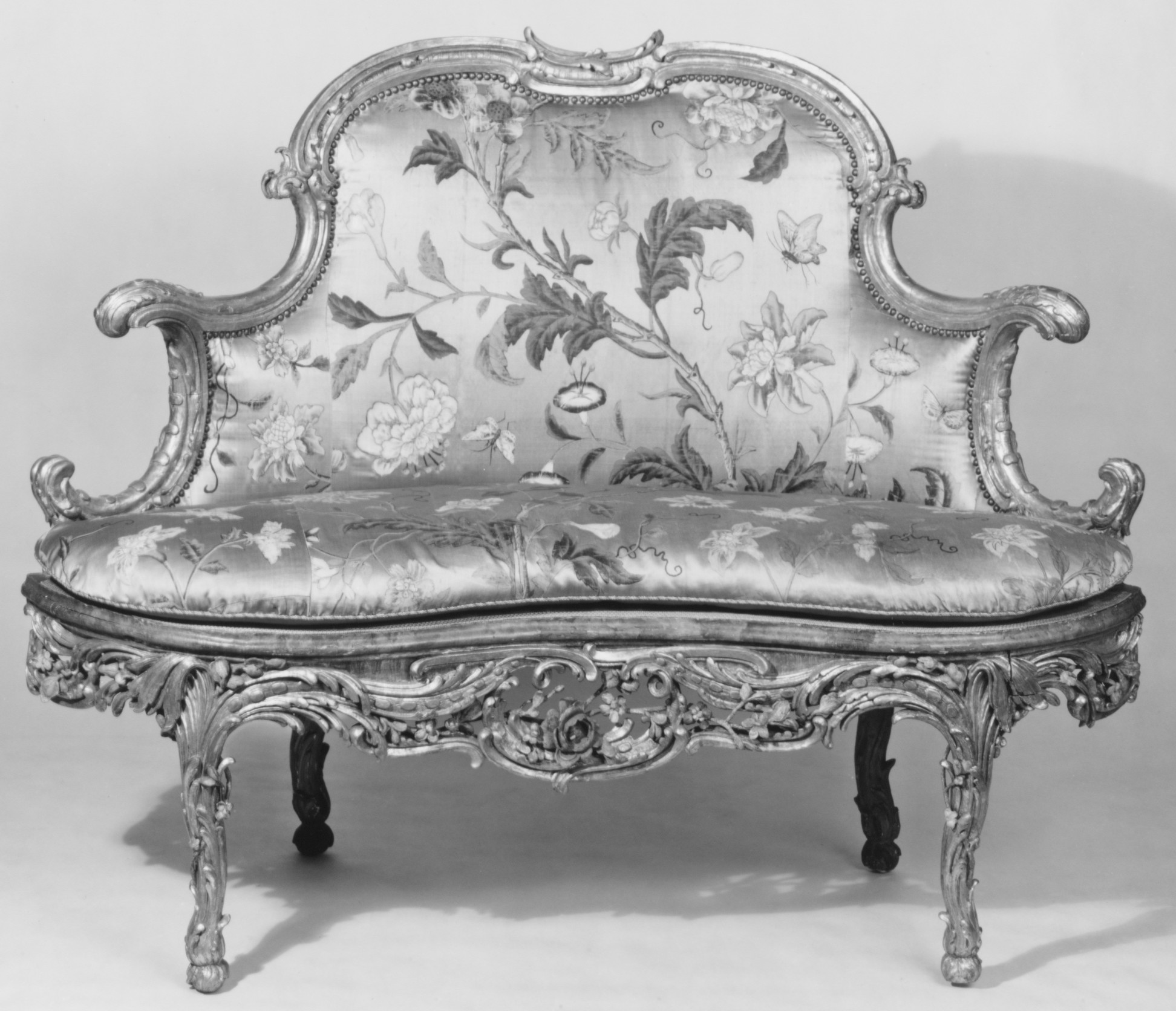
The Art of Reclining: Deconstructing Katherine Fashion Lab’s Painted Silk Upholstery Panels
In the rarefied echelons of haute couture, the boundary between garment and environment has long been a site of creative friction. Katherine Fashion Lab, a maison renowned for its intellectual rigor and globalist aesthetic, dissolves this boundary entirely with its latest offering: a set of hand-painted silk upholstery panels designed for a standalone study settee. This is not merely furniture; it is a narrative artifact, a wearable textile rendered immobile, and a profound meditation on heritage, materiality, and the silent language of domestic space. The analysis that follows deconstructs the panel’s design philosophy, material provenance, and the strategic implications of positioning such an object within a solitary, contemplative context.
Material as Narrative: The Silk Canvas
The choice of silk as the primary substrate is both a homage to centuries of textile artistry and a deliberate provocation. Silk, historically associated with the body—with robes, with courtly attire, with the sensuous drape of a kimono—is here stretched and static, demanding a new lexicon of appreciation. Katherine Fashion Lab sources its raw silk from a cooperative in the ancient trading corridors of Uzbekistan, a nod to the Global Heritage mandate. This silk is not the glossy, machine-perfected variety of mass production; it retains a slubbed, organic texture, a tactile record of the silkworm’s labor and the artisan’s hand.
The painting process itself is a feat of controlled spontaneity. Natural dyes, derived from indigo, madder root, and cochineal, are layered in translucent washes. The result is a chromatic depth that synthetic pigments cannot replicate—a surface that shifts from deep aubergine to muted ochre as the study’s light changes throughout the day. Each panel is a unique composition, yet they are united by a visual motif: an abstracted cartographic pattern, referencing the Silk Road’s trade routes. This is not a literal map but a ghost of one, with sinuous lines and clustered dots that evoke caravanserais and oases. The effect is simultaneously ancient and avant-garde, a textile that speaks of journeys both geographical and psychological.
Structural Integrity: Upholstery as Armature
To dismiss these panels as mere decorative covers would be to miss the engineering prowess at play. The settee itself is a minimalist frame in ebonized oak, designed by Katherine Fashion Lab in collaboration with a furniture atelier in Milan. The upholstery panels are not simply laid over padding; they are integral to the piece’s structural logic. Each panel is backed with a fine linen canvas and hand-stitched to a removable wooden lattice, allowing for conservation and rotation. This modularity is a deliberate design choice, acknowledging that the silk—like couture—requires care, rotation, and eventual restoration. The padding beneath is a proprietary blend of horsehair and organic cotton, offering a firm yet yielding support that respects the body’s posture during prolonged reading or reflection.
The tension between the silk’s fragility and the settee’s intended use is a calculated paradox. Katherine Fashion Lab challenges the collector to treat the object not as a passive furnishing but as an active participant in daily ritual. The panels are designed to develop a patina over time—a faint crease here, a sun-induced fade there—that records the life of the study’s occupant. This is a radical departure from the conservationist impulse that typically governs luxury textiles. Instead, the maison embraces entropy as a form of storytelling, a philosophy that aligns with the Japanese concept of wabi-sabi while remaining distinctly global in its execution.
Global Heritage: The Cartographic Imagination
The “Global Heritage” designation is not a marketing tagline but a curatorial framework. Katherine Fashion Lab’s design team conducted extensive research into the visual languages of the Silk Road, from the geometric tilework of Samarkand to the floral manuscripts of Persia. The painted motifs on the panels are a synthesis of these influences, filtered through a contemporary lens. For instance, the repeated circular forms echo the girih patterns of Islamic architecture, while the sinuous lines recall the calligraphic strokes of Chinese ink painting. Yet the composition resists direct quotation; it is a palimpsest, a layering of visual memories that never settles into a single cultural identity.
This approach has strategic implications for the luxury market. In an era where cultural appropriation is a constant risk, Katherine Fashion Lab navigates the terrain through collaboration and attribution. The pigments were sourced from a collective of women artisans in Rajasthan, the silk from Uzbekistan, and the painting executed by a master craftsman from Kyoto. Each contributor is acknowledged in the object’s provenance documentation, transforming the settee into a testament to ethical globalization. The collector is not purchasing a product but a network of relationships, a materialized diplomacy.
Context: The Standalone Study as Sanctuary
The decision to position this settee within a “standalone study” is a masterstroke of contextual branding. The study, in the modern luxury home, has evolved from a utilitarian workspace into a sanctuary for introspection—a room where time slows and the self is recalibrated. The upholstery panels, with their painted cartography, invite the sitter to embark on an interior journey. The silk’s tactile richness encourages a slower mode of being; one does not slump into this settee but settles into it, as one might settle into a narrative.
From a design psychology perspective, the panels serve as a visual anchor. The abstract map motif subtly orients the sitter within a broader world, even as the study’s walls close in. This is particularly potent in an age of digital saturation, where the physical and the virtual compete for attention. The settee becomes a counterpoint—a place where the hand can trace the painted routes, where the eye can rest on a surface that is not a screen. Katherine Fashion Lab understands that luxury is increasingly defined not by accumulation but by the curation of experience. The settee is a tool for that curation, a stage for the drama of solitary thought.
Market Implications and Collectorship
This piece occupies a unique niche at the intersection of furniture, fine art, and haute couture. It is priced not per unit but as a limited edition of twelve, each with a numbered certificate and a dossier of the materials’ origins. The target collector is not a decorator but a connoisseur—someone who understands that the value lies in the narrative as much as the object. Katherine Fashion Lab is effectively redefining the category of “functional art,” asserting that a settee can be as worthy of conservation as a painting or a sculpture.
The standalone study context further elevates the piece’s exclusivity. It is not designed for a living room or a gallery but for a private, almost monastic space. This scarcity of context amplifies desire; the collector must have a study worthy of the settee, and the settee in turn defines the study as a site of significance. It is a symbiotic relationship that reinforces the brand’s ethos: that luxury is not about display but about depth.
Conclusion: The Settee as a Manifesto
Katherine Fashion Lab’s painted silk upholstery panels are more than a design object; they are a manifesto for a new kind of luxury—one that is slow, narrative-driven, and ethically sourced. By choosing silk as a canvas, the maison elevates upholstery to the status of couture. By invoking global heritage, it creates a dialogue across cultures. And by situating the piece in a standalone study, it honors the quiet, transformative power of solitude. In a world of disposable trends, this settee endures—not as a static artifact, but as a living text, waiting to be read by the body and the mind.