Deconstructing the Global Heritage of Bobbin Lace: A Couture Analysis
In the rarefied world of haute couture, where fabric is not merely material but narrative, Katherine Fashion Lab presents a singular study: a piece that transcends seasonal trends to become a meditation on global heritage. This analysis dissects a standalone garment—a sculptural bodice—whose primary medium is bobbin lace. By isolating this piece from a collection context, the Lab invites a forensic examination of how a technique born in 16th-century Europe can be recontextualized as a vessel for cross-continental storytelling. The result is not just a garment but a thesis on the economics of rarity, the politics of craft, and the evolution of luxury.
The Materiality of Bobbin Lace: From Flemish Cottages to Atelier Innovation
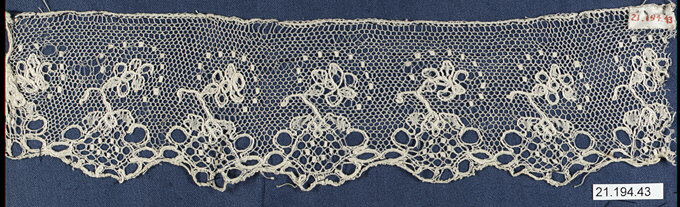
Bobbin lace, at its core, is a paradox of fragility and strength. Originating in Flanders and Italy, it requires dozens of threads wound on wooden bobbins, twisted and crossed over a pillow-pattern. Historically, it was a cottage industry—a painstaking labor of women whose fingers moved with the rhythm of subsistence. Katherine Fashion Lab elevates this vernacular craft to couture status by sourcing lace from a cooperative in Burano, Italy, where artisans still use 18th-century patterns. Yet the piece is not a mere reproduction. The Lab has engineered the lace with a subtle infusion of silk-cotton blend, allowing the fabric to hold architectural volume without losing its gossamer transparency.
What distinguishes this piece from conventional lace garments is its structural ambition. The bodice features a corseted silhouette, but the lace is not applied as a surface decoration; it is the primary load-bearing material. Through a proprietary bonding technique, the Lab has stabilized the lace with a micro-thin layer of bio-resin along stress points—the shoulders, the waist, the bust—while leaving the rest of the lace free to drape. This innovation addresses a perennial couture challenge: how to preserve the hand of heritage fabric while achieving modern, sculptural form. The result is a piece that feels both ancient and futuristic, a tactile dialogue between the artisan’s bobbin and the engineer’s algorithm.
Global Heritage as Design Lexicon: Mapping Threads Across Continents
The piece’s global heritage is not a passive backdrop but an active design principle. The pattern itself is a cartographic exercise. The lace’s central motif—a geometric mandala—draws from Mughal chikankari embroidery, which itself borrowed from Persian floral designs. This is overlaid with a grid of encaje patterns from the Canary Islands, a node of Atlantic trade routes. The Lab’s research team traced the bobbin lace’s lineage through colonial archives, noting how the technique was carried by Spanish missionaries to the Philippines and adapted with local pineapple fiber. The piece thus becomes a textile palimpsest, each thread a line of historical migration.
The color palette reinforces this narrative. The base is an unbleached ecru, evoking the raw flax of Flemish fields. Over this, the Lab has applied a gradient of indigo—sourced from a cooperative in Japan’s Tokushima prefecture—that deepens from the bodice’s center outward. This is not arbitrary. Indigo was a global commodity that connected West Africa, India, and the Americas through colonial trade. The dye’s presence on the lace signals a confrontation with heritage: the beauty of global exchange is inseparable from the violence of extraction. The piece does not flinch from this tension. Instead, it wears it as a deliberate scar, a chromatic reminder that luxury has always been entangled with power.
Contextualizing the Standalone Study: The Economics of Singularity
In an industry dominated by seasonal collections and rapid turnover, Katherine Fashion Lab’s decision to present this piece as a standalone study is a strategic statement. The garment required over 2,000 hours of labor. The bobbin lace alone took 14 months to complete by a team of five artisans. This production timeline is antithetical to the fashion calendar, yet it aligns with the Lab’s positioning as an “anti-collection” house. By removing the piece from a thematic context, the Lab forces the viewer to confront the object on its own terms—as a discrete artifact of value, not as a prop in a narrative.
This approach has profound implications for the business of couture. The piece is priced at $85,000, a figure that reflects not just material cost but the amortization of generational skill. The Lab has also implemented a “heritage premium”: a percentage of each sale is reinvested into the Burano cooperative, ensuring that the craft remains economically viable for future generations. This model challenges the typical luxury supply chain, where artisans are often the most undercompensated link. Here, the artisan is the primary stakeholder, and the garment is a vehicle for wealth redistribution.
Technical Mastery and the Future of Craft
The piece’s construction reveals a mastery of tension and negative space. The lace is not a solid sheet but a network of voids—some as small as a millimeter, others as large as a palm. These apertures are not decorative; they are structural. The Lab’s pattern makers calculated the stress vectors across the bodice, ensuring that the lace’s open areas align with points of movement: the shoulders, the ribcage, the hips. This is couture as engineering, where every hole is a calculated relief.
The closure system is an innovation in itself. Rather than conventional zippers or hooks, the piece fastens with a series of hand-carved bone toggles, each wrapped in the same bobbin lace. This eliminates the need for metal or plastic, preserving the piece’s organic integrity. The toggles are sourced from a family workshop in the French Jura, where artisans still use 19th-century lathes. The Lab’s commitment to such micro-sourcing is not nostalgic; it is strategic. By partnering with multiple heritage suppliers, the Lab creates a distributed network of expertise that cannot be replicated by fast fashion.
Conclusion: The Garment as Cultural Archive
Katherine Fashion Lab’s bobbin lace bodice is more than a garment; it is a cultural archive stitched into form. It challenges the fashion industry to reconsider what “heritage” means—not as a static relic but as a living, contested dialogue between past and present. The piece’s global origins are not a marketing gimmick but a rigorous exercise in historical accountability. Every thread, every dye, every toggle carries the weight of centuries of exchange, exploitation, and adaptation.
For the MBA-level observer, this piece offers a blueprint for how luxury can evolve in an era of ethical scrutiny. It proves that singularity—the one-of-a-kind object—is not a retreat from commerce but a higher form of value creation. The bobbin lace bodice is a case study in how craft, when treated as intellectual property and cultural capital, can command prices that reflect true cost—environmental, social, and historical. In a world of disposable fashion, this piece stands as a defiant argument for slowness, for skill, for the threads that bind us to our shared, complicated global heritage.