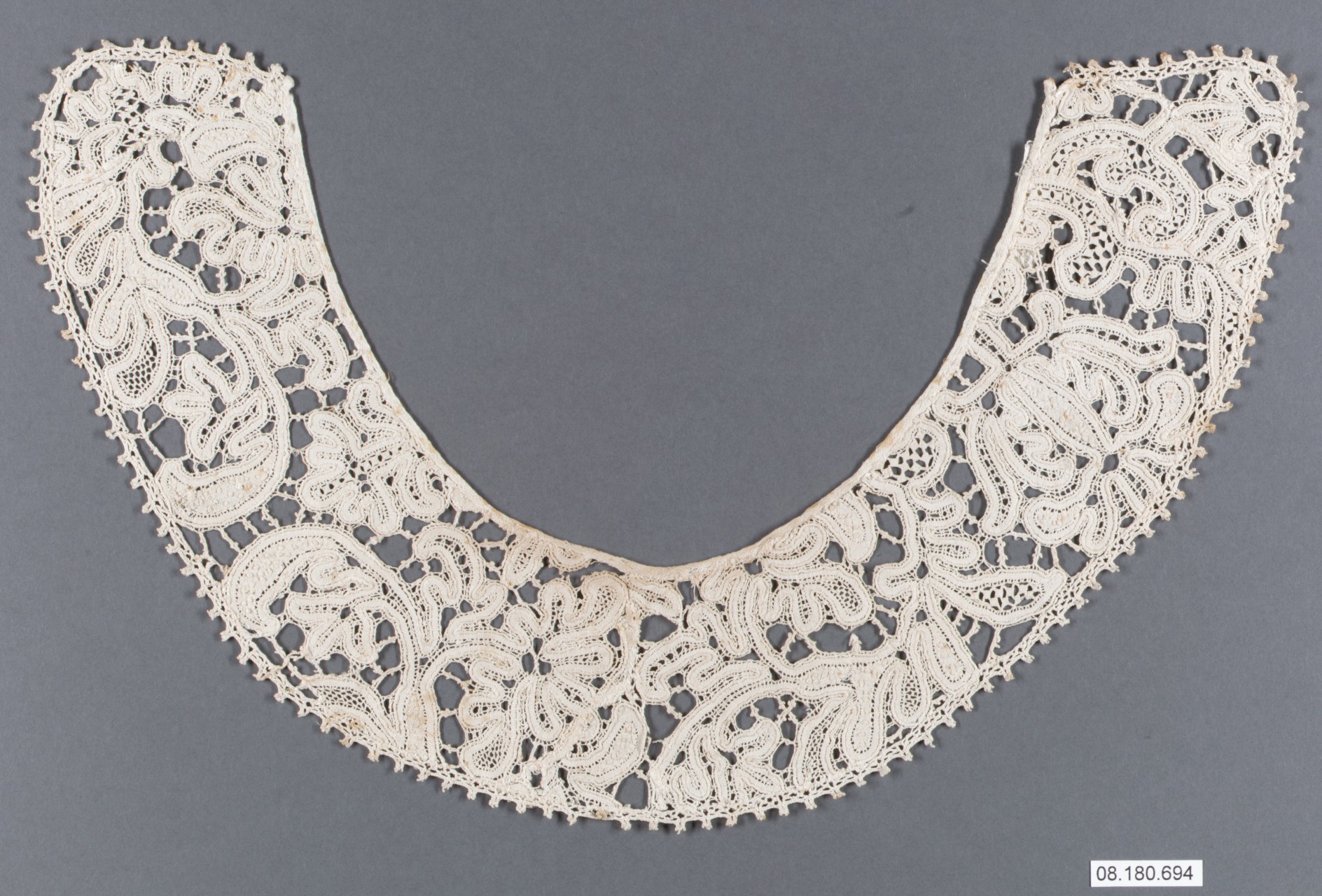
Heritage Analysis: The Collar in Ancient Civilization – Bobbin Lace as Symbolic Power and Luxury Strategy
Introduction: The Collar as a Threshold of Identity
The collar, as an item of adornment, occupies a unique position in the history of human dress. Positioned at the threshold between the head and the torso—the seat of intellect and the vessel of breath—the collar has long served as a marker of status, spiritual alignment, and cultural belonging. In ancient civilizations, from Egypt to Mesopotamia, the collar was not merely decorative; it was a talisman, a declaration of power, and a conduit for divine favor. For Katherine Fashion Lab, the strategic revival of the collar through the medium of bobbin lace offers a profound opportunity to bridge ancient symbolism with 2026 high-end luxury sensibilities. This analysis examines the symbolic power, historical adornment, and spiritual meaning of the collar in ancient contexts, and proposes a forward-looking strategy for luxury brand positioning.
Symbolic Power: The Collar as Armor and Authority
In ancient Egypt, the broad collar, or wesekh, was worn by pharaohs, nobles, and deities as a symbol of dominion over life and death. Crafted from faience beads, gold, and semi-precious stones, the collar’s weight and radiance signified the wearer’s ability to command resources and supernatural forces. The sun disk, often central to these collars, linked the ruler to Ra, the sun god, reinforcing the idea that the wearer was a living embodiment of cosmic order. Similarly, in ancient Mesopotamia, collars of lapis lazuli and carnelian adorned the necks of priest-kings, serving as protective amulets against evil spirits. The collar, therefore, was not passive decoration; it was a charged object that conferred authority and warded off chaos. For Katherine Fashion Lab, the bobbin lace collar can be reimagined as a modern armature of power, where the intricate knots and loops echo the ancient belief in the collar as a boundary that protects and elevates the wearer.
Historical Adornment: The Evolution of Lace as Prestige Fabric
Bobbin lace, though originating in 16th-century Europe, finds its conceptual precursor in the openwork techniques of ancient textiles. In civilizations such as the Indus Valley and pre-Columbian Peru, netting and knotting were used to create adornments that signified social rank. The collar, in these contexts, was often the most labor-intensive piece of attire, requiring months of skilled craftsmanship. The time and expertise invested in its creation made it a marker of elite status—a physical manifestation of surplus wealth and cultural refinement. By the Renaissance, bobbin lace had become the ultimate luxury textile, worn by royalty and clergy to signify divine right and earthly power. For Katherine Fashion Lab, the choice of bobbin lace for the collar is a deliberate invocation of this historical lineage. The medium itself carries the weight of centuries of prestige, making it an ideal vehicle for 2026 high-end luxury, where authenticity and craftsmanship are paramount.
Spiritual Meaning: The Collar as a Conduit for the Divine
Across ancient cultures, the collar was believed to be a conduit for spiritual energy. In ancient Greece, the strophion, a cloth band worn around the neck, was associated with the goddess Aphrodite and was thought to enhance the wearer’s allure as a reflection of divine beauty. In ancient China, jade collars were buried with the dead to guide the soul through the afterlife, their circular shape symbolizing eternity and the unbroken cycle of existence. The collar’s proximity to the throat—the site of speech and breath—made it a focal point for rituals of invocation and blessing. Bobbin lace, with its open, airy structure, evokes this spiritual permeability. The negative space in the lace becomes a metaphor for the unseen—the breath of life, the whisper of the divine. For Katherine Fashion Lab, the 2026 collection can position the bobbin lace collar as a spiritual talisman, appealing to the luxury consumer’s desire for meaning and connection in an increasingly fragmented world.
Strategic Implications for 2026 High-End Luxury
As the luxury market moves toward 2026, several macro-trends align with the heritage narrative of the bobbin lace collar. First, craftsmanship as storytelling is a dominant driver of value. Consumers are willing to pay premium prices for objects that carry a traceable history of human skill. Bobbin lace, requiring hundreds of hours of handwork, embodies this ethos. Second, spiritual wellness and intentional adornment are rising. The ancient belief in the collar as a protective and empowering object resonates with contemporary interest in jewelry and accessories that serve as personal anchors. Third, cultural heritage as a luxury differentiator is critical. Brands that can authentically reference ancient traditions—without appropriation—gain credibility in a market saturated with fast luxury. Katherine Fashion Lab can leverage the bobbin lace collar as a signature piece, positioning it as a modern heirloom that connects the wearer to a lineage of power and grace.
Design and Material Recommendations
To translate this heritage analysis into tangible products, the following strategies are recommended for the 2026 collection:
1. Symbolic Motifs: Incorporate ancient symbols—such as the Egyptian ankh, the Mesopotamian tree of life, or the Greek meander—into the bobbin lace patterns. These motifs should be subtle, integrated into the lace structure rather than appliquéd, to maintain the integrity of the medium.
2. Material Elevation: Use silk, linen, and metallic threads (gold, silver, and platinum) to echo the precious materials of ancient collars. The contrast between the delicate lace and the weight of the metal threads will create a tactile experience of luxury.
3. Modularity: Design collars that can be worn as standalone pieces or layered over garments, allowing the wearer to adapt the piece to different contexts—from daywear to ceremonial occasions. This flexibility enhances the piece’s value proposition.
4. Limited Editions: Produce each collar as a numbered, limited edition with a certificate of authenticity that details the heritage inspiration and the artisan’s story. This aligns with the 2026 luxury trend of scarcity and provenance.
Conclusion: The Collar as a Bridge Across Millennia
The bobbin lace collar, when viewed through the lens of ancient civilization, is far more than a fashion accessory. It is a repository of symbolic power, a testament to historical artistry, and a vessel for spiritual meaning. For Katherine Fashion Lab, the strategic opportunity lies in honoring this heritage while innovating for the future. By positioning the collar as a talisman of authority and connection, the brand can capture the imagination of the 2026 luxury consumer—a consumer who seeks not just beauty, but depth. The collar, in bobbin lace, becomes a conversation between the ancient and the contemporary, a wearable artifact that speaks to the enduring human need to adorn the self with meaning.