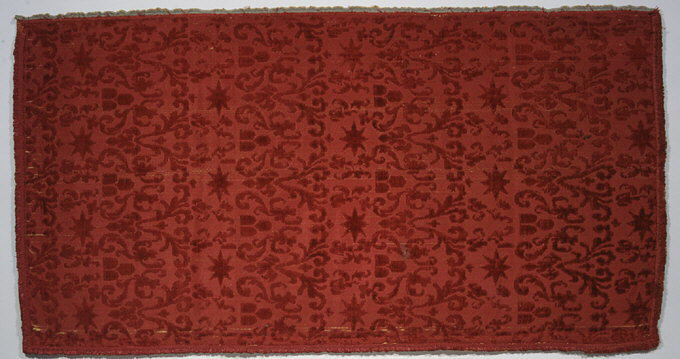
A Study in Silk: The Global Heritage Piece at Katherine Fashion Lab
In the rarefied world of haute couture, where innovation often masquerades as disruption, Katherine Fashion Lab has consistently distinguished itself by revering tradition while redefining its boundaries. The subject of this analysis—a singular piece crafted from silk, drawing upon a lexicon of global heritage—represents a masterclass in the synthesis of cultural memory and avant-garde technique. This is not a garment that merely adorns; it is a repository of narratives, a textile artifact that speaks to the fluidity of identity in a hyperconnected world.
The piece, conceived as a standalone study rather than part of a seasonal collection, demands a nuanced examination of its material, provenance, and conceptual underpinnings. Silk, the medium of choice, is both a historical constant and a contemporary challenge. Its production, from sericulture to weaving, has shaped economies and empires across Asia, the Middle East, and Europe. Katherine Fashion Lab’s deployment of silk is therefore a deliberate act of cultural archaeology, one that acknowledges the fiber’s legacy while subverting its traditional associations with fragility and opulence.
Materiality and Mastery: Silk as a Conduit for Global Heritage
The silk used in this piece is not a passive substrate but an active participant in the design narrative. The lab has sourced a rare, hand-reeled variety from a cooperative in the Mekong Delta, where artisans employ techniques passed down through generations. This choice is emblematic of a broader strategic pivot toward ethical provenance and micro-sourcing, aligning with the industry’s increasing demand for transparency. Yet, the fabric’s material properties—its tensile strength, its capacity for iridescence, its responsiveness to dye—are exploited with surgical precision.
The garment’s construction reveals a layered approach to global heritage. The base silhouette references the hanbok’s clean lines, while the asymmetrical draping evokes the sari’s fluidity. A hand-painted motif, executed in natural indigo and cochineal, draws from Indonesian batik patterns and Persian miniature florals, creating a visual dialogue that transcends geographic boundaries. This is not cultural appropriation but cultural translation—a rigorous study of form and meaning that respects each source while forging new syntax.
The technical execution is equally noteworthy. The silk has been treated with a proprietary enzyme wash that softens its hand while preserving its structural integrity, allowing for architectural folds that defy the material’s natural drape. This intervention, developed in collaboration with textile engineers, demonstrates how heritage materials can be recontextualized through modern science without erasing their intrinsic qualities. The result is a piece that feels both ancient and futuristic, a paradox that lies at the heart of Katherine Fashion Lab’s ethos.
Cultural Cartography: Mapping Identity Through Design
To analyze this piece solely as a fashion object would be to miss its deeper resonance as a cultural cartography. The garment’s construction mirrors the migratory paths of silk itself—from East to West, from ritual to commerce, from the sacred to the secular. Each seam, each pleat, each embroidered detail encodes a history of exchange and adaptation. The lab has openly cited the Silk Road as a conceptual framework, but not in the romanticized manner often seen in luxury branding. Instead, the piece interrogates the power dynamics embedded in that historical network: Who wove the silk? Who traded it? Who wore it?
This critical lens is most evident in the garment’s closure system. Traditional silk robes often relied on sashes or frogs, but here, the lab has employed a series of magnetic clasps inspired by Mongolian belt ornaments. The choice is deliberate: it disrupts the expected narrative of passive Eastern craftsmanship being “elevated” by Western design. Instead, it asserts a hybridized agency, where multiple heritages coexist without hierarchy. The clasps themselves are cast in recycled brass, etched with motifs that blend Uyghur geometrics and Art Deco symmetry—a subtle commentary on the colonial legacies that have shaped global fashion.
The piece also challenges the notion of “authenticity” in heritage design. By combining techniques and symbols from disparate cultures, Katherine Fashion Lab rejects the purist impulse to preserve traditions in amber. Instead, it proposes a living heritage—one that evolves through contact and reinterpretation. This is a sophisticated stance in an era where cultural sensitivity often translates into rigid boundaries. The lab’s approach suggests that true respect for heritage lies not in replication but in dialogue, in allowing the past to speak through the present.
Context and Consumption: The Standalone Study as Curatorial Statement
Presenting this piece as a standalone study rather than part of a collection is a curatorial decision with significant implications. It removes the garment from the commercial cycle of seasons and trends, positioning it instead as an object of contemplation—akin to a museum artifact or a limited-edition artwork. This strategy aligns with a growing movement in high fashion toward decommodification, where garments are valued for their intellectual and cultural capital rather than their marketability.
The study format also allows for a deeper engagement with the piece’s narrative. Accompanying the physical garment, Katherine Fashion Lab has produced a digital dossier that traces the provenance of each material, the biography of each artisan, and the historical references embedded in the design. This transparency is not merely a marketing tool but a pedagogical gesture, inviting the wearer and viewer to become co-investigators in the garment’s story. In an industry often criticized for obscuring its supply chains, this openness is a radical act.
From a consumer perspective, the standalone study targets a discerning clientele—collectors, curators, and connoisseurs who seek garments as investments in cultural knowledge. The price point, while undisclosed, is likely commensurate with the piece’s rarity and the labor involved. Yet, the value proposition extends beyond monetary worth. To own this piece is to participate in a conversation about global heritage, to carry a mobile archive of human creativity. It is, in essence, a wearable thesis.
Conclusion: The Future of Heritage in Haute Couture
Katherine Fashion Lab’s silk piece stands as a testament to the possibilities of couture when it is unmoored from commercial imperatives and tethered to intellectual rigor. By weaving together global heritage, material innovation, and critical discourse, the lab has created more than a garment—it has produced a model for how fashion can engage with the complexities of our interconnected world. The piece challenges us to see silk not as a relic of a bygone era but as a living thread, capable of connecting past and future, East and West, tradition and transformation. In doing so, it affirms that the most profound fashion is not about what we wear, but what we remember and reimagine.