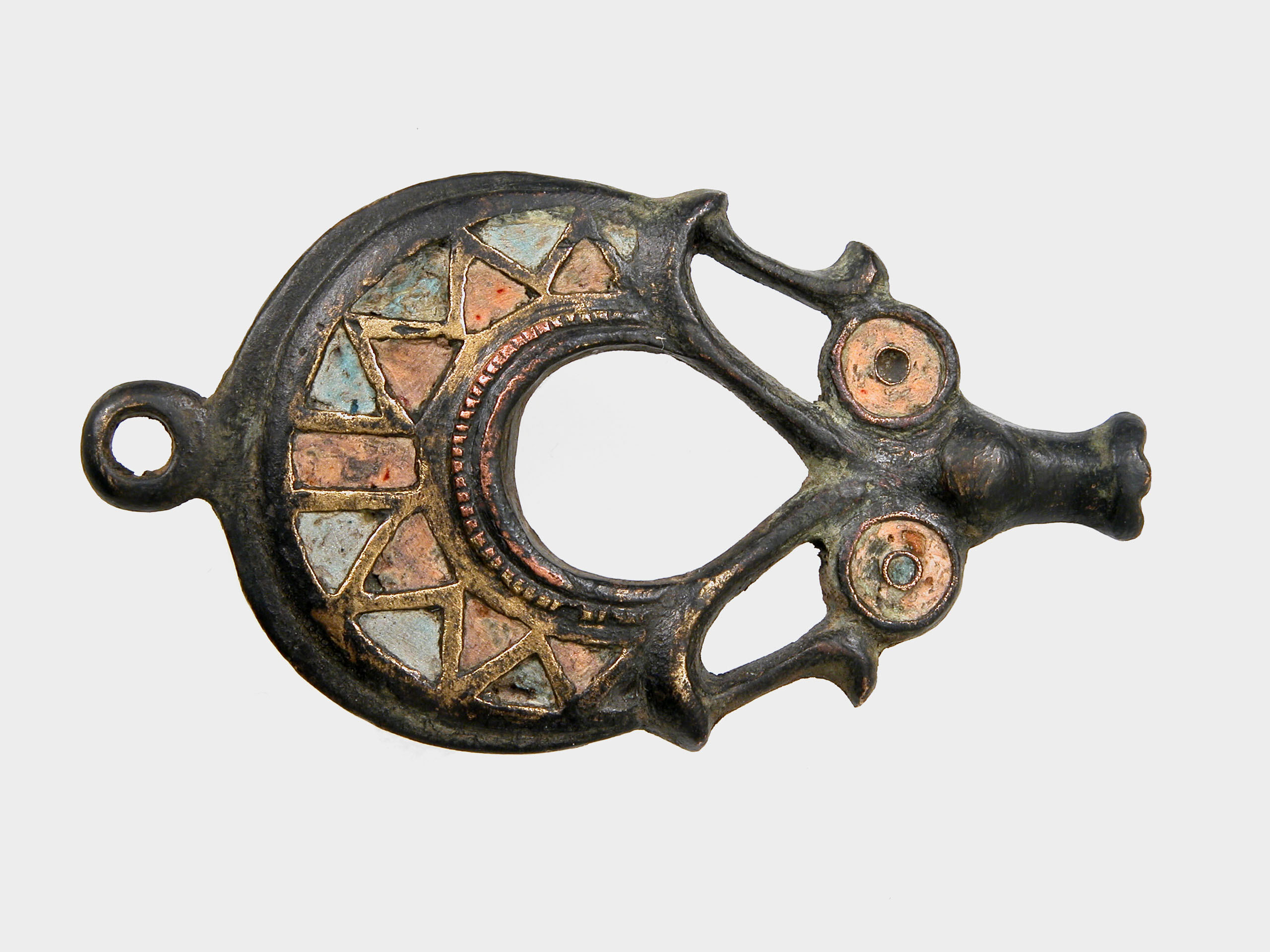
Heritage Analysis: The Roman Zoomorphic Brooch
As Lead Heritage Curator for Katherine Fashion Lab, I present this strategic standalone research on the Roman Zoomorphic Brooch, a copper alloy artifact adorned with champlevé enamel. This analysis examines its symbolic power, historical adornment practices, spiritual meaning, and provides actionable insights for a 2026 high-end luxury strategy. The brooch, dating from the 1st to 3rd century CE, represents a convergence of material craft, cultural identity, and metaphysical belief systems within the Roman Empire. Its zoomorphic form—often depicting animals such as lions, eagles, or hares—serves as a potent emblem of status, protection, and divine connection. For Katherine Fashion Lab, this artifact offers a blueprint for integrating heritage symbolism into contemporary luxury, appealing to discerning clientele seeking authenticity and narrative depth.
Symbolic Power in Roman Society
The zoomorphic brooch was not merely decorative; it was a deliberate statement of power. In Roman culture, animals were imbued with specific symbolic meanings derived from mythology, military conquest, and imperial propaganda. For instance, the eagle (aquila) symbolized Jupiter, the supreme deity, and was a standard for Roman legions, representing authority and victory. A brooch in this form would signal the wearer’s allegiance to the state or military elite, reinforcing hierarchical structures. Similarly, the lion evoked strength and courage, often associated with Hercules or the goddess Cybele, while the hare symbolized fertility and speed, linked to Venus. The choice of animal thus communicated the wearer’s social role, aspirations, or protective needs.
This symbolic power was amplified by the materiality of the brooch. Copper alloy, a durable and accessible metal, was often used for military and civilian adornment, while champlevé enamel—where colored glass paste was fused into recessed cells—added vivid hues of red, blue, green, and yellow. These colors were not arbitrary; red symbolized Mars and military might, blue evoked the heavens and divine favor, and green represented fertility and renewal. The interplay of form and color created a talismanic object that transcended mere ornamentation, embedding the wearer within a cosmic order. For Katherine Fashion Lab, understanding this layered symbolism is critical: a 2026 luxury strategy must not replicate forms but reinterpret their semiotic power through modern materials and narratives.
Historical Adornment: Function and Fashion
In Roman society, brooches (fibulae) served both utilitarian and aesthetic purposes. They fastened garments such as tunics, cloaks, and military uniforms, but their design and placement denoted rank, wealth, and cultural affiliation. The zoomorphic brooch, often worn at the shoulder or chest, was a focal point of personal presentation. Archaeological evidence from sites like Vindolanda and Pompeii suggests that such brooches were common among soldiers, traders, and provincial elites, reflecting a blend of Roman and local traditions. The champlevé technique, originating from Celtic and Gallic influences, highlights the syncretism of the Roman Empire, where conquered peoples contributed to imperial material culture.
The brooch’s size—typically 3-6 cm—was calibrated for visibility without overwhelming the garment. Its enamel colors, preserved in remarkable condition due to the durability of glass, indicate careful craftsmanship. Artisans employed meticulous layering and firing processes to achieve vibrant, long-lasting surfaces. This attention to detail elevated the brooch from a functional item to a luxury good, accessible primarily to those with disposable income. For Katherine Fashion Lab, this historical precedent underscores the importance of craftsmanship and exclusivity. In 2026, high-end luxury clients seek objects that tell stories of skill and provenance, not just visual appeal. The brooch’s legacy suggests that heritage-inspired pieces should emphasize artisanal techniques—such as enamel work or metal casting—to justify premium pricing and foster emotional connection.
Spiritual Meaning and Protective Function
Beyond social status, the zoomorphic brooch held profound spiritual significance. Romans practiced a polytheistic religion where animals were intermediaries between humans and gods. Wearing an animal-form brooch was believed to invoke the protection and attributes of that creature’s associated deity. For example, a brooch depicting a wolf might channel the martial ferocity of Mars, while a dolphin invoked Neptune’s guidance over seas and journeys. This apotropaic function—warding off evil—was especially common among soldiers and travelers, who faced constant physical danger. The brooch thus served as a portable shrine, a tangible link to the divine.
Champlevé enamel intensified this spiritual dimension. The glass-like surface was thought to capture and reflect light, symbolizing divine radiance. Colors like blue and yellow were associated with the sky and sun gods, respectively, while red and green evoked earthly and chthonic forces. The brooch’s placement on the body—near the heart or collarbone—aligned it with life force and breath, reinforcing its role as a spiritual anchor. For modern luxury consumers, this spiritual layer offers a compelling narrative of protection, identity, and transcendence. Katherine Fashion Lab can leverage this by positioning zoomorphic motifs as amulets for contemporary challenges—such as digital overload or environmental anxiety—framing them as symbols of resilience and inner strength.
2026 High-End Luxury Strategy: Heritage as Competitive Advantage
To translate this heritage into a 2026 luxury strategy, Katherine Fashion Lab must adopt a three-pronged approach: narrative curation, material innovation, and experiential marketing. First, narrative curation involves developing a brand lexicon around zoomorphic symbolism. Each brooch design should be accompanied by a story linking its animal to Roman mythology, historical use, and modern relevance. For instance, a lion brooch could be marketed as “The Guardian,” evoking courage in leadership, while an eagle brooch becomes “The Visionary,” symbolizing clarity and ambition. This storytelling must be authentic, avoiding cultural appropriation by crediting Roman origins and collaborating with historians or archaeologists.
Second, material innovation must honor the champlevé tradition while pushing boundaries. Katherine Fashion Lab can commission contemporary artisans to recreate the enamel process using sustainable, non-toxic materials, such as recycled glass or bio-resins. The copper alloy base can be upgraded to recycled brass or gold-plated silver, aligning with eco-luxury trends. Limited-edition brooches, produced in small batches (<100 units), would enhance exclusivity. Each piece should include a certificate of authenticity with details on the artisan, materials, and symbolic meaning, appealing to collectors and heritage enthusiasts.
Third, experiential marketing should immerse clients in the Roman context. Pop-up exhibitions at flagship stores could display original artifacts (on loan from museums) alongside Katherine Fashion Lab’s reinterpretations. Virtual reality (VR) experiences might transport clients to a Roman forum or battlefield, showing how the brooch was worn and perceived. Collaborations with luxury travel brands could offer curated tours of Roman sites, where clients wear their brooches as talismans. This strategy builds a community around heritage, fostering loyalty and word-of-mouth advocacy.
Finally, pricing should reflect the brooch’s dual value: as a historical artifact and a modern luxury item. A starting price of $2,500–$5,000 per piece positions it within the accessible luxury tier, while limited editions with rare gemstones or intricate enamel patterns can reach $15,000+. This pricing aligns with consumer willingness to pay for authenticity, craftsmanship, and narrative. Katherine Fashion Lab should also consider a subscription model for heritage collectors, offering annual releases tied to specific Roman deities or animals, creating anticipation and repeat engagement.
Conclusion: A Timeless Symbol for a Modern Era
The Roman Zoomorphic Brooch is more than an archaeological curiosity; it is a testament to the enduring human need for symbolism, protection, and beauty. For Katherine Fashion Lab, this artifact provides a strategic foundation for a 2026 luxury line that honors the past while innovating for the future. By focusing on symbolic power, historical adornment, and spiritual meaning, the brand can differentiate itself in a crowded market, appealing to clients who seek depth and purpose in their purchases. The brooch’s legacy—crafted from copper alloy and champlevé enamel—reminds us that true luxury is not about excess, but about meaning. As we move toward 2026, let this heritage guide our designs, narratives, and experiences, ensuring that Katherine Fashion Lab remains a curator of timeless elegance and cultural resonance.