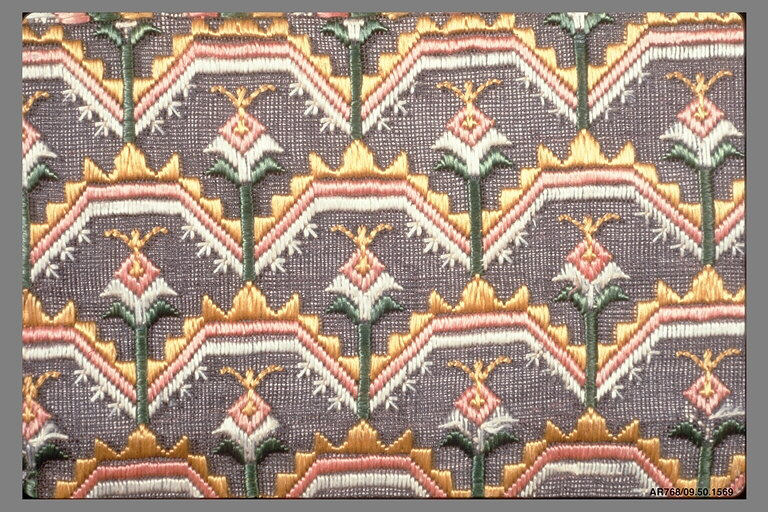
The Fragment as a Complete Narrative: Deconstructing Global Heritage at Katherine Fashion Lab
In the rarefied echelons of haute couture, the concept of the “fragment” is often dismissed as an incomplete gesture—a remnant of a larger, more coherent whole. Yet, at Katherine Fashion Lab, the fragment is not a vestige but a thesis. The latest standalone study from the lab, titled simply “Fragment,” challenges the very ontology of couture construction. By drawing from a wellspring of Global Heritage and employing a triad of ethereal materials—embroidered net, buratto, and silk—the lab proposes that a fragment is not a broken piece of a garment, but a garment that is complete in its incompleteness. This analysis deconstructs how Katherine Fashion Lab elevates the fragment from a structural afterthought to a philosophical cornerstone, weaving a narrative that is both geographically expansive and intimately personal.
Material Lexicon: Embroidered Net, Buratto, and Silk as Archival Voices
The choice of materials in this study is neither arbitrary nor purely aesthetic; each fabric serves as a historical document. The embroidered net, often associated with 19th-century European lacemaking, is here recontextualized. The lab employs a technique that mimics the punto in aria (stitch in the air) methodology, where threads are suspended without a ground fabric. The net becomes a scaffold for memory, its openwork suggesting absence—a deliberate void that invites the viewer to fill in the missing narrative. The embroidery itself is not floral or figurative in the traditional sense; instead, it features abstract, geometric motifs reminiscent of nomadic textile patterns from Central Asia and the Silk Road. This fusion renders the net a map of trade routes, a cartography of cultural exchange rendered in thread.
Buratto, a coarse, open-weave linen fabric historically used for sieving flour or as a base for needlepoint lace, is resurrected here with a radical purpose. In the hands of Katherine Fashion Lab, buratto is not a humble support but a primary text. Its grid-like structure is deliberately left visible in key areas, creating a tension between the raw, unadorned warp and weft and the intricate, dense embroidery that overtakes other sections. This juxtaposition speaks to the fragment’s dual nature: the buratto represents the foundational, the unrefined, the potential—while the embroidery signifies the realized, the decorative, the memory. The lab treats buratto as a palimpsest, where earlier layers of global craft traditions are visible beneath the surface of contemporary couture.
The silk employed is a heavy, double-faced charmeuse with a liquid sheen that catches light in unpredictable ways. Unlike the transparency of the net or the roughness of the buratto, the silk provides a solid, sensual counterpoint. It is used sparingly—as lining for a single sleeve, as a panel that falls from the shoulder like a fragment of a kimono, or as a train that is abruptly cut off, unfinished. This silk is not merely a fabric but a fragment of a garment from an imagined past. Its presence suggests a lost robe, a ceremonial garment dissected and reassembled in a new, incomplete form. The lab’s choice to leave the silk’s edges raw, fraying slightly, reinforces the idea that couture is not about perfection but about the honest presentation of time and wear.
Global Heritage as a Fragmented Archive
The “Global Heritage” origin of this study is not a superficial borrowing of motifs from disparate cultures. Instead, Katherine Fashion Lab approaches heritage as a fragmented archive—a collection of broken narratives that must be reconstructed through material and form. The lab’s research draws from three primary sources: the Mughal miniature tradition, where figures are often depicted in partial profiles or behind architectural screens; the Japanese boro practice of patching and mending textiles, where fragments of indigo-dyed cloth are stitched together to create a new whole; and the West African kente weaving, where strips of fabric are sewn side-by-side, creating a visual rhythm of repetition and variation.
In “Fragment,” these influences are not replicated but synthesized. A single bodice might feature a panel of embroidered net that echoes the intricate floral borders of a Mughal shawl, while the adjacent buratto section is stitched with a pattern derived from kente’s weft-faced stripes. The silk panel, hanging asymmetrically, recalls the obi of a kimono but is cut in a Western architectural silhouette. The result is a garment that is simultaneously from everywhere and nowhere—a fragment of a global conversation that has no single origin point. The lab argues that heritage, in the 21st century, is inherently fragmented; we can only access it through partial, mediated glimpses. The garment becomes a museum of these glimpses, each fragment a curated artifact.
Structural Innovation: The Incomplete Silhouette
From a structural standpoint, “Fragment” abandons the traditional couture principles of symmetry, closure, and finish. The garments in this study are deliberately unfinished. Seams are left open in strategic places, revealing the interior construction—the horsehair braid, the boning channels, the hand-stitched felled seams. This is not a sign of carelessness but a deliberate exposure of the garment’s skeleton. The fragment, in this context, is the revealed process. The lab’s design team has created pieces that are meant to be seen from the inside out, as if the wearer has been caught mid-dressing, or as if the garment has been partially deconstructed by time.
The silhouette itself is fragmented. A jacket might have one fully constructed sleeve and one that is merely a scaffolding of buratto and net, transparent and skeletal. A skirt may fall to the floor on one side and end abruptly at the knee on the other, with raw edges left unhemmed. This asymmetry is not arbitrary; it is a visual representation of the incomplete archive. The wearer is not fully dressed in the conventional sense; they are dressed in a narrative that is still being written. The lab’s pattern-cutting employs a technique of subtractive tailoring, where fabric is removed rather than added, creating negative spaces that frame the body. These voids are as important as the filled areas, echoing the open spaces of the embroidered net and the buratto’s grid.
Philosophical Implications: The Fragment as a Complete Statement
What Katherine Fashion Lab achieves with “Fragment” is a radical redefinition of completion. In the context of global heritage and the materials chosen, the fragment becomes a total statement. The incomplete sleeve, the raw edge, the visible interior—these are not flaws but intentional acts of truth-telling. The lab posits that all couture, indeed all clothing, is a fragment of a larger cultural and temporal context. We cannot wear the entirety of a civilization’s textile history; we can only wear a piece of it. By embracing this limitation, the lab transforms the fragment from a liability into a strength.
Furthermore, the study challenges the fetishization of the “finished” garment in luxury fashion. In an industry obsessed with perfection, “Fragment” celebrates the beauty of the partial. It suggests that memory itself is fragmentary—we remember moments, not entire lifetimes. The embroidered net holds a memory of a Mughal garden; the buratto holds a memory of a West African loom; the silk holds a memory of a Japanese ceremony. Together, these fragments do not form a coherent whole but a collage of moments that is more honest than any seamless, perfectly finished gown could ever be.
Conclusion: A New Couture Lexicon
Katherine Fashion Lab’s “Fragment” is not a collection of garments but a lexicon—a new vocabulary for how couture can engage with history, material, and form. By grounding the study in the tactile realities of embroidered net, buratto, and silk, and by drawing from a Global Heritage that is acknowledged as inherently fragmented, the lab has produced work that is both intellectually rigorous and emotionally resonant. The fragment, in their hands, is no longer a piece of something else; it is a complete thing in itself, a testament to the power of the unfinished, the partial, and the remembered. In a world that demands completeness, Katherine Fashion Lab argues for the profound eloquence of the fragment. This is couture as archaeology, as poetry, as an honest reckoning with the fact that we are all, in the end, fragments of the stories we inherit.