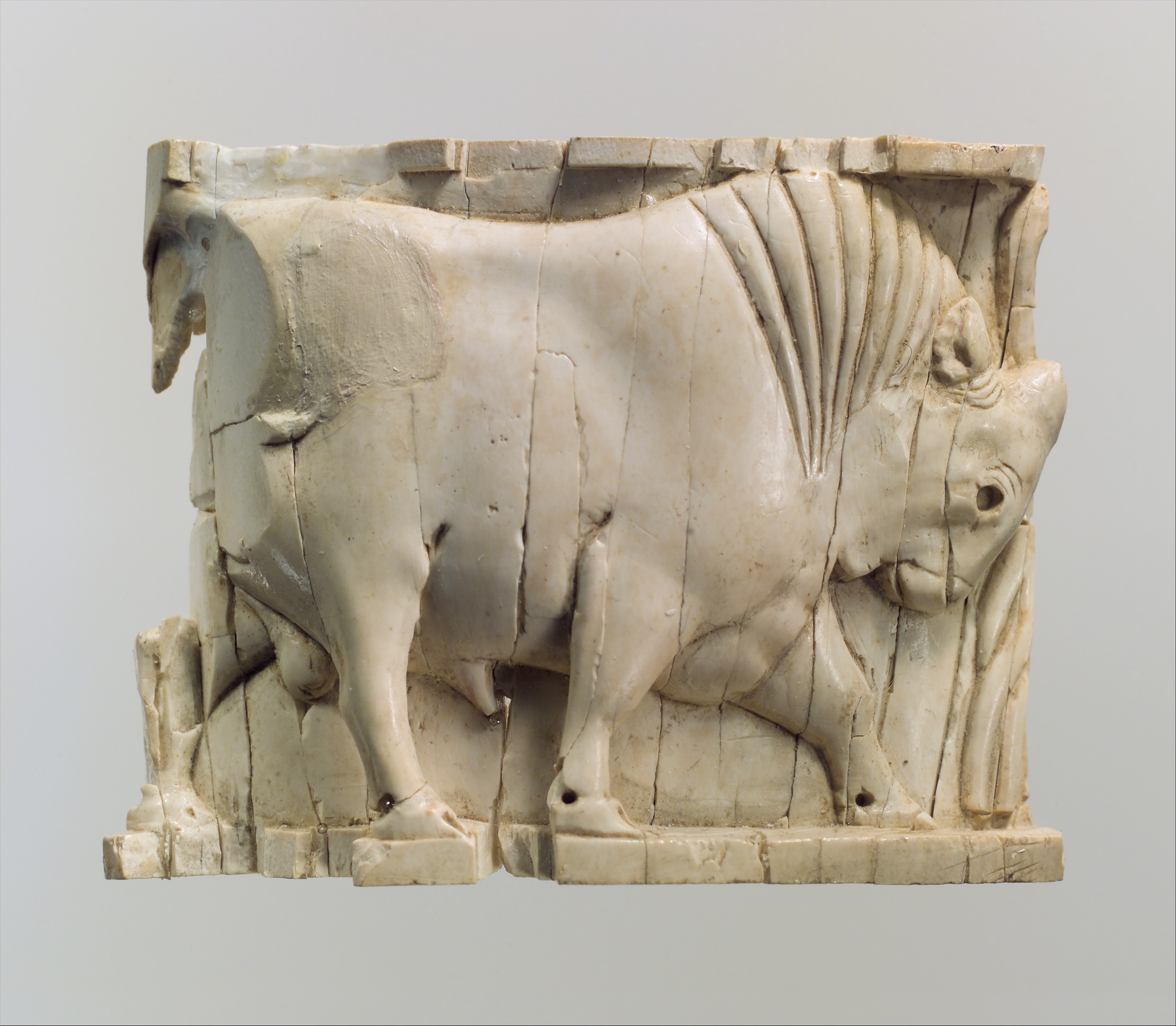
Heritage Analysis: Assyrian Ivory Plaque with a Striding Bull
Introduction: The Object as a Nexus of Power and Adornment
The carved ivory plaque depicting a striding bull, originating from the Assyrian Empire (circa 9th–7th century BCE), represents a masterwork of ancient craftsmanship and symbolic communication. Measuring approximately 10–15 centimeters in height, this relief was originally affixed to a furniture or cosmetic box, likely within a royal or elite household. As a portable luxury item, it served not merely as decoration but as a talisman of authority, a declaration of spiritual alignment, and a marker of refined taste. For Katherine Fashion Lab, this artifact offers a profound template for understanding how material culture encodes power, beauty, and transcendence—insights directly translatable into a 2026 high-end luxury strategy that prioritizes narrative depth, symbolic resonance, and artisanal integrity.
Symbolic Power: The Bull as Imperial and Cosmic Authority
The striding bull in Assyrian iconography is far more than a zoological representation. It is a deliberate emblem of divine kingship and terrestrial dominance. The bull was associated with the god Adad, the deity of storms and fertility, and with the king himself, who was often depicted as a bull-like figure in royal inscriptions. The striding posture—muscular, forward-moving, head held high—conveys unassailable momentum and unrelenting power. In the context of a cosmetic box, this symbolism was intimate yet potent: the owner, through daily use, would invoke the bull’s attributes of virility, protection, and authority. For a luxury brand, this demonstrates that objects of personal adornment can carry strategic symbolism. A 2026 collection might feature motifs of the striding bull on accessories or packaging, not as mere decoration but as a signature emblem of resilience and leadership—qualities highly valued in contemporary high-end consumers who seek products that amplify their own agency.
Historical Adornment: Ivory as a Material of Prestige and Exchange
Ivory in the Assyrian context was a hyper-luxury material, sourced from African elephants or Syrian elephants (now extinct) and traded across vast networks from Egypt, Phoenicia, and the Levant. The material’s rarity, its luminous, warm patina, and its capacity for intricate carving made it a status marker par excellence. The plaque’s function as a furniture or cosmetic box fitting further underscores that adornment was not limited to the body; it extended to the objects of daily ritual. The cosmetic box, likely containing oils, kohl, or perfumes, was itself an instrument of beautification and social presentation. This intersection of adornment, ritual, and material value is directly relevant to Katherine Fashion Lab’s strategy. In 2026, the brand could revive the ethos of “adornment as environment” by creating limited-edition luxury storage pieces—cabinetry, vanity boxes, or display cases—that echo the Assyrian practice of embedding symbolic art into functional luxury. The use of sustainable, ethically sourced alternatives to ivory (such as tagua nut, bone, or resin) would align with modern ethical standards while preserving the narrative of precious materiality.
Spiritual Meaning: The Bull as Guardian and Mediator
Beyond political symbolism, the striding bull held deep spiritual significance. In Assyrian cosmology, the bull was a protective figure, often placed at gateways or on furniture to ward off evil spirits. The bull’s association with the moon god Sin and the earth’s fertility linked it to cycles of renewal and protection. For the owner of the cosmetic box, the bull plaque would serve as a personal guardian during intimate rituals of grooming and adornment—transforming the act of beautification into a sacred practice. This spiritual dimension offers a powerful framework for luxury branding in an era where consumers seek meaning beyond materialism. Katherine Fashion Lab could integrate this concept by developing a “Guardian Collection” for 2026, where each piece (jewelry, scarves, or accessories) features the striding bull motif as a talisman. Marketing narratives could emphasize the theme of protection and inner strength, positioning the collection as armor for the modern individual navigating a volatile world. The use of ritualized packaging—such as a box that opens in a specific manner, accompanied by a card explaining the bull’s spiritual role—would deepen the consumer’s emotional connection.
2026 High-End Luxury Strategy: Translating Heritage into Contemporary Desire
To leverage this Assyrian heritage for a 2026 luxury strategy, Katherine Fashion Lab must adopt a multilayered approach that respects historical authenticity while meeting modern consumer expectations for exclusivity, storytelling, and sustainability.
1. Artisanal Collaboration and Material Innovation
Partner with master carvers from regions with living traditions of ivory or bone carving (e.g., Italy, India, or Japan) to create limited-edition pieces that reinterpret the striding bull in materials like fossilized mammoth ivory, sustainable tagua, or high-fired porcelain. The narrative of “ancient technique meets modern ethics” will resonate with discerning buyers. Each piece would be numbered and accompanied by a certificate of provenance and craftsmanship, elevating it from commodity to collectible art.
2. Symbolic Motif Integration Across Product Categories
The striding bull should not be a one-off design but a recurring brand signature. Apply the motif to leather goods (embossed on handbags or belts), silk scarves (as a central pattern), and jewelry (as a pendant or cufflink). The bull’s posture—forward, dynamic, confident—can be stylized into a geometric logo that appears on packaging, digital assets, and store interiors. This creates a visual language of power and movement that is instantly recognizable.
3. Experiential Retail and Storytelling
Develop an immersive retail experience that recreates the context of an Assyrian palace or temple. Use scent (frankincense, cedar), sound (low drumming, wind), and tactile materials (stone, wood, velvet) to transport the customer. A dedicated “Heritage Wall” could display a replica of the plaque alongside a digital narrative of its history, symbolism, and the carving process. This transforms shopping into curatorial discovery and positions Katherine Fashion Lab as a custodian of cultural memory.
4. Strategic Pricing and Exclusivity
Position the “Striding Bull Collection” at the ultra-high-end tier, with prices reflecting the rarity of materials and the labor intensity of carving. Offer bespoke commissions for VIP clients—a service that allows them to choose the material, size, and placement of the bull motif on a custom piece. This taps into the desire for personalization and ownership of heritage, a key driver in the 2026 luxury market where uniqueness is paramount.
5. Digital and Social Media Narrative
Launch a multimedia campaign titled “The Striding Bull: Power in Motion.” Use short films, interviews with art historians and carvers, and behind-the-scenes content to educate and inspire. Encourage user-generated content by inviting customers to share how the bull motif empowers them—transforming the brand into a community of strength and beauty.
Conclusion: The Bull as a Blueprint for Timeless Luxury
The Assyrian ivory plaque with a striding bull is not a relic of a dead civilization but a living blueprint for how luxury can embody power, spirituality, and artisanal mastery. For Katherine Fashion Lab, this artifact offers a strategic foundation for a 2026 collection that is both historically grounded and forward-looking. By honoring the bull’s symbolic depth, the material’s prestige, and the ritual function of adornment, the brand can create products that are not merely beautiful but meaningful artifacts for a new generation of luxury consumers. In an era of fleeting trends, the striding bull stands as a testament to enduring strength—a quality that defines the highest echelons of luxury.