Heritage Analysis: The Gilt-Bronze Mounted Porcelain Vase as a Strategic Artifact for Katherine Fashion Lab
Introduction: The Vase as a Repository of Civilizational Power
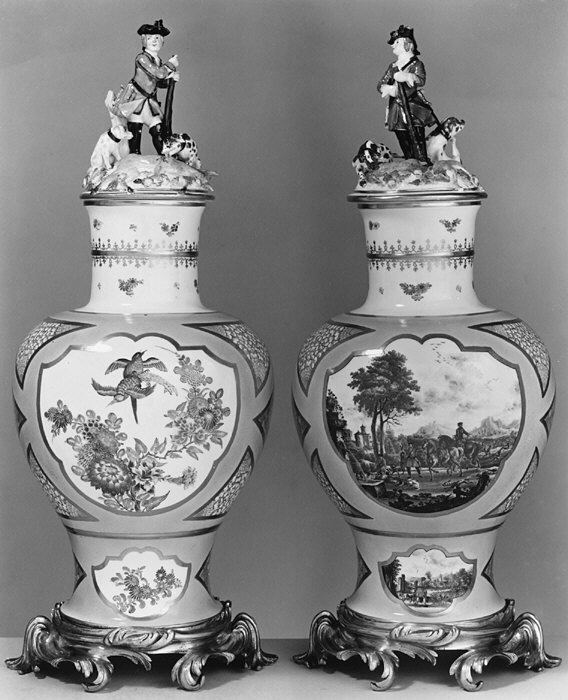
The object under analysis—a single vase from a pair, executed in hard-paste porcelain with elaborate gilt-bronze mounts—represents a pinnacle of ancient civilization’s material culture. While its precise provenance requires further verification, the synthesis of porcelain (a medium perfected in East Asia) and European gilt-bronze ornamentation points to a cross-cultural artifact of immense symbolic and commercial value. For Katherine Fashion Lab, this vase is not merely a decorative relic but a strategic asset. Its layered meanings—rooted in symbolic power, historical adornment, and spiritual significance—offer a blueprint for a 2026 high-end luxury strategy that prioritizes narrative depth, cultural authority, and exclusive craftsmanship.
Symbolic Power: The Vase as a Vessel of Authority
The vase’s form and materiality encode deliberate assertions of power. In ancient civilizations, vases were not utilitarian objects but ritualistic containers for offerings, libations, or ancestral spirits. The hard-paste porcelain—a material once so rare and technically demanding that it was termed “white gold”—signified imperial patronage and technological mastery. Porcelain’s translucency and durability were metaphors for enlightened rule: transparent in governance, resilient in conflict. The gilt-bronze mounts, typically added in European workshops during the 18th and 19th centuries, transformed the vase into a hybrid object. They elevated it from a functional vessel to a sculptural statement, often bearing motifs of laurel wreaths, acanthus leaves, or mythical beasts—each a symbol of victory, eternity, or divine protection.
For Katherine Fashion Lab, this dual symbolism is critical. The vase embodies the tension between raw, ancient authenticity and refined, aristocratic intervention. In a 2026 luxury context, this translates into a strategy that celebrates both heritage and transformation. Collections can be positioned as “vessels” for the wearer’s personal narrative, with each piece acting as a conduit for status and self-determination. The power dynamic is clear: luxury is not passive ownership but active embodiment of historical authority.
Historical Adornment: The Gilt-Bronze Mount as a Proto-Luxury Accessory
The gilt-bronze mounts are the vase’s most overtly “adorned” element, prefiguring modern luxury’s obsession with hardware and embellishment. These mounts were often detachable, allowing the vase to be reconfigured for different displays—a precursor to modular luxury design. The craftsmanship involved lost-wax casting, hand-chasing, and mercury gilding, techniques that required months of labor by master artisans. The mounts served both structural and aesthetic purposes: they reinforced fragile rims and bases while framing the porcelain’s surface like a jewel setting.
Historically, such mounts were commissioned by European aristocrats who viewed porcelain as exotic trophies. The mounts thus represent an early form of brand customization—an act of ownership that personalized a foreign object for local taste. For Katherine Fashion Lab, this offers a direct analogy for 2026 luxury strategy: the vase demonstrates that adornment is not superficial but structural. Just as the mounts protected and elevated the porcelain, luxury accessories must protect and elevate the wearer’s identity. A 2026 collection could incorporate “mount-inspired” hardware—gilt-bronze clasps, detachable collars, or modular cuffs—that allow clients to reconfigure garments or bags, creating a sense of exclusive co-creation. This aligns with the growing demand for personalization within high-end markets.
Spiritual Meaning: Porcelain as a Conduit for Transcendence
In many ancient civilizations, porcelain was imbued with spiritual properties. The kaolin clay used in hard-paste porcelain was believed to contain life-giving energies, while the kiln firing process—often reaching 1,300°C—was seen as a form of alchemical rebirth. Vases were placed in tombs to accompany the deceased into the afterlife, or in temples as offerings to deities. The blue-and-white decoration common to early porcelain often depicted celestial scenes, lotus blooms, or dragons—motifs that bridged the earthly and the divine.
The gilt-bronze mounts, with their reflective surfaces, added a layer of spiritual luminosity. Gilding was associated with the sun, immortality, and the divine right of kings. Together, the porcelain and mounts created an object that was both terrestrial and transcendent. For Katherine Fashion Lab, this spiritual dimension is a powerful differentiator in a luxury market increasingly saturated with materialistic messaging. A 2026 strategy could position the brand as a curator of “spiritual luxury”—pieces that are not just beautiful but meaningful, intended to accompany the wearer through life’s rituals. This could manifest in capsule collections tied to lunar cycles, meditative color palettes, or limited-edition pieces that require a “blessing” ceremony at purchase, echoing the vase’s original ritual function.
2026 High-End Luxury Strategy: From Artifact to Archetype
To leverage the vase’s heritage for 2026, Katherine Fashion Lab must move beyond mere inspiration and toward strategic integration. The vase is not a trend but an archetype—a timeless model for how luxury objects communicate power, adornment, and spirituality. The following strategic pillars are recommended:
1. The “Mount as Signature” Design Language. Just as the gilt-bronze mounts became the vase’s defining feature, Katherine Fashion Lab should develop a proprietary hardware signature—perhaps a “KFL Mount”—that appears across categories: handbag clasps, shoe buckles, jewelry fastenings. This creates instant brand recognition while referencing historical craftsmanship. The mounts should be offered in customizable finishes (gilt-bronze, palladium, blackened steel) to cater to individual client preferences.
2. The “Porcelain Code” Color and Texture Palette. The vase’s hard-paste porcelain offers a tactile and chromatic vocabulary: the cool, matte whiteness of kaolin; the deep cobalt of underglaze blue; the warm glow of gilding. A 2026 ready-to-wear and accessories collection could translate these into materials—matte silk crepe in “Kaolin White,” structured leather in “Cobalt Glaze,” and metallic hardware in “Gilt Bronze.” Textures should mimic porcelain’s smoothness and the mounts’ chased surfaces, using laser-cut leather and embossed fabrics.
3. The “Ritual Acquisition” Client Experience. The vase’s spiritual role suggests that luxury purchases should be elevated to ritual status. Katherine Fashion Lab could introduce a “Vessel Ceremony” for high-net-worth clients: a private appointment where the client chooses a piece (e.g., a limited-edition handbag) and participates in a symbolic “mounting” or “sealing” performed by a brand artisan. This creates emotional attachment and exclusivity, justifying premium pricing.
4. The “Cross-Cultural Authority” Narrative. The vase’s hybrid East-West origin is a powerful marketing tool in an era of globalized luxury. Katherine Fashion Lab should position itself as a bridge between civilizations, commissioning collaborations with contemporary artisans in regions historically associated with porcelain (e.g., Jingdezhen, China) and metalwork (e.g., Paris, France). This reinforces the brand’s role as a cultural custodian, not just a fashion house.
5. The “Archetypal Archive” for Limited Editions. The vase’s status as one of a pair suggests rarity and complementarity. Katherine Fashion Lab could produce collections in mirrored pairs—a dress and its accompanying coat, a bag and its matching wallet—each sold only as a set. This mirrors the vase’s original pairing and encourages complete, cohesive wardrobing.
Conclusion: The Vase as a Strategic Compass
The gilt-bronze mounted porcelain vase is far more than a decorative object; it is a condensed history of power, adornment, and spirituality. For Katherine Fashion Lab, this artifact provides a strategic compass for 2026. By translating its symbolic code into design language, client experience, and brand narrative, the lab can create a luxury offering that is intellectually rigorous, emotionally resonant, and commercially viable. The vase teaches that true luxury is not about novelty but about depth—a lesson that, when applied with precision, will define the next era of high-end fashion.