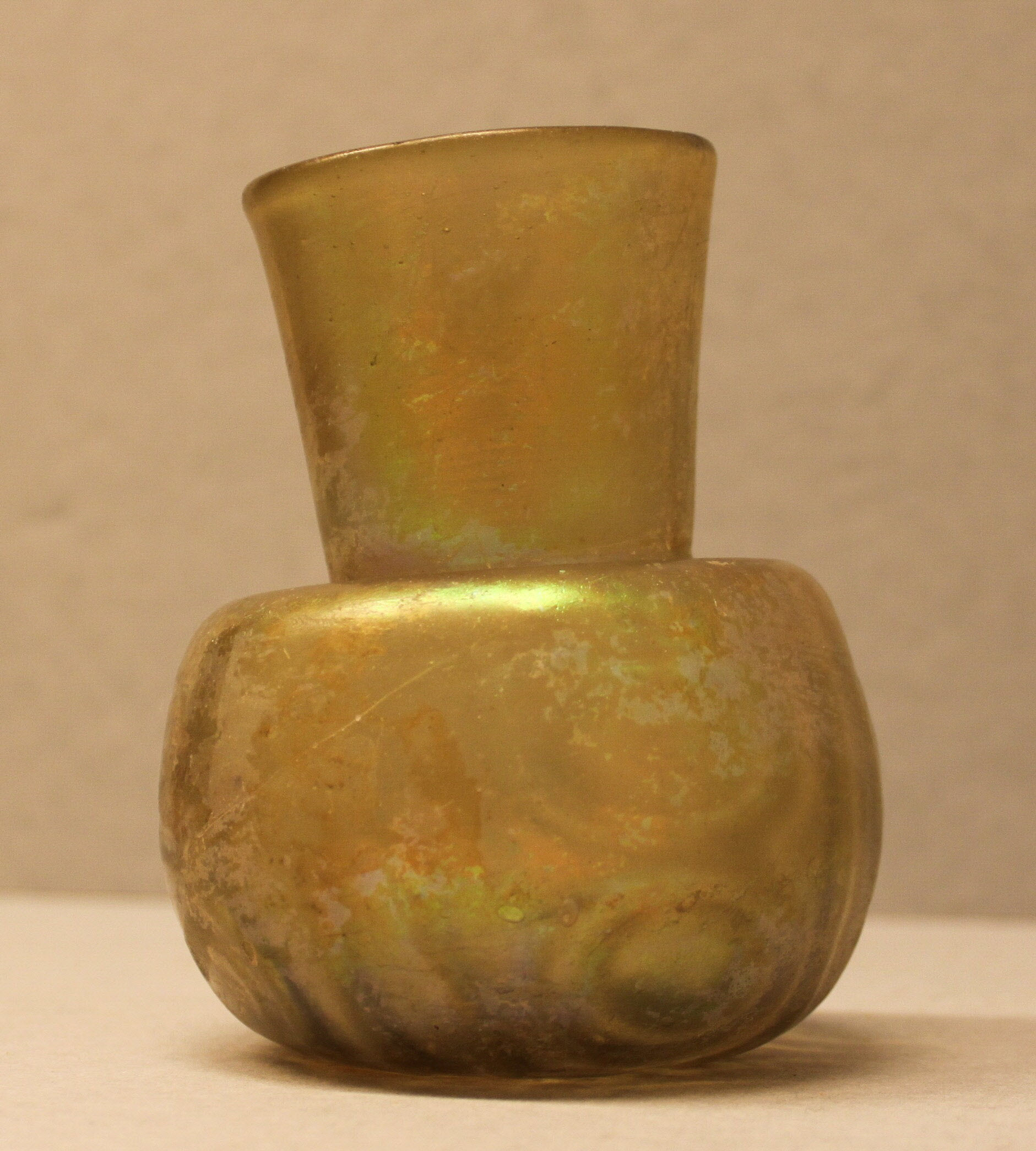
Heritage Analysis: The Mold-Blown Glass Bottle in Ancient Civilization
As Lead Heritage Curator for Katherine Fashion Lab, I present this strategic standalone research on the mold-blown glass bottle from ancient civilization. This artifact, rendered in glass through the innovative mold-blown technique, serves as a profound lens for understanding symbolic power, historical adornment, and spiritual meaning. The analysis culminates in a forward-looking luxury strategy for 2026, aligning heritage with high-end market aspirations.
Symbolic Power of the Glass Bottle in Ancient Context
The mold-blown glass bottle, emerging around the 1st century BCE in the Roman and Syro-Palestinian regions, was far more than a utilitarian vessel. Its symbolic power derived from the transformative nature of glass itself—a material created from sand and fire, representing alchemical change and human mastery over nature. In ancient civilizations, the bottle was a container of precious substances: perfumes, oils, and wines, which were often associated with status, ritual, and commerce. The mold-blown technique allowed for intricate designs—such as mythological scenes, geometric patterns, or animal motifs—that elevated the bottle from a simple storage item to a symbol of wealth and sophistication. For Katherine Fashion Lab, this symbolic power translates into a brand narrative of transformation and exclusivity. In 2026, a luxury strategy can leverage this by positioning the bottle as a metaphor for the brand’s ability to contain and preserve intangible values—heritage, craftsmanship, and rarity—within a tangible, exquisite form. The bottle’s power lies in its duality: it holds substance while projecting image, much like a luxury brand that must balance product quality with aspirational storytelling.
Historical Adornment and Aesthetic Legacy
Historically, the mold-blown glass bottle served as an object of adornment, both for the body and the domestic space. In ancient Rome, small glass bottles (unguentaria) were used to hold perfumed oils and were often buried with the deceased, signifying their role in life and afterlife adornment. The mold-blown technique enabled mass production of intricate shapes, such as date-shaped, head-shaped, or amphora-style bottles, which were prized for their aesthetic appeal. These bottles were not merely functional; they were displayed in homes, carried during ceremonies, and gifted as tokens of affection or alliance. For Katherine Fashion Lab, this historical adornment offers a rich design vocabulary. The 2026 luxury strategy can draw from the geometric precision and organic curves of ancient mold-blown bottles, incorporating these motifs into jewelry, accessories, or packaging. The bottle’s role as an adornment object suggests that luxury items must transcend utility to become wearable art. By referencing ancient glassware, the brand can position its collections as modern heirlooms—objects that adorn the body while carrying centuries of aesthetic legacy. This approach appeals to high-end consumers who seek narrative depth and historical resonance in their purchases.
Spiritual Meaning and Ritualistic Significance
The spiritual meaning of the mold-blown glass bottle in ancient civilization cannot be overstated. Glass was associated with purity, light, and divine intervention. In Egyptian, Roman, and Near Eastern cultures, glass bottles were used in religious rituals to hold sacred oils, incense, or water from holy springs. The transparency of glass symbolized spiritual clarity and the ability to see beyond the material world. Mold-blown bottles often featured religious iconography, such as the Eye of Horus, Dionysian vines, or Christian crosses in later periods, reinforcing their role as conduits between the earthly and the divine. For Katherine Fashion Lab, this spiritual dimension offers a powerful branding tool. In 2026, a luxury strategy can incorporate themes of sacred containment and luminous purity. Products could be designed to evoke the ritualistic experience—unboxing a perfume bottle that recalls an ancient unguentarium, or wearing a pendant shaped like a mold-blown vessel. The spiritual meaning also suggests that luxury consumption can be a form of modern ritual, where the act of acquiring and displaying a high-end item becomes a moment of personal significance. The bottle’s transparency can be metaphorically linked to brand authenticity, appealing to consumers who value ethical sourcing and transparent production processes.
Strategic Luxury Strategy for 2026: The Bottle as a Brand Archetype
Based on this heritage analysis, Katherine Fashion Lab can develop a 2026 luxury strategy that positions the mold-blown glass bottle as a central brand archetype. This strategy comprises three pillars: Heritage Craftsmanship, Symbolic Curation, and Ritualistic Experience.
Heritage Craftsmanship involves reviving mold-blown techniques through collaborations with master glass artisans from regions like Murano, Italy, or Hebron, Palestine. Limited-edition bottles—each hand-finished with ancient motifs—can serve as collectible pieces, reinforcing the brand’s commitment to artisanal excellence. These bottles can be used as packaging for high-end fragrances or as standalone decorative objects, priced at premium levels to reflect their historical and technical value.
Symbolic Curation focuses on storytelling. Each bottle design will be accompanied by a narrative that links its ancient symbolism (e.g., protection, transformation, or divinity) to contemporary luxury values. For instance, a bottle featuring the Tree of Life motif can symbolize sustainability and growth, aligning with eco-conscious consumer trends. This curation will be presented in a digital heritage archive, accessible via QR codes on packaging, allowing customers to explore the spiritual and cultural roots of their purchase.
Ritualistic Experience transforms the act of acquiring a Katherine Fashion Lab bottle into a multisensory event. Pop-up installations in luxury retail spaces will recreate ancient ritual settings—dim lighting, incense, and curated soundscapes—where customers can engage with the bottles as sacred objects. The unboxing experience will mimic ritualistic unveiling, with handcrafted boxes, silk linings, and certificates of authenticity that detail the bottle’s mold-blown heritage. This approach taps into the growing demand for experiential luxury, where the journey is as valuable as the product.
In terms of market positioning, the 2026 strategy targets ultra-high-net-worth individuals (UHNWIs) and cultural connoisseurs who prioritize heritage, authenticity, and narrative depth. Pricing will reflect the rarity of hand-blown glass and the intellectual capital of the symbolic curation, with entry-level pieces starting at $2,000 and limited-edition collaborations reaching $50,000 or more. Distribution will be selective, through flagship stores and private viewings, ensuring exclusivity.
Finally, the brand must integrate digital and physical realms. NFTs representing each bottle’s heritage story can be offered as digital companions, creating a bridge between ancient craftsmanship and blockchain modernity. This dual approach—physical artifact and digital narrative—positions Katherine Fashion Lab at the forefront of 2026 luxury, where heritage is not merely preserved but reimagined for a discerning, future-oriented clientele.
In conclusion, the mold-blown glass bottle from ancient civilization is a masterclass in symbolic power, historical adornment, and spiritual meaning. By embedding these elements into a cohesive luxury strategy, Katherine Fashion Lab can achieve a distinctive market position that honors the past while shaping the future of high-end fashion and lifestyle.