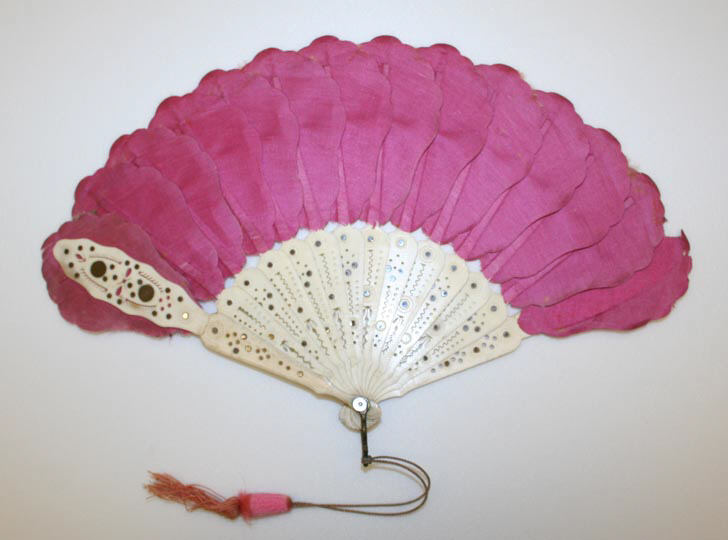
Heritage Analysis: The Fan as an Object of Symbolic Power and Luxury Strategy
Within the curated collections of Katherine Fashion Lab, the fan emerges not merely as a functional accessory but as a profound artifact of cultural symbolism, historical adornment, and spiritual resonance. This analysis examines the fan through the lens of American and European heritage, focusing on its construction from ivory, silk, and steel. By deconstructing its layered meanings, we uncover a strategic pathway for positioning the fan within 2026 high-end luxury markets—where heritage, exclusivity, and narrative depth converge.
Symbolic Power: The Fan as a Tool of Silent Authority
The fan, particularly in European aristocratic circles from the 16th to 19th centuries, served as a sophisticated instrument of non-verbal communication. Its symbolic power lay in its ability to convey status, discretion, and social maneuvering. In courts from Versailles to Vienna, the fan’s opening and closing, its angle, and the speed of its movement encoded messages of interest, disdain, or invitation. This “language of the fan” was a form of silent authority, wielded primarily by women to navigate patriarchal spaces with subtlety and control.
In American contexts, the fan assumed additional dimensions of power. During the Gilded Age, fans crafted from ivory and silk were markers of immense wealth and transatlantic sophistication. They signified not only access to European luxury goods but also the wearer’s participation in a global elite. The symbolic power of the fan, therefore, transcends mere ornamentation; it is a relic of social agency, where the bearer commands attention without uttering a word. For Katherine Fashion Lab, this legacy offers a potent narrative: the fan as a talisman of quiet influence, appealing to modern consumers who value discretion and personal sovereignty.
Historical Adornment: Materials as Markers of Prestige
The medium of the fan—ivory, silk, and steel—is integral to its historical significance. Ivory, sourced from elephant tusks, was a material of extreme rarity and expense, often carved by master artisans in Dieppe, France, or in the workshops of East Asia for European export. Its use in fan sticks and guards signified not only wealth but also a connection to colonial trade networks. The luminous, creamy surface of ivory was prized for its ability to be intricately carved with scenes of mythology, nature, or portraits, transforming the fan into a miniature canvas of personal and political expression.
Silk, typically used for the fan leaf, introduced a dimension of fragility and luxury. Hand-painted or embroidered with gold thread, silk leaves depicted pastoral idylls, classical allegories, or even contemporary events. The combination of ivory and silk created a tactile and visual contrast: the cool, solid structure of ivory against the soft, flowing drape of silk. Steel, employed in the rivets and sometimes the guard sticks of later 19th-century fans, added a note of industrial precision and durability. Steel’s inclusion signaled a shift toward mechanization and the democratization of luxury, though in high-end examples, it was often gilded or inlaid with precious metals to preserve an air of exclusivity.
Historically, these materials were not chosen merely for aesthetic appeal; they were deliberate statements of access to global resources and artisanal skill. For the contemporary luxury strategist, this triad of materials—ivory, silk, steel—offers a rich vocabulary for design. However, ethical considerations around ivory sourcing necessitate a shift toward alternatives such as responsibly sourced bone, resin, or sustainably harvested tagua nut, while retaining the sensory and symbolic qualities that define the fan’s heritage.
Spiritual Meaning: The Fan as a Conduit Between Worlds
Beyond social and material significance, the fan holds spiritual meaning across both American and European traditions. In European Christianity, liturgical fans, or flabella, were used in ceremonies to ward off insects from the Eucharist, symbolizing purity and divine protection. In folk traditions, fans were believed to carry the breath of the bearer, representing life force and the ability to influence spiritual energies. The act of fanning oneself was seen as a form of cleansing, both physical and metaphysical.
In American spiritualist movements of the 19th century, fans were sometimes used in séances to create air currents associated with spirit presence. The fan’s rhythmic movement could induce a trance-like state, linking it to meditative practices. This spiritual dimension aligns with contemporary luxury consumers’ growing interest in objects that offer not just beauty but also a sense of ritual and inner connection. A fan, when held and used, becomes a personal tool for focus, calm, and intentionality—a luxury item that transcends fashion to become a vessel for well-being.
2026 High-End Luxury Strategy: Reimagining the Fan for the Modern Elite
To position the fan within the 2026 luxury market, Katherine Fashion Lab must leverage its heritage while addressing contemporary values of sustainability, exclusivity, and experiential depth. The following strategic pillars are recommended:
1. Ethical Material Innovation: Replace ivory with high-quality, sustainable alternatives such as fossilized mammoth tusk (which is legal and ethically sourced), polished tagua nut, or durable bio-resin that mimics ivory’s luster. Silk should be sourced from heritage mills in Como, Italy, or Lyon, France, with certifications for ethical sericulture. Steel components can be crafted from recycled stainless steel or titanium, finished with hand-applied patinas to evoke antique craftsmanship.
2. Narrative-Driven Design: Each fan should tell a story. Collaborate with contemporary artists, historians, or even perfumers to create limited-edition collections that reference specific historical moments—such as the Versailles court or the American Gilded Age. The fan’s leaf can be hand-painted with motifs that speak to modern themes: resilience, connection, or inner power. Include a certificate of authenticity that details the fan’s provenance, materials, and symbolic meaning, transforming it into a collectible artifact.
3. Experiential Retail and Ritual: Fans should be sold not as mere accessories but as objects of ritual. Offer private consultations where clients learn the historical language of the fan and choose a design that resonates with their personal narrative. In-store experiences might include a “fan ceremony” where the client selects the fan while a perfumer creates a bespoke scent to accompany it, linking the fan to sensory memory. This positions the fan as a tool for personal empowerment and mindfulness, appealing to the 2026 consumer’s desire for meaningful luxury.
4. Exclusivity Through Scarcity: Produce each fan in limited runs, with no more than 50 pieces per design. Number each fan and include a hidden, personalized engraving on the steel rivet. This creates a sense of secrecy and intimacy, aligning with the fan’s historical role as a bearer of hidden messages. Pricing should reflect the artisanal labor and narrative depth, starting at $5,000 to $50,000, positioning the fan as an heirloom rather than a seasonal trend.
5. Strategic Partnerships: Align with luxury hotels, private clubs, and spiritual wellness retreats to offer fans as exclusive gifts or meditation aids. For example, a limited-edition fan designed for a Swiss alpine retreat could incorporate steel elements inspired by mountain topography and silk dyed with natural pigments from local flora. Such collaborations reinforce the fan’s status as a bridge between heritage and contemporary luxury.
Conclusion: The Fan as a Blueprint for Future Luxury
The fan, in its historical complexity, offers Katherine Fashion Lab a unique opportunity to redefine luxury for 2026. By honoring its symbolic power, material prestige, and spiritual resonance, while innovating with ethical materials and experiential strategies, the fan becomes more than an accessory—it becomes a statement of cultural fluency and personal authority. In a market saturated with digital ephemera, the fan stands as a tangible object of silence, ritual, and enduring elegance. Its strategic revival is not merely a nod to the past but a forward-looking declaration that true luxury is always layered, always meaningful, and always in control of its own narrative.