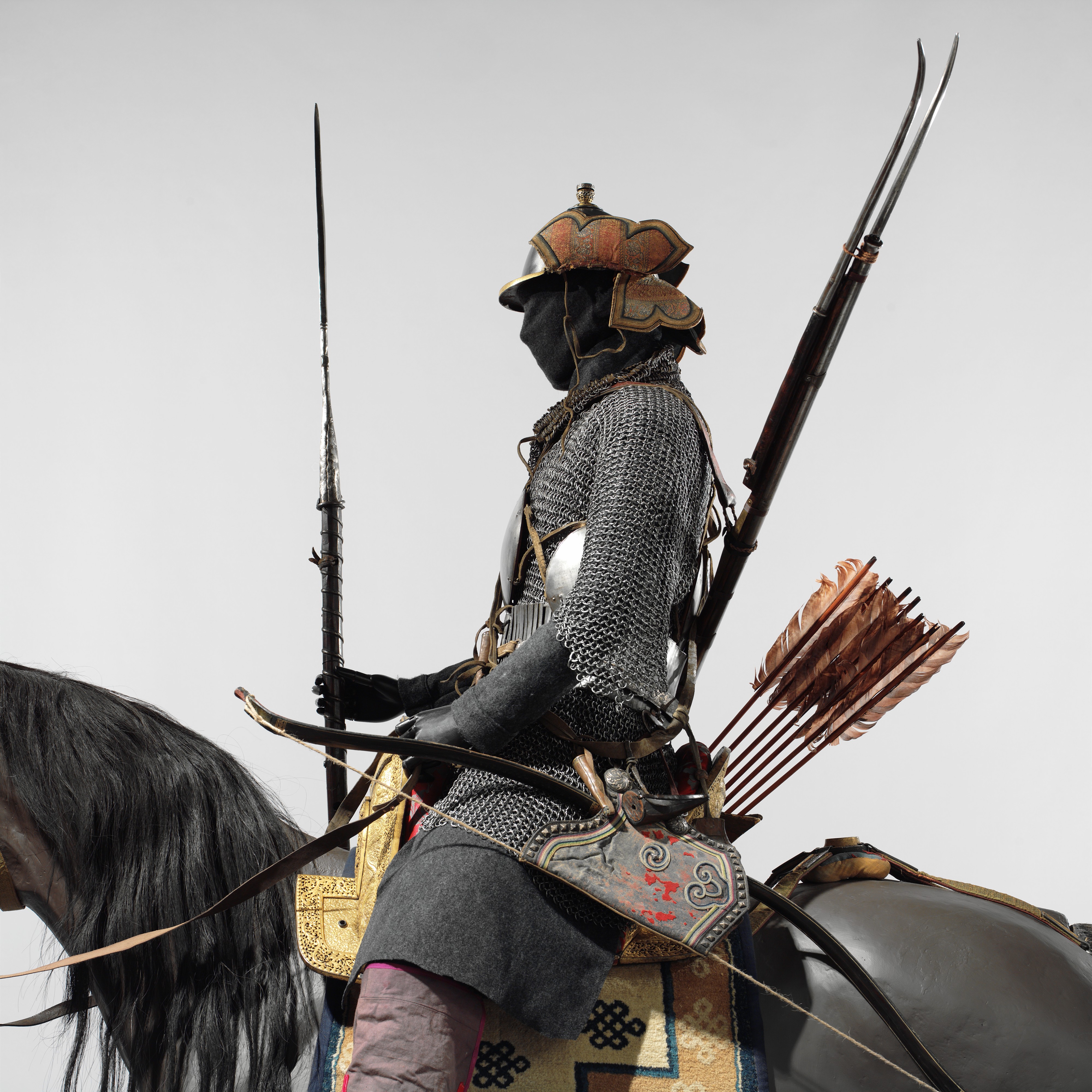
Strategic Heritage Analysis: The Armored Cavalryman of the Himalayas
This analysis, prepared for the strategic development of Katherine Fashion Lab, examines a specific artifact of profound cultural and symbolic weight: the armored cavalryman of the Tibetan cultural sphere, encompassing influences from Bhutan and Nepal. More than mere military equipment, this panoply represents a holistic system of symbolic power, spiritual fortification, and elite adornment. Deconstructing its materiality and meaning provides a unique, non-Western cornerstone for a 2026 high-end luxury strategy, moving beyond superficial aesthetic appropriation to a deeper narrative of integrated protection, identity, and transcendence.
Deconstructing the Panoply: A Symphony of Material and Meaning
The specified materials—steel, iron, gold, silver, copper alloy, brass, wood, leather, textile, bone, horn, silk, hair, turquoise, lead—are not a simple list of components but a deliberate hierarchy of symbolic and functional elements. The base layers of leather and textile (often wool or silk) speak to practicality and connection to the pastoral landscape. The overlaid steel and iron plates provide the literal armor, but their construction often incorporated sacred geometries and mantra inscriptions, transforming them into tangible spiritual shields. The incorporation of copper alloy (shaktham) and brass held apotropaic significance, believed to ward off negative forces.
The true narrative of adornment, however, lies in the precious and organic materials. Gold and silver gilding or inlay were not merely displays of wealth but symbolic representations of solar and lunar energies, aligning the wearer with cosmic forces. The use of bone, horn, and human hair (often from a yogi or revered figure) invoked a potent, transgressive spiritual power, connecting the warrior to the charnel grounds and the fearless wisdom of Tantric Buddhism. Turquoise, the most revered stone, served as the ultimate talisman, a bridge between sky and earth, ensuring protection, health, and spiritual favor. Even lead, used in ritual sealing or weighting, implies a grounding, heavy, and immutable intention.
The Symbolic Armature: Warrior as Deity, Armor as Mandala
This armor was designed for a dual battlefield: the physical and the spiritual. The cavalryman, particularly within the context of Tibetan and Bhutanese history, was often a member of the elite—a figure akin to a knight, whose role was bound to notions of chivalry (dpa' ba) and sacred duty. The armor’s structure frequently mirrored the iconography of the Dharma Protector (Dharmapāla), wrathful deities who use fierce means to combat ignorance and defend the Buddhist teachings. By donning the armor, the warrior temporarily assumed this divine archetype.
Historical adornment here is inseparable from spiritual meaning. The helmet, often crowned with insignia of the sun, moon, or flaming jewels, elevated the wearer’s consciousness. The mirror-like polishing of steel plates (melong) was intended to reflect and blind adversaries, both human and demonic. The "four mirrors" typically worn on the chest and back were not just protective plates but symbolic representations of the all-seeing, reflective wisdom of the enlightened mind. Silk sashes and pennants, flowing from the shoulders or helmet, signified the swift, unstoppable energy of the enlightened warrior. Every element was a loaded signifier, contributing to a psychosomatic transformation of the wearer into an entity of both martial and spiritual authority.
Strategic Translation: A 2026 Luxury Code for Katherine Fashion Lab
For a 2026 high-end luxury strategy, this analysis moves beyond "inspiration" to propose a framework of Integrated Symbolic Armor. The contemporary luxury consumer seeks not just products, but identity, purpose, and resilience. The Himalayan armored cavalryman provides a rich, unexplored lexicon to meet this need.
Pillars of the 2026 Strategy:
1. Material Alchemy & Modern Talismans: The lab must innovate with material juxtapositions that carry narrative weight. Imagine tech-leather bonded with silk inscribed with micro-patterns derived from mantra scripts; polished steel accents treated to a mirror finish, referencing the melong; hardware in graded alloys of brass, silver, and gold, telling a story of elemental hierarchy. Turquoise and other semi-precious stones should be incorporated not merely as gems, but as positioned talismans—set at the collar bone (throat chakra protection) or the sternum (heart center). This is adornment with intentionality.
2. Silhouette as Spiritual Architecture: The layered, articulated construction of the armor—the laminar plates, the flowing under-silks, the protective aprons—informs a new approach to silhouette. This translates into structured yet fluid tailoring: coats with articulated shoulder and arm defenses, layered gilets that recall chest plates, skirts or trousers with leather appliqué suggesting lamellar construction. The goal is to create a wearable architecture that conveys empowerment and poised readiness, not aggression.
3. The Narrative of Integrated Protection: In 2026, luxury is a shield. Marketing and brand storytelling must pivot from exclusivity to empowerment. Each collection derived from this code should tell a story of protection—of one’s spirit, values, and time. This could manifest in "digital detox" pockets lined with sacred geometry prints, or garments designed for transition, mirroring the warrior’s movement from meditation to action. The cavalryman’s armor was his ritual attire; Katherine Fashion Lab’s offerings become armor for modern rites of passage.
4. Beyond Apparel: Holistic Adornment Systems: The strategy must encompass a full ecosystem. Fine jewelry pieces based on helmet crowns and ritual mirrors; leather goods with closures inspired by armor lashings; even bespoke fragrance notes evoking the high-altitude air, leather, and incense that would have surrounded the original artifact. This creates a complete, immersive world.
Conclusion: From Historical Artifact to Future Legacy
The Himalayan Armored Cavalryman offers Katherine Fashion Lab a profound and distinct heritage foundation. It is a narrative rich in symbolic power, deep material intelligence, and spiritual resonance. By intelligently decoding and re-encoding its principles—transforming literal armor into metaphorical protection, spiritual talismans into intentional design, and elite warrior adornment into contemporary empowerment—the Lab can establish a unique and defensible position in the 2026 luxury landscape. This approach moves the brand from participating in trends to defining a new code: one where luxury is measured not by logos, but by the layered, personal, and potent symbolism it enables the wearer to embody. The result is a collection that doesn't just clothe the body, but fortifies the identity.