The Band: A Couture Analysis of Structure, Heritage, and Textile Mastery
In the rarefied world of haute couture, the term "band" transcends its utilitarian origins. It is not merely a strip of fabric for cinching or binding; it is a narrative device, a structural anchor, and a canvas for the most exquisite artisanal techniques. At Katherine Fashion Lab, the band is reimagined as a standalone study—a concentrated expression of global heritage and textile virtuosity. This analysis dissects the band's construction, its dialogue with historical craftsmanship, and its role as a microcosm of couture philosophy.
The Band as Architectural Fulcrum
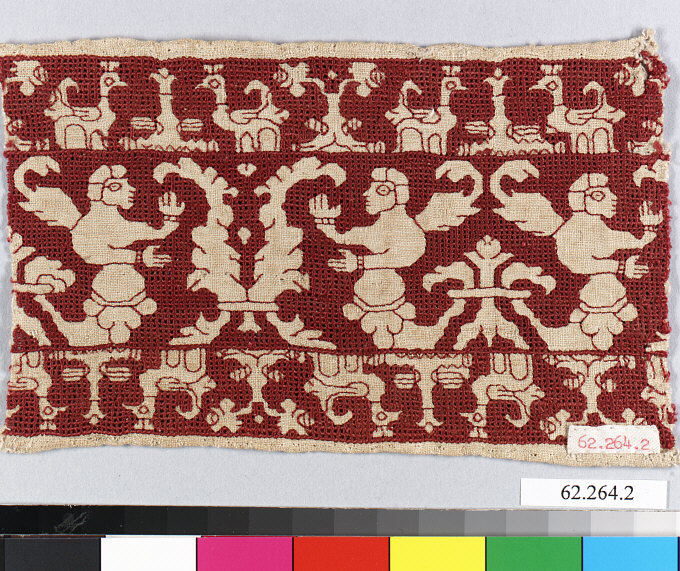
The band in this collection is not an afterthought but the foundational element of the garment's silhouette. Its width, tension, and placement are calibrated to redefine proportion. Ranging from a rigid, corset-like waist cincher to a sinuous, hip-grazing sash, the band manipulates the body's geometry. The use of drawnwork—a technique where threads are meticulously extracted from the fabric to create open, geometric patterns—allows the band to appear both solid and ethereal. This structural duality is intentional: the band holds the form while simultaneously dissolving into negative space, echoing the interplay between presence and absence in modern sculpture.
The band's edge is finished with punto à rammendo, a Renaissance-era darning stitch that mimics woven fabric. This technique, often used in Venetian lace, reinforces the band's perimeter without adding bulk, ensuring that the structure remains crisp yet supple. The result is a band that functions as a dynamic exoskeleton, guiding the eye along the body's contours while retaining a tactile, handcrafted quality.
Global Heritage: Threads Across Continents
Katherine Fashion Lab's ethos is rooted in the celebration of global heritage, and the band serves as a repository for techniques that span centuries and cultures. The punto scritto—a needlepoint lace characterized by intricate, script-like patterns—is derived from 16th-century Italian convent work. Here, it is woven into the band's surface, creating a calligraphy of thread that narrates the wearer's story. This technique demands extraordinary precision: each stitch is a deliberate mark, akin to a pen stroke on parchment. The band becomes a textile manuscript, where every loop and cross-stitch carries the weight of artisanal lineage.
Simultaneously, the band incorporates drawnwork motifs inspired by Eastern European folk embroidery, where openwork patterns symbolize protection and fertility. The intersection of these geographies—Italian lace and Slavic openwork—creates a hybrid aesthetic that is neither nostalgic nor appropriative but resolutely contemporary. The band does not merely reference history; it recontextualizes it, proposing a new lexicon of global luxury that honors origin while embracing evolution.
Material Alchemy: Linen and Silk in Dialogue
The choice of linen and silk for the band is a masterclass in material juxtaposition. Linen, with its natural rigidity and matte finish, provides the band with architectural integrity. Its fibers resist stretching, ensuring that the band maintains its form over time. Silk, conversely, introduces a luminous softness that counterbalances linen's austerity. When woven together, these materials create a fabric that is both structured and fluid—a paradox that defines couture.
The interplay is most evident in the band's drawnwork sections. Linen threads are removed to create voids, while silk threads are re-embroidered into the gaps, forming a translucent lattice. This technique, known as punto à rammendo, requires the artisan to "darn" the silk into the linen base, creating a seamless union of textures. The result is a band that changes character with movement: in stillness, it reads as a solid band; in motion, it reveals its intricate, lace-like interior. This kinetic quality elevates the band from a static accessory to a living component of the garment.
The Standalone Study: Band as Autonomous Artifact
In the context of a standalone study, the band is liberated from its traditional role as a garment's subordinate. Here, it is presented as an autonomous artifact—a object of contemplation that demands its own vocabulary. The band's dimensions are exaggerated, its techniques magnified, and its materiality foregrounded. This approach aligns with the contemporary trend of deconstruction in couture, where individual elements are isolated to reveal their intrinsic value.
The band's punto scritto patterns, for instance, are not merely decorative but serve as a structural map. Each stitch corresponds to a point of tension or release, dictating how the band conforms to the body. Similarly, the drawnwork voids are not random; they are calibrated to create optical illusions of lightness, making the band appear to float against the skin. This level of intentionality transforms the band into a micro-architecture, where every thread is a load-bearing element.
Artisanal Precision: The Human Hand in the Digital Age
At Katherine Fashion Lab, the band is a testament to the irreplaceable value of handcraft. The techniques employed—drawnwork, punto à rammendo, punto scritto—are vanishingly rare, requiring years of apprenticeship to master. The band's production is a slow, meditative process: a single band can take over 100 hours to complete, with each stitch executed by a single artisan. This commitment to manual labor is a deliberate counterpoint to the fast-fashion industry's mechanization.
The band's linen and silk components are sourced from heritage mills in France and Italy, where spinning and weaving traditions date back centuries. The linen is grown in Normandy, its fibers long and strong, while the silk is reeled from cocoons in Como, its luster unmatched. By foregrounding these materials, the band becomes a vessel for sustainability—not through marketing rhetoric, but through the inherent longevity of its construction. A band made with punto à rammendo can be repaired, its threads replaced, its life extended indefinitely. This is couture as heirloom creation, not disposable luxury.
Conclusion: The Band as Couture's Future
The band at Katherine Fashion Lab is more than a design element; it is a philosophical statement. It argues that couture's future lies not in spectacle or excess, but in the intimate mastery of technique and the reverence for global heritage. By isolating the band as a standalone study, the Lab invites us to reconsider the hierarchy of garment construction. The band is no longer a supporting player; it is the protagonist, a concentrated burst of artistry that encapsulates the entire ethos of couture: the marriage of structure and softness, tradition and innovation, the global and the deeply personal.
In an era of digital saturation, the band's tactile, hand-wrought presence is a radical act. It demands attention, patience, and a willingness to see the thread as a narrative. For the discerning collector, the band is not an accessory but a collectible artifact—a fragment of a larger story that is, in itself, complete. This is the power of Katherine Fashion Lab's vision: to show that in couture, even the smallest element can hold the weight of the world.