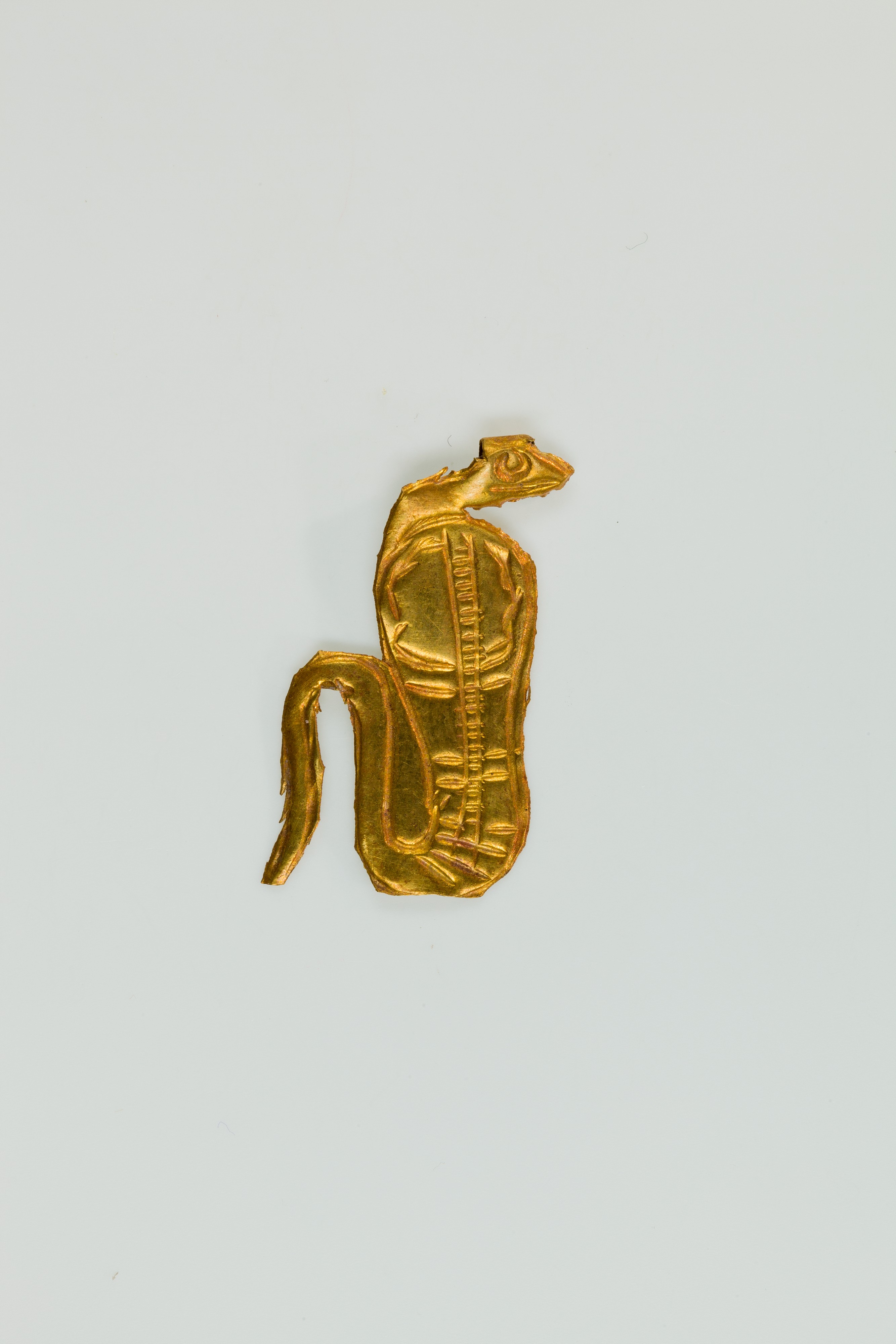
Heritage Analysis: The Uraeus Amulet of Djedmutesankh
As Lead Heritage Curator for Katherine Fashion Lab, this analysis examines the Uraeus Amulet of Djedmutesankh, a sheet gold artifact from Ancient Egypt (circa 945–715 BCE, Third Intermediate Period). This piece embodies the intersection of symbolic power, historical adornment, and spiritual meaning, offering a foundational lens for 2026 high-end luxury strategy. The amulet’s provenance—associated with the priestess Djedmutesankh, daughter of the High Priest of Amun—elevates its status beyond mere ornament to a talisman of divine authority. For Katherine Fashion Lab, this research informs a strategic approach to luxury branding that leverages cultural symbolism, craft heritage, and narrative depth to resonate with discerning consumers.
Symbolic Power: The Uraeus as Divine Authority
The uraeus—a rearing cobra—was a potent emblem in Ancient Egyptian iconography, representing the goddess Wadjet, protector of Lower Egypt and the pharaoh. In the context of Djedmutesankh’s amulet, the cobra’s coiled form and poised strike symbolize absolute sovereignty and guardianship. Crafted from sheet gold, a material reserved for deities and royalty, the amulet amplifies this symbolism by linking the wearer to the sun god Ra. Gold, as the “flesh of the gods,” conferred immortality and solar power, making the uraeus a conduit for divine energy.
For Katherine Fashion Lab, this symbolic power translates into a luxury strategy that emphasizes authority and protection. In 2026, high-end consumers seek brands that offer more than aesthetics—they desire objects that confer status and shield against cultural dilution. By incorporating the uraeus motif into limited-edition jewelry or accessories, the Lab can position these pieces as talismans of personal power, appealing to leaders, innovators, and tastemakers. The key is to avoid literal reproduction; instead, abstract the cobra’s form into minimalist designs that evoke strength without overt historical mimicry. This approach aligns with the Lab’s commitment to authentic heritage reinterpretation, ensuring the symbol retains its gravitas while feeling contemporary.
Historical Adornment: Craft and Context
The Uraeus Amulet of Djedmutesankh exemplifies the pinnacle of Ancient Egyptian goldsmithing. Sheet gold was hammered to paper-thinness, then shaped with precision to capture the cobra’s sinuous curves and detailed scales. The amulet’s small scale—typically 2–4 centimeters—suggests it was worn as a pendant or sewn into funerary garments, reflecting a culture where adornment was inseparable from spiritual preparation. Djedmutesankh, as a priestess, would have worn such amulets during rituals to invoke protection and ensure safe passage to the afterlife. This historical context underscores a ritualistic relationship between object and wearer, a concept often lost in modern fashion.
For Katherine Fashion Lab’s 2026 strategy, historical adornment offers a blueprint for craft storytelling. The sheet gold technique—requiring master artisans to manipulate metal without soldering—mirrors the Lab’s emphasis on artisanal excellence. A strategic collaboration with contemporary goldsmiths could produce a “Djedmutesankh Collection” that celebrates this ancient method, using recycled gold to align with sustainability trends. The narrative would focus on the amulet’s dual role as ornament and amulet, inviting customers to participate in a lineage of protective beauty. This approach differentiates the Lab from mass-produced luxury, where heritage is often superficial. By foregrounding the materiality and process, the Lab builds a brand story rooted in authenticity, appealing to clients who value provenance over trend.
Spiritual Meaning: The Amulet as Sacred Technology
In Ancient Egyptian belief, amulets were not decorative but functional—they were sacred technologies that channeled divine forces. The uraeus, specifically, was believed to spit fire at enemies, both physical and spiritual, safeguarding the wearer’s soul. Djedmutesankh’s amulet, inscribed with spells from the Book of the Dead, would have been activated through ritual, transforming gold into a protective barrier. This spiritual dimension elevates the artifact from a luxury good to a metaphysical tool, a concept that resonates with contemporary wellness and intentionality movements.
For Katherine Fashion Lab, integrating spiritual meaning into 2026 luxury strategy involves creating ritualized experiences. High-end consumers increasingly seek objects that offer emotional or spiritual utility—a pendant that calms, a bracelet that empowers. The Lab could develop a “Sacred Adornment” line where each piece is paired with a digital or physical ritual guide, inspired by Egyptian practices. For example, a gold cobra brooch might include a small scroll with a modern adaptation of an ancient protection prayer. This taps into the growing market for mindful luxury, where value is measured not just by material cost but by personal transformation. The strategy must be executed with respect: avoiding cultural appropriation by collaborating with Egyptologists and spiritual advisors to ensure accurate representation. This positions the Lab as a curator of meaning, not just fashion.
2026 High-End Luxury Strategy: Synthesis and Application
The Uraeus Amulet of Djedmutesankh provides a robust framework for Katherine Fashion Lab’s 2026 luxury positioning. Three strategic pillars emerge from this analysis:
Pillar 1: Symbolic Authority as Brand Equity
The uraeus’s association with divine rule offers a template for exclusivity and leadership. In 2026, the Lab can launch a “Guardian” collection featuring abstract cobra motifs in gold, platinum, and black diamonds, marketed as symbols of personal sovereignty. Limited to 100 pieces globally, each with a certificate of authenticity linking to Djedmutesankh’s historical record, this creates scarcity and narrative depth. The price point—$20,000–$50,000—positions it as an investment piece, appealing to collectors and connoisseurs. This strategy leverages the power of myth to build brand mythology, where each purchase is an act of joining an elite lineage.
Pillar 2: Craft Heritage as Differentiation
The sheet gold technique, a hallmark of Ancient Egyptian artisanship, becomes a competitive advantage. The Lab should invest in reviving this method, partnering with master metalsmiths in Europe or the Middle East to produce hand-hammered pieces that require 50+ hours of labor. This aligns with the 2026 luxury trend toward slow fashion and artisanal revival. Marketing materials should emphasize the tactile quality of the gold—its lightness, its warmth—through high-resolution video and haptic sampling kits for VIP clients. The narrative “From the Nile to New York” bridges ancient and modern, positioning the Lab as a custodian of endangered crafts.
Pillar 3: Spiritual Utility as Emotional Resonance
The amulet’s function as sacred technology opens a new category: intentional luxury. For 2026, the Lab can introduce a “Ritual Adornment” subscription, where clients receive quarterly pieces designed for specific intentions—protection, clarity, abundance—each accompanied by a ritual card and a digital meditation. This builds recurring engagement and deepens emotional loyalty. The strategy targets the wellness luxury segment, projected to grow 15% annually, by framing jewelry as a tool for self-empowerment. To maintain credibility, the Lab should appoint a Cultural Stewardship Council, including Egyptologists and spiritual leaders, to oversee authenticity.
Conclusion: From Artifact to Archetype
The Uraeus Amulet of Djedmutesankh is more than a historical artifact; it is an archetype of luxury that fuses power, craft, and spirit. For Katherine Fashion Lab, this analysis offers a strategic roadmap for 2026: by honoring the amulet’s symbolic authority, reviving its artisanal methods, and embracing its spiritual utility, the Lab can create a luxury experience that transcends materialism. The challenge lies in balancing reverence with innovation—avoiding pastiche while delivering relevance. With this heritage-informed approach, the Lab positions itself not as a fashion house but as a cultural institution, where every piece carries the weight of millennia and the promise of personal transformation. In a market saturated with surface-level luxury, this depth of meaning becomes the ultimate differentiator.