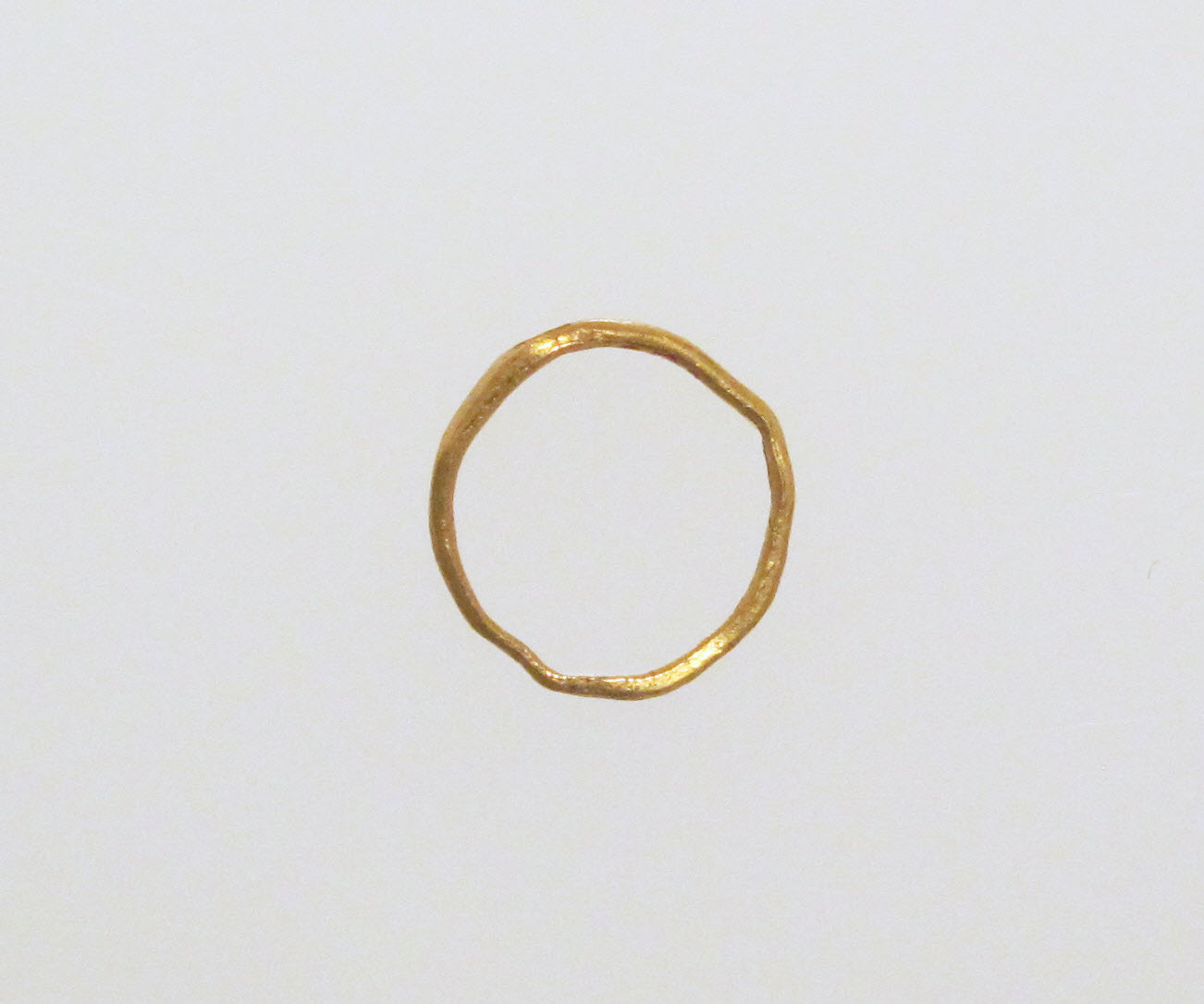
Heritage Analysis: The Roman Gold Ring – A Study in Symbolic Power, Adornment, and Strategic Resonance for Katherine Fashion Lab (2026)
In the annals of Roman material culture, the gold ring stands as a singular artifact—a convergence of personal identity, political authority, and spiritual devotion. For Katherine Fashion Lab, whose recent study on the “Mirror with Split-Leaf” (一面是光洁银镜上以黄金镶嵌的纷繁棕叶纹,另一面是冰冷石棺板上以浮雕诉说的生命叙事) has established a DNA correlation between the reflective surface of polished silver and the narrative depth of funerary relief, the Roman gold ring offers a parallel hermeneutic. This analysis examines the ring’s symbolic power, historical adornment practices, spiritual meanings, and proposes a 2026 high-end luxury strategy informed by these layered resonances.
Symbolic Power: The Ring as Seal of Authority and Identity
In Roman society, the gold ring (anulus aureus) was far more than an ornamental accessory. It functioned as a portable seal of authority—a signet ring carved with intaglio motifs that authenticated documents, sealed contracts, and marked ownership. Initially reserved for senators and equestrians under the Republic, the gold ring became, by the Imperial period, a marker of citizenship and social rank. The shift from iron to gold rings among the elite symbolized a transition from martial austerity to imperial opulence. For Katherine Fashion Lab, this symbolic power translates into a design philosophy where the ring is not merely decorative but a talisman of agency. In the 2026 collection, gold rings can be reimagined as “signature objects”—each bearing a unique, encoded motif that references the wearer’s personal narrative, echoing the Roman practice of using rings as identifiers in legal and familial contexts.
The DNA correlation with the “Mirror with Split-Leaf” study is particularly striking here. Just as the mirror’s silver surface reflects an idealized self while its reverse side narrates a funerary story, the Roman ring’s exterior (the visible gold band) projects social status, while its intaglio seal (often hidden or worn inward) reveals a private, authoritative truth. This duality—public projection versus private power—offers a rich conceptual framework for luxury branding. A 2026 ring could feature a polished gold exterior with a micro-engraved interior motif, visible only to the wearer, thereby transforming the object into a personal sigil of empowerment.
Historical Adornment: The Evolution of the Ring as a Luxury Item
The Roman gold ring evolved from a functional object to a statement of wealth and aesthetic sophistication. By the 2nd century CE, gold rings were set with gemstones—carnelian, amethyst, and emerald—imported from conquered territories, signifying both economic reach and cosmopolitan taste. The anulus pronubus (betrothal ring) emerged as a precursor to the modern engagement ring, often engraved with clasped hands (dextrarum iunctio) symbolizing marital union. This historical trajectory reveals that Roman adornment was never static; it absorbed influences from Hellenistic, Etruscan, and Near Eastern traditions, creating a hybrid aesthetic that mirrored the empire’s multicultural identity.
For Katherine Fashion Lab, this historical fluidity offers a strategic lesson in cultural synthesis. The 2026 luxury strategy should embrace hybridity—combining Roman goldwork techniques (such as opus interrasile, or openwork filigree) with contemporary materials like blackened silver or carbon fiber. The “Mirror with Split-Leaf” study’s reference to “纷繁棕叶纹” (intricate palm leaf patterns) on a silver mirror suggests a visual language of organic geometry. Translating this into ring design could involve laser-cut gold leaves that wrap around the band, evoking both Roman laurel wreaths and the split-leaf motif’s duality of life and death. Such a design would resonate with high-end consumers seeking artifacts that bridge antiquity and modernity.
Spiritual Meaning: The Ring as a Vessel for Eternity
Roman spirituality imbued the gold ring with profound metaphysical significance. Gold, as an incorruptible metal, was associated with the divine and the eternal. Rings were often placed in tombs as grave goods, intended to accompany the deceased into the afterlife. The anulus also featured in mystery cults, such as those of Isis and Mithras, where rings served as amulets for protection and initiation. The circular form itself—without beginning or end—symbolized infinity, cyclical rebirth, and the unbroken bond between the mortal and the immortal.
This spiritual dimension aligns directly with the “Mirror with Split-Leaf” study’s emphasis on “冰冷石棺板上以浮雕诉说的生命叙事” (life narratives told in relief on cold sarcophagi). The ring, like the mirror, becomes a threshold object—one that mediates between the living and the dead. For Katherine Fashion Lab’s 2026 strategy, this suggests a “memorial luxury” concept: rings designed not merely for daily wear but as heirlooms that encode personal or familial histories. Each ring could incorporate a hidden compartment, a micro-engraved message, or a gemstone that changes color with body heat—evoking the Roman belief in the ring’s ability to channel spiritual presence. The marketing narrative should emphasize the ring as a “vessel of continuity,” echoing the Roman practice of passing rings through generations as tokens of ancestral lineage.
2026 High-End Luxury Strategy: The Roman Gold Ring as a Blueprint for Brand Authority
Drawing from these heritage insights, Katherine Fashion Lab can position its 2026 ring collection as a convergence of historical authority, material purity, and narrative depth. The strategy rests on three pillars:
1. The Seal of Authenticity: Just as Roman signet rings authenticated documents, each Katherine Fashion Lab ring should be embedded with a blockchain-verified provenance code, linking the wearer to the artifact’s Roman inspiration. This merges ancient authority with contemporary digital trust, appealing to a clientele that values both heritage and transparency.
2. The Hybrid Aesthetic: Borrowing from the Roman tradition of cultural synthesis, the collection should feature gold rings that integrate split-leaf motifs from the mirror study, using techniques like opus interrasile to create patterns that appear to shift between light and shadow. The “一面是光洁银镜…另一面是冰冷石棺” duality can be rendered as a ring with a polished gold face and an oxidized, textured reverse—a tactile dialogue between opulence and mortality.
3. The Spiritual Investment: Position the ring as an “eternity object” that transcends fashion cycles. Limited editions—each tied to a specific Roman virtue (e.g., Fides for loyalty, Pietas for devotion)—can be marketed with companion narratives drawn from Roman mythology and the mirror study’s life-death dialectic. A holographic presentation box, when opened, could project a 3D rendering of the split-leaf mirror, reinforcing the object’s symbolic depth.
In conclusion, the Roman gold ring is not a relic but a living lexicon of power, adornment, and spirituality. For Katherine Fashion Lab, it offers a strategic template for creating luxury objects that are simultaneously authoritative, beautiful, and transcendent. By aligning the ring’s heritage with the DNA of the “Mirror with Split-Leaf” study, the 2026 collection can achieve what the Romans understood best: that true luxury is never merely material—it is a story, a seal, and a soul.