Heritage Analysis: The Frankish Disk Brooch as a Blueprint for 2026 High-End Luxury Strategy
Introduction: The Object as a Strategic Artifact
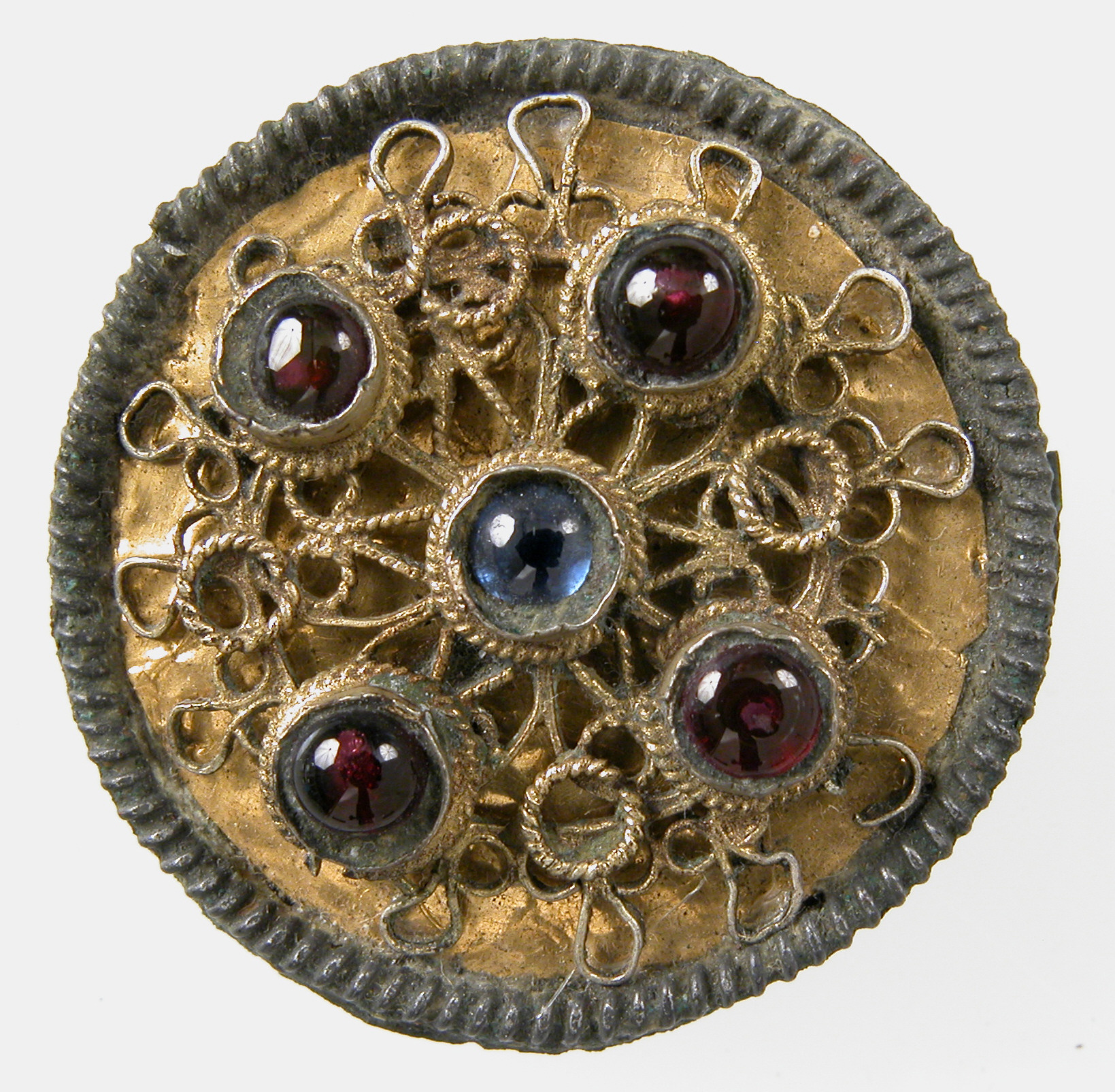
The Frankish disk brooch, crafted from copper alloy, coated with gold, and adorned with garnets and sapphire cabochons, represents more than a decorative accessory from the early medieval period. It is a concentrated symbol of power, spirituality, and social stratification. For Katherine Fashion Lab, this artifact offers a profound case study in how material culture can encode authority, identity, and transcendence. In the context of a 2026 high-end luxury strategy, the brooch’s design principles—its use of sacred geometry, precious materials, and symbolic color—provide a replicable framework for creating objects that command reverence and desire. This analysis examines the brooch’s symbolic power, historical adornment, and spiritual meaning, then translates these insights into actionable luxury brand strategy.
Symbolic Power: The Brooch as a Marker of Sovereignty
The Frankish disk brooch was not merely ornamental; it was a deliberate instrument of political and social authority. In Frankish society, brooches of this scale and material complexity were worn by elite women and men as fasteners for cloaks or as pectoral ornaments. The use of gold—a metal associated with the sun, immortality, and divine right—immediately signaled the wearer’s proximity to power. The garnets, with their deep red hue reminiscent of blood and life force, further reinforced this symbolism. Red garnets in Frankish culture were often linked to warrior ethos and the sacred bond between ruler and deity. The sapphires, rarer in northern European contexts, introduced a celestial dimension; their blue color evoked the heavens, wisdom, and the unattainable. Together, these materials created a microcosm of Frankish cosmology: the earth (copper alloy), the sun (gold), life and sacrifice (garnet), and the divine (sapphire). For a 2026 luxury strategy, this teaches that material selection must be intentional, not merely opulent. Each component should carry a narrative of origin, rarity, and symbolic weight. Katherine Fashion Lab can apply this by sourcing gemstones with documented provenance and embedding them in designs that tell a story of ascent—from the mundane to the celestial.
Historical Adornment: The Body as a Canvas for Hierarchy
In the Frankish period, adornment was a visual language of rank and allegiance. The disk brooch was typically worn at the shoulder or chest, positioning it at the eye level of the observer. This placement was strategic: it ensured that the brooch was the first element of the wearer’s silhouette to be perceived, thereby establishing dominance and identity before any verbal exchange. The circular form itself—a disk—carried profound meaning. Circles, in pre-Christian and early Christian Frankish symbolism, represented eternity, the cyclical nature of life, and the unbroken bond between the wearer and their lineage. The brooch’s size (often 5–8 centimeters in diameter) demanded attention without being garish, a lesson in restrained opulence. For Katherine Fashion Lab, this underscores the importance of proportion and placement in luxury design. A 2026 collection should consider how objects interact with the body’s architecture: a brooch, pendant, or clasp should be positioned to create a focal point that commands respect, not just admiration. The historical practice of using adornment to denote social strata can be modernized as a tiered luxury system, where specific designs are reserved for exclusive clientele, thereby reinforcing brand hierarchy and desirability.
Spiritual Meaning: The Brooch as a Talisman of Protection and Transcendence
The Frankish disk brooch was imbued with spiritual significance that transcended its physical form. Garnets and sapphires were not chosen solely for their beauty; they were believed to possess protective and healing properties. Garnets were thought to ward off evil, ensure safe passage in the afterlife, and symbolize eternal friendship. Sapphires, in medieval lapidaries, were associated with chastity, divine favor, and the ability to dispel envy. The gold coating, often achieved through mercury gilding, was a laborious process that symbolically transformed the base copper alloy into a sacred object, mirroring alchemical ideas of purification and spiritual elevation. The brooch’s circular shape also echoed the mandala-like patterns found in early Christian and pagan iconography, representing the cosmos and the soul’s journey toward unity with the divine. For a 2026 luxury strategy, this spiritual dimension is critical. Modern high-end consumers increasingly seek objects that offer meaning beyond materiality—pieces that serve as talismans, heirlooms, or meditative anchors. Katherine Fashion Lab can capitalize on this by collaborating with gemologists and cultural historians to develop a “symbolic signature” for each collection, where gemstones are selected for their historical and energetic properties, and designs incorporate sacred geometry. Marketing narratives should emphasize the brooch as a companion for life’s transitions—a piece that protects, empowers, and connects the wearer to a lineage of power.
2026 High-End Luxury Strategy: Translating Heritage into Competitive Advantage
To operationalize the Frankish disk brooch’s heritage for 2026, Katherine Fashion Lab must adopt a three-pronged strategy: material storytelling, positional design, and spiritual branding.
Material Storytelling involves creating a narrative around each component. The copper alloy base can be reframed as “earth-born foundation,” the gold coating as “alchemical transformation,” the garnets as “blood of the warrior,” and the sapphires as “celestial wisdom.” This narrative should be embedded in product descriptions, packaging, and digital experiences. For instance, a limited-edition “Frankish Legacy” brooch could include a certificate detailing the origin of each gemstone and the symbolic meaning of its placement. This approach not only justifies premium pricing but also creates an emotional bond with the consumer.
Positional Design focuses on how the object interacts with the body. Drawing from the Frankish practice of shoulder placement, Katherine Fashion Lab should design brooches that are meant to be worn at specific points—the collarbone, the lapel, or the waist—to create a visual hierarchy. The circular form should be maintained as a brand signature, but with modern variations such as asymmetric disks or layered concentric rings. This ensures that the object is instantly recognizable as a Katherine Fashion Lab piece, reinforcing brand equity.
Spiritual Branding addresses the modern consumer’s desire for authenticity and transcendence. The brand can position its disk brooches as “modern talismans” for empowerment, protection, and self-actualization. Collaborations with contemporary artists, spiritual leaders, or historians can lend credibility. A 2026 campaign might feature testimonials from clients who view the brooch as a source of strength during career transitions or personal milestones. The brand should also consider offering customization options—such as engraving personal symbols or selecting gemstones based on astrological or numerological significance—to deepen the spiritual connection.
Conclusion: The Brooch as a Strategic Compass
The Frankish disk brooch is not a relic of a bygone era; it is a strategic compass for the future of high-end luxury. Its fusion of symbolic power, historical adornment, and spiritual meaning offers Katherine Fashion Lab a blueprint for creating objects that are not merely worn but revered. By adopting material storytelling, positional design, and spiritual branding, the brand can differentiate itself in a saturated market, attract discerning clientele, and command premium positioning. In 2026, luxury will not be defined by excess but by depth—the depth of narrative, the depth of symbolism, and the depth of connection. The Frankish disk brooch, with its gold, garnets, and sapphires, shows the way.