Heritage Analysis: The Ceremonial Bowl as a Blueprint for 2026 Luxury Adornment
Materiality and Craft: The Earthenware Medium as a Statement of Prestige
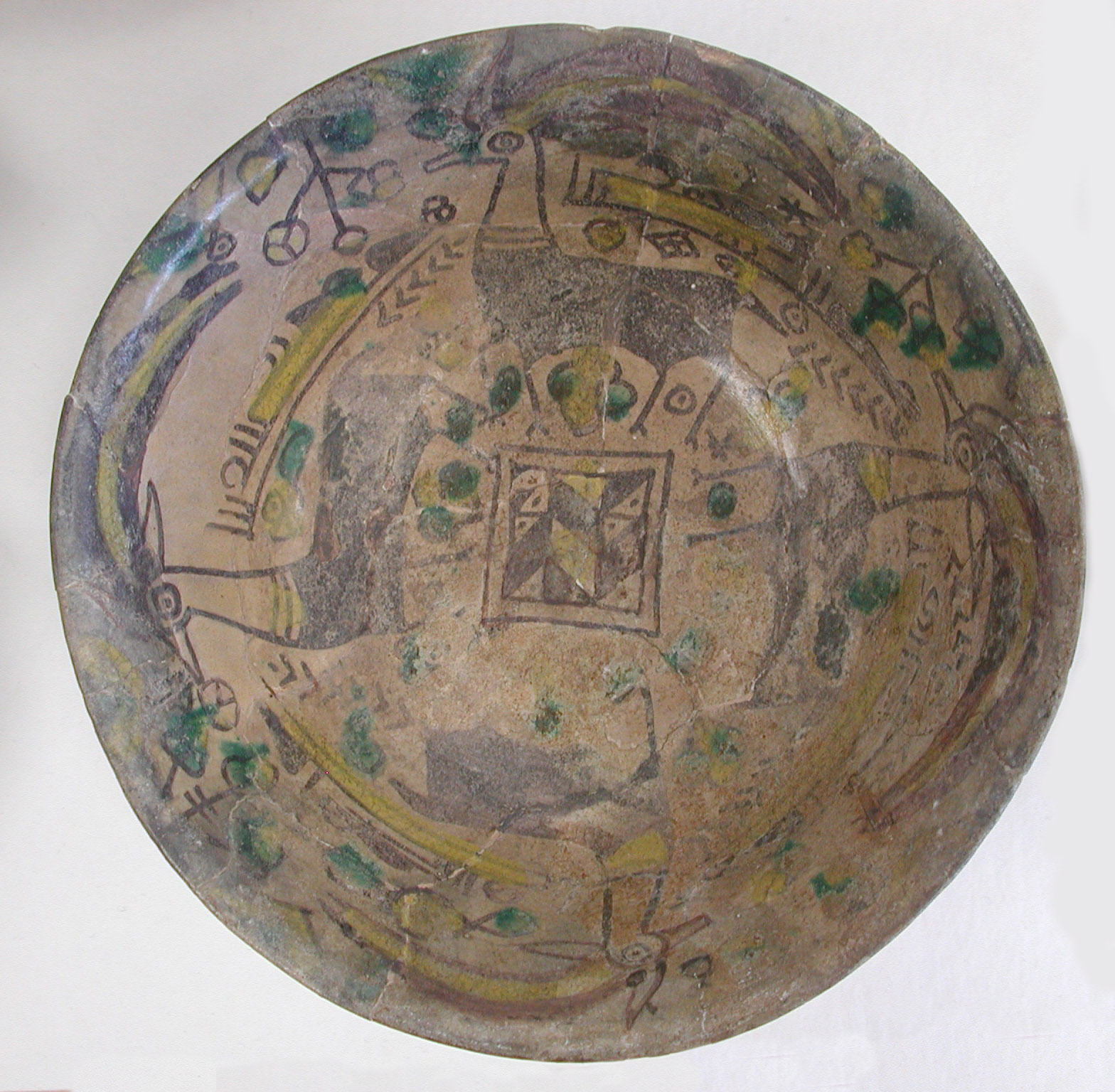
The bowl under analysis, a product of an ancient civilization rendered in earthenware with black slip and polychrome pigments beneath a transparent colorless glaze, represents a pinnacle of early technological mastery and aesthetic ambition. In the context of Katherine Fashion Lab’s strategic heritage research, the choice of buff ware is not incidental. This medium, characterized by its warm, neutral clay body, served as a canvas for the application of black slip—a refined iron-rich liquid clay—and vibrant polychrome pigments. The subsequent application of a transparent colorless glaze was a revolutionary act, sealing the narrative and imbuing the object with a luminous, almost sacred finish. For the high-end luxury consumer of 2026, this materiality speaks to a desire for authenticity and permanence. The earthenware’s inherent fragility, paradoxically, becomes a symbol of exclusivity: it demands care, reverence, and a connoisseur’s understanding of craft. In luxury strategy, this translates to a product narrative where the raw, earthy base is elevated by meticulous, almost obsessive finishing—a metaphor for the modern luxury brand that values artisanal provenance over industrial perfection.
Symbolic Power: The Bowl as a Vessel of Authority and Transformation
In ancient civilizations, the bowl was far more than a utilitarian object; it was a vessel of symbolic power. Used in ritual libations, funerary offerings, and ceremonial feasting, the bowl mediated between the mortal and the divine. The painted motifs—often featuring geometric patterns, stylized animals, or abstracted human forms—were not decorative but apotropaic, designed to ward off evil or invoke blessings. For Katherine Fashion Lab, this symbolic dimension offers a powerful lexicon for 2026 luxury. The bowl’s function as a container of transformation (e.g., holding food that nourishes or wine that intoxicates) can be reimagined as a brand’s capacity to hold and transform cultural capital. A luxury handbag, for instance, is not merely a carrier of objects but a vessel of status, memory, and identity. By aligning with the bowl’s ancient symbolism, a brand can position its products as talismanic objects—possessing the power to elevate the wearer’s social and spiritual standing. This is particularly resonant in a post-pandemic 2026 market, where consumers seek meaningful protection and ritualistic connection in their possessions.
Historical Adornment: The Polychrome Palette as a Status Code
The polychrome pigments on this bowl—likely derived from mineral sources such as ochre, malachite, and azurite—were not chosen arbitrarily. Each color carried hierarchical significance. Red often symbolized life force or royalty; black represented the underworld or fertility; white signified purity or mourning. The black slip provided a dramatic contrast, framing the polychrome details with a sense of depth and gravity. In the realm of historical adornment, this bowl would have been a marker of elite status, owned by priests, chieftains, or merchants who could afford imported pigments and skilled artisans. For Katherine Fashion Lab’s 2026 luxury strategy, this color code can be adapted as a chromatic signature. A limited-edition collection might feature a “ritual palette” of deep reds, obsidian blacks, and gold-flecked whites, directly referencing the bowl’s mineral origins. The use of polychrome underglaze techniques in textile prints or leather finishes would create a sense of layered depth, mimicking the bowl’s glazed surface. This approach not only differentiates the brand but also educates the consumer in a language of visual power—a key differentiator in a saturated luxury market.
Spiritual Meaning: The Bowl as a Mediator of Cosmic Order
Spiritually, the bowl was a microcosm of the universe. Its circular form echoed the sun, the moon, and the cycle of life and death. The painted motifs often depicted cosmological narratives—the journey of the sun, the union of earth and sky, or the rebirth of the soul. The transparent glaze acted as a veil, allowing the viewer to see the spiritual truth beneath a protective layer. For the modern luxury consumer, this spiritual dimension is increasingly relevant. In 2026, high-end clients are not just buying products; they are investing in narratives of transcendence. A bowl’s spiritual meaning can be translated into a brand’s ethos of holistic well-being. For example, a fragrance line might be inspired by the bowl’s ritual use, with notes of myrrh, cedar, and lotus that evoke ancient ceremonies. A jewelry collection could feature circular pendants with hidden inscriptions, echoing the bowl’s function as a keeper of secrets. The spiritual power of the bowl lies in its ability to contain and reveal—a dualism that luxury brands can exploit through storytelling, packaging, and experiential retail.
2026 High-End Luxury Strategy: From Artifact to Archetype
To operationalize this heritage analysis, Katherine Fashion Lab must adopt a three-tier strategic framework for 2026: Authenticity, Exclusivity, and Transcendence.
First, Authenticity is achieved through direct collaboration with archaeological conservators and contemporary ceramists. A capsule collection could feature actual earthenware replicas of the bowl, produced in limited numbers by master potters using ancient techniques. These objects would be sold as functional art, bridging the gap between museum piece and everyday luxury. The transparent glaze becomes a metaphor for brand transparency—a commitment to ethical sourcing and artisanal labor.
Second, Exclusivity is built through color and material scarcity. The black slip and polychrome pigments can be reformulated as proprietary finishes for leather goods, using natural dyes and mineral-based pigments that are difficult to replicate. Each piece would be numbered and documented, with a digital provenance certificate that traces the pigment’s origin and the artisan’s hand. This creates a collector’s market, where the bowl’s ancient status as a prestige object is mirrored in the modern luxury item’s rarity.
Third, Transcendence is the ultimate goal. The bowl’s spiritual meaning can be activated through experiential luxury. Private clients might be invited to a “ritual unveiling” event, where the bowl’s painted narrative is revealed in a darkened gallery, accompanied by soundscapes and incense. This transforms the purchase into a rite of passage, aligning the brand with the consumer’s quest for meaning. In 2026, the luxury market will be dominated by those who can offer not just products, but portals to other times and states of being. The ancient bowl, with its earthenware body, black slip, polychrome soul, and glazed spirit, is the perfect archetype for this strategy.
Conclusion: The Bowl as a Strategic Compass for Katherine Fashion Lab
This heritage analysis reveals that the ancient earthenware bowl is not a relic but a blueprint for future luxury. Its materiality teaches us the value of craft over speed; its symbolism offers a vocabulary for power and protection; its adornment provides a chromatic code for status; and its spirituality speaks to the human need for transcendence. For Katherine Fashion Lab, the bowl is a strategic compass pointing toward a 2026 where luxury is defined not by volume or visibility, but by depth, rarity, and ritual. By embedding this ancient wisdom into product design, brand narrative, and consumer experience, the Lab can position itself at the vanguard of a new luxury paradigm—one where the past is not imitated, but resurrected as a living language of desire.