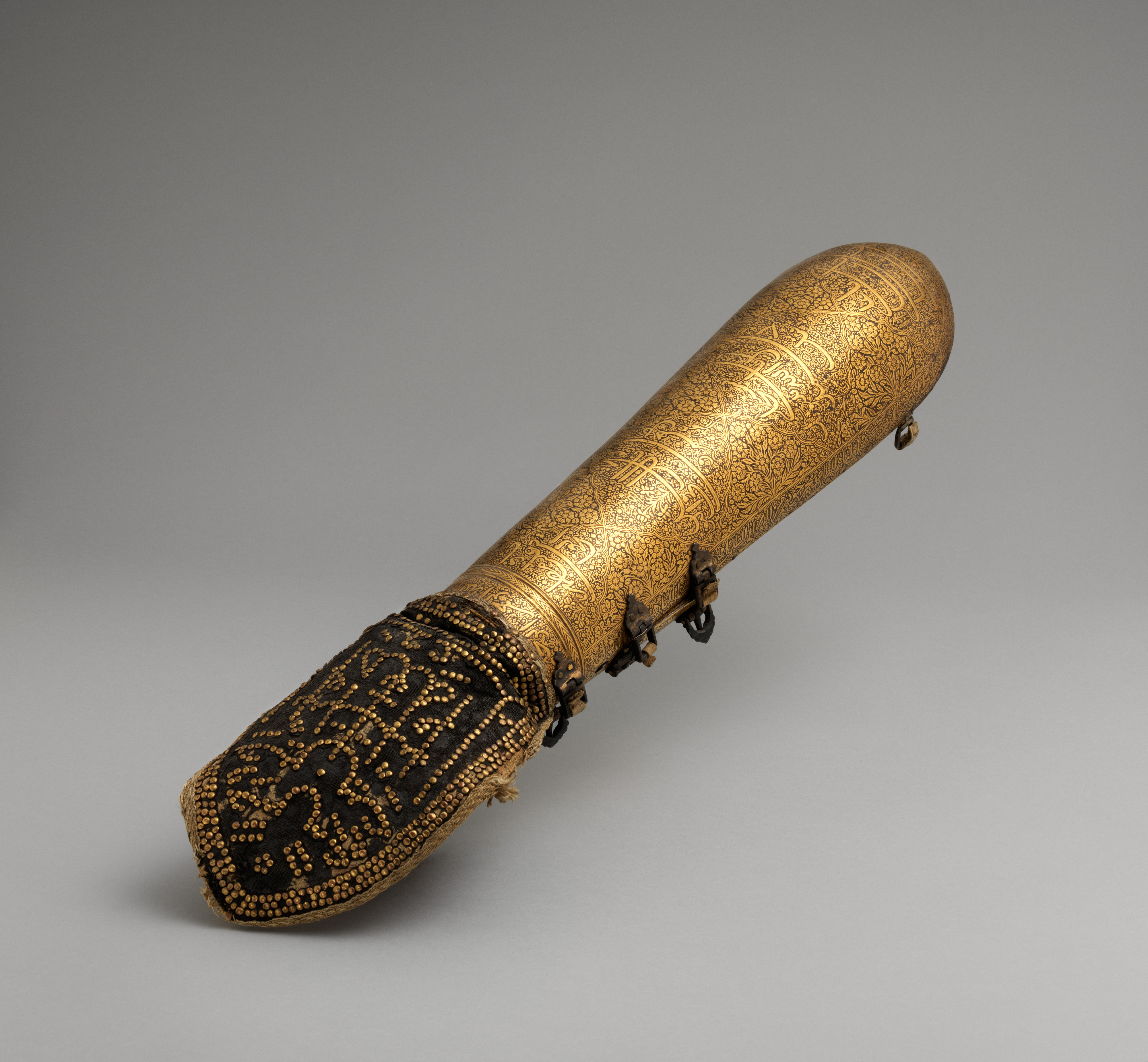
The Dastana: A Confluence of Martial Utility and Regal Aesthetics
Within the vast lexicon of global couture, few artifacts bridge the chasm between brutal functionality and exquisite artistry as seamlessly as the Indian dastana, or arm guard. At Katherine Fashion Lab, we approach this object not merely as a piece of historical armor but as a profound statement of design philosophy—a standalone study in material hierarchy, ergonomic poetry, and the semiotics of power. This particular dastana, a composite of steel, gold, velvet, silk, linen, and copper alloy, offers a masterclass in how protection can be elevated to a form of wearable sovereignty.
Material Hierarchy: The Dialogue Between Strength and Sensuality
The genius of this dastana lies in its deliberate orchestration of contrasting materials. The steel core is not merely a shield; it is a canvas. Forged with a meticulous curvature that mirrors the natural anatomy of the forearm, the steel demonstrates an advanced understanding of biomechanics. The metal’s weight is distributed to allow for unencumbered wrist articulation, a critical detail for a warrior who must wield a sword or draw a bow. Yet, the steel is not left raw. It is overlaid with gold—applied through koftgari inlay, a technique where fine gold wire is hammered into etched steel. This gilding transforms a weapon of war into a jewel. The gold does not weaken the steel; it ennobles it, creating a visual rhythm of light and shadow that speaks to the wearer’s status.
Where the metal ends, the textile narrative begins. The interior lining of linen serves as the unsung hero of comfort. Linen’s natural breathability and moisture-wicking properties prevent chafing against the skin, a pragmatic choice for prolonged wear in the Indian subcontinent’s heat. Over this, a layer of silk is used as a binding agent, its tensile strength ensuring the structural integrity of the padding. The outermost textile layer, a plush velvet, introduces a radical shift in sensory language. Velvet, historically associated with royalty and leisure, is a deliberate paradox when paired with steel. It softens the visual aggression of the armor, suggesting that the wearer is not merely a fighter but a connoisseur of refinement. The deep, saturated dye of the velvet—often crimson or midnight blue—creates a chromatic counterpoint to the cold gleam of the metal, framing the arm as both a tool of destruction and an object of desire.
Ergonomic Poetry: The Art of Protective Fit
The dastana’s design is a testament to the principle that true luxury lies in fit. Unlike Western armor, which often prioritized rigid, full-coverage protection, the Indian arm guard embraces flexibility. The copper alloy rivets that secure the steel plates to the textile base are not randomly placed; they form a pattern of articulated joints, allowing the guard to bend with the elbow and wrist. This articulation is a feat of engineering that anticipates modern sportswear ergonomics. The velvet and silk layers are quilted with a precision that creates micro-channels for airflow, preventing heat buildup. The linen base, meanwhile, is cut on the bias to follow the arm’s natural rotation, ensuring that the guard moves as a second skin rather than a rigid cage.
The aesthetic payoff of this ergonomic design is profound. When worn, the dastana does not disrupt the silhouette; it enhances it. The steel plates, though formidable, are shaped to taper gracefully toward the wrist, echoing the line of a tailored sleeve. The gold inlay catches the light with each movement, creating a kinetic spectacle. The velvet cuff, often finished with a subtle scalloped edge, frames the hand with a regal flourish. This is armor designed not just to protect but to be seen in motion—a dynamic sculpture that celebrates the human form in action.
Semiotics of Power: Armor as Social Currency
In the context of Mughal and Rajput courts, the dastana was far more than a defensive tool. It was a symbol of rank, a visual shorthand for the wearer’s proximity to power. The use of gold was strictly regulated; only nobles of a certain standing could commission such lavish embellishment. The velvet itself, imported from Persia or Europe, signaled access to global trade networks. The dastana thus functioned as a wearable asset, a piece of portable wealth that could be displayed in courtly processions, diplomatic audiences, or on the battlefield.
The copper alloy rivets, often shaped into floral or geometric motifs, carry their own symbolic weight. In Indian iconography, the lotus—a common motif on such armor—represents purity and divine protection. By embedding these symbols into the very structure of the guard, the artisan conflated physical defense with spiritual safeguarding. The wearer was not merely shielded from steel; they were cloaked in auspiciousness. The silk threads used to stitch the layers also held meaning; silk was a material of ritual purity, often used in ceremonies. To wear silk against the skin while bearing steel was to embody a duality of warrior and priest, conqueror and sage.
Standalone Study: The Dastana as a Blueprint for Modern Couture
For the contemporary designer, the dastana offers a provocative case study in how to reconcile utility with opulence. Its material palette—steel, gold, velvet, silk, linen, copper—reads as a lexicon of extremes: hard and soft, cold and warm, martial and luxurious. The lesson is one of intentional contrast. In an era where fashion increasingly blurs the lines between performance wear and high art, the dastana demonstrates that the most compelling designs are those that honor the body’s needs while elevating its presence.
The use of linen as a base layer, for instance, prefigures modern innovations in moisture-wicking fabrics. The velvet overlay anticipates the contemporary fascination with textural juxtaposition—think of a leather jacket lined in cashmere. The gold inlay on steel is a direct ancestor of today’s laser-cut metal embellishments on luxury handbags. The dastana is, in essence, a time capsule of design intelligence: every material is chosen for both its function and its ability to tell a story of power, protection, and prestige.
At Katherine Fashion Lab, we see the dastana as a challenge to the modern ethos of disposable fashion. It is an artifact that demands to be studied, handled, and worn with intention. Its construction—the hand-hammered gold, the silk stitching, the linen padding—represents hours of labor that cannot be replicated by machine. In a world of fast production, the dastana reminds us that true couture is a negotiation between the body and the material, between violence and beauty. It is not merely an arm guard; it is a declaration that even in the most brutal of contexts, elegance is a form of power.
This standalone study thus concludes with a call to action for the discerning designer: to approach materials not as mere resources but as actors in a narrative. The steel speaks of resilience. The gold whispers of legacy. The velvet murmurs of comfort. The silk sings of ritual. The linen breathes of practicality. The copper binds it all together. In their unity, they create a garment that transcends its original purpose—a timeless lesson in how to armor the soul while adorning the body.