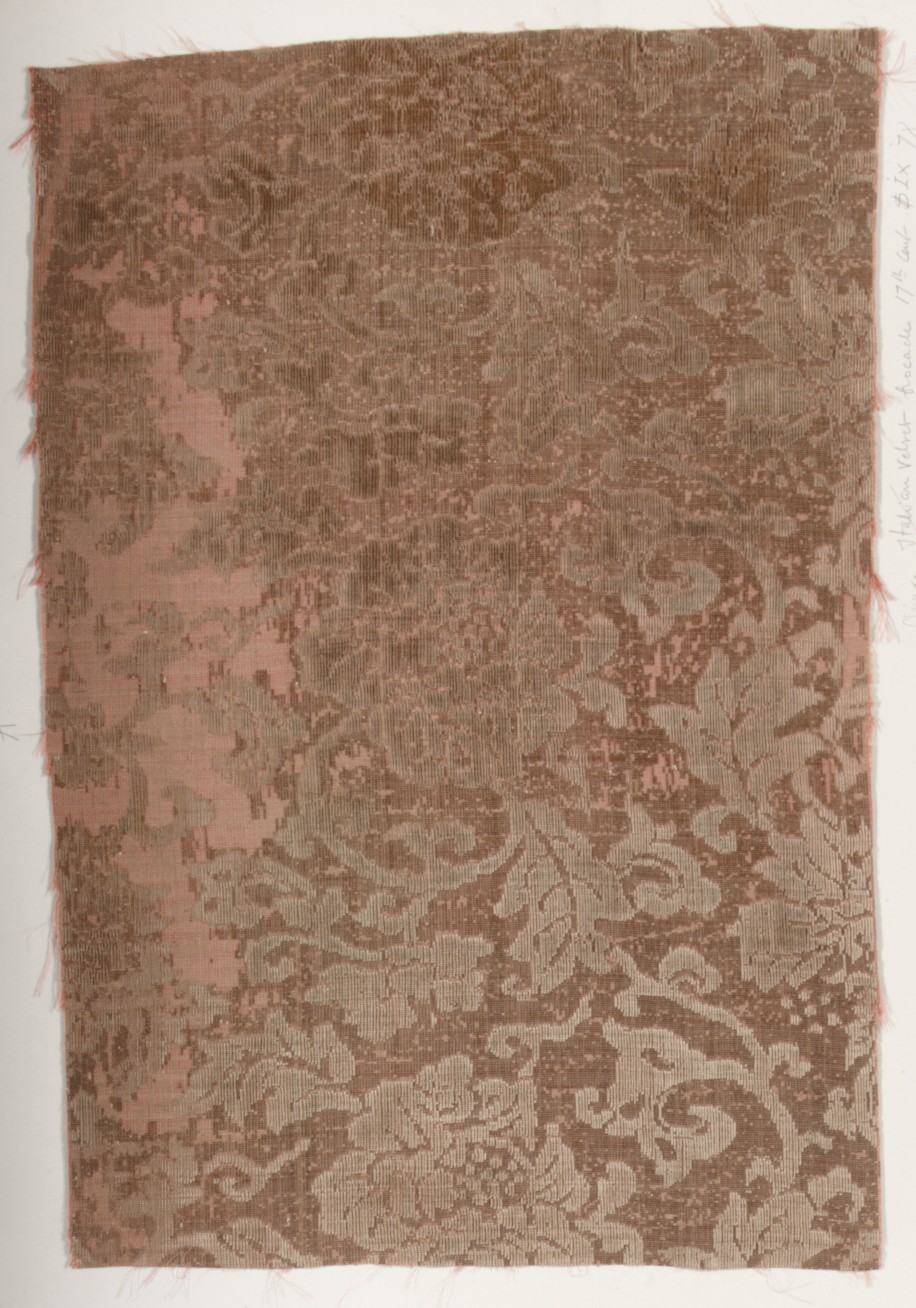
The Fragment as a Whole: Deconstructing Heritage in Silk and Metal
In the rarefied world of haute couture, where garments are often conceived as complete, monolithic statements, Katherine Fashion Lab presents a provocative counter-narrative with its latest standalone study, Fragment. This piece is not a dress, nor a jacket, nor a gown in the traditional sense. It is a deliberate, intellectual deconstruction of form, a meditation on the incomplete, and a masterclass in the tension between fragility and permanence. Drawing from a vast, unspecific Global Heritage, the Lab eschews cultural appropriation in favor of cultural abstraction, distilling centuries of textile traditions into a single, powerful object. The chosen materials—silk and metal thread—are not merely fabrics; they are the philosophical protagonists of this narrative, embodying the ephemeral and the eternal, the soft and the unyielding.
The Conceptual Framework: Incompletion as a Virtue
The term Fragment is both a title and a thesis. In an industry obsessed with polish, finish, and the illusion of perfection, Katherine Fashion Lab boldly champions the unfinished. The garment—if it can be called that—presents as a suspended, asymmetrical panel of raw silk, its edges left intentionally frayed and unhemmed. This is not a sign of neglect but of deliberate artistic choice. The fragment symbolizes the incomplete narratives of global textile history, the lost techniques, the torn trade routes, and the fragmented stories of artisans whose names have been erased by time. By presenting a fragment, the Lab invites the wearer and the observer to become co-creators, to mentally complete the missing sections, to imagine the whole from which this piece was torn.
This approach aligns with the contemporary luxury consumer’s desire for authenticity and intellectual engagement. A perfectly finished garment is a closed statement; a fragment is an open question. It challenges the very definition of couture, which has historically been synonymous with meticulous, invisible construction. Here, the construction is visible, the seams are celebrated, and the raw edge is a philosophical border. The piece exists in a state of perpetual becoming, a snapshot of a process rather than a final destination. This is a radical departure from the conventional, where the goal is to hide the hand of the maker. In Fragment, the hand is everything, and its work is left deliberately exposed.
Material Dialectic: Silk’s Fragility and Metal’s Permanence
The material selection is a study in opposites that paradoxically merge into a cohesive whole. The silk used is a heavy, raw, unbleached silk—often referred to as “silk noil” or “raw silk”—which retains the natural irregularities and slubs of the fiber. Its surface is matte, almost paper-like, suggesting a tactile vulnerability. This silk is not dyed; it retains its natural ecru color, a deliberate nod to the pre-industrial world, to the raw material before it is transformed by synthetic processes. The choice of undyed silk speaks to a Global Heritage of natural fibers and a respect for the material’s intrinsic beauty, unadorned by artificial color.
Contrasting this is the metal thread, a fine, hand-twisted silver-gilt wire that is hand-embroidered into the silk in a series of seemingly random, yet meticulously plotted, geometric patterns. The metal thread is not applied as a decorative afterthought; it is structurally integrated into the fabric, acting as a skeleton that gives form to the otherwise limp silk. The metal thread’s rigidity creates tension, pulling the silk into sharp, angular folds and creating a three-dimensional topography. Where the silk is soft and yields to gravity, the metal thread is stiff and resists it. This dialectic between the yielding and the unyielding creates a dynamic visual and tactile experience. The metal thread also introduces an element of permanence and preciousness—it is a material associated with treasure, with heirlooms, with objects meant to last centuries. This juxtaposition against the fragile, ephemeral silk is a powerful metaphor for the dual nature of heritage: it is both delicate and enduring, easily lost yet capable of surviving through careful preservation.
Global Heritage as a Source of Abstraction
Katherine Fashion Lab’s approach to Global Heritage is notably sophisticated. Rather than borrowing specific motifs from a single culture—a practice that often risks reductionism or appropriation—the Lab extracts the essence of textile traditions from across continents. The geometric patterns embroidered in metal thread evoke the complex geometries of Islamic tilework, the precision of Japanese kogin stitching, and the bold, abstract forms of pre-Columbian Andean textiles. Yet, no single pattern is directly copied. Instead, the Lab synthesizes these influences into a new, universal visual language. The result is a piece that feels ancient and futuristic simultaneously, a hybrid artifact that belongs to no one culture but speaks to the shared human impulse to adorn and structure fabric.
The fragment’s shape itself is an abstraction of a garment. It is not a kimono, not a toga, not a cape, yet it references all of these. The asymmetrical drape suggests a sari’s pallu, while the stiffened, metal-reinforced edge recalls the rigid collars of Elizabethan ruffs. This deliberate ambiguity is a strength. It allows the piece to function as a standalone study, unmoored from any specific historical or cultural context. It is a pure exploration of form, material, and the concept of the fragment as a carrier of memory. The Lab seems to argue that heritage is not a set of fixed symbols but a living, mutable process of reinterpretation.
Structural and Aesthetic Execution
From a technical standpoint, the construction of Fragment is a feat of engineering. The silk panel is approximately 2.5 meters in length and 1 meter in width, but it is not a simple rectangle. The edges are cut in an irregular, organic curve, mimicking the shape of a torn or worn piece of fabric. The metal thread embroidery is concentrated along the upper and lower edges, creating a dense, metallic border that transitions into sparser, more scattered patterns toward the center. This gradient of density creates a visual rhythm, guiding the eye from the structured periphery to the more open, vulnerable center.
The piece is designed to be worn, but not in a conventional manner. It is secured to the body with a series of small, hidden metal clasps, allowing it to be draped in multiple configurations. The wearer becomes a collaborator, choosing how the fragment falls, how the metal thread catches the light, and how the raw silk moves. This interactive element elevates the piece from a static object to a living, breathing entity. The weight of the metal thread ensures that the fabric holds its shape, creating sharp, architectural folds that contrast with the softness of the silk. The overall aesthetic is one of controlled chaos—a deliberate imbalance that feels both ancient and avant-garde.
Conclusion: A New Definition of Luxury
Katherine Fashion Lab’s Fragment redefines luxury not as opulence or perfection, but as intellectual depth, material integrity, and conceptual rigor. In a market saturated with disposable trends, this standalone study offers a counterpoint: a piece that demands contemplation, that resists easy categorization, and that honors the fragmented, incomplete nature of global textile heritage. The dialogue between the fragile, natural silk and the permanent, man-made metal thread is a metaphor for the human condition itself—caught between the ephemeral and the eternal. This is not a garment for the passive consumer; it is a statement for the discerning collector who understands that true luxury lies in the unresolved, the open-ended, and the beautifully incomplete. The fragment, in the hands of Katherine Fashion Lab, becomes a whole universe of meaning.