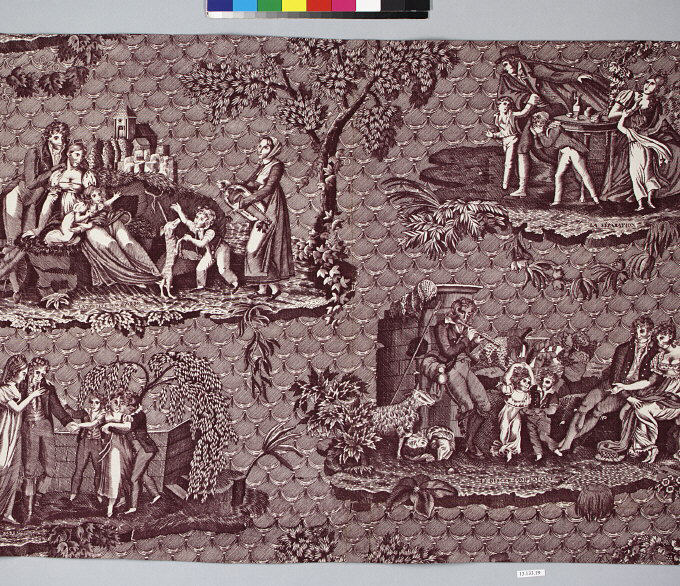
Deconstructing the Dialectic: "Petite Savoyard" or "La Reconciliation" as a Study in Global Couture
Within the rarefied ateliers of Katherine Fashion Lab, the garment designated as "Petite Savoyard" or "La Reconciliation" stands not merely as a piece of clothing but as a profound sartorial thesis. Its very nomenclature, offering two distinct identities, initiates a dialogue central to contemporary luxury: the negotiation between rooted heritage and globalized reinterpretation. Originating from the conceptual wellspring of "Global Heritage" and crafted from the foundational material of cotton, this piece demands a standalone study that dissects its contradictions, its material intelligence, and its quiet rebellion against couture's traditional hierarchies.
The Duality of Nomenclature: A Semantic Framework
The title itself is the first act of curation. "Petite Savoyard" evokes a specific, localized identity—the young girl from the Savoy region, historically associated with Alpine simplicity, pastoral life, and perhaps the modest, functional dress of rural Europe. It is a nod to a geographically-bound archetype, a figure of folkloric charm. In stark contrast, "La Reconciliation" proposes a conceptual resolution. It speaks to a bridging—of past and future, of local and global, of tradition and avant-garde. This duality frames the garment as both an object of specific origin and a universal proposition for harmony. The "or" in the title is not indecisive but rather inclusive, inviting the viewer to hold both concepts in tension, understanding that the garment's power lies in its capacity to be both simultaneously.
Material Alchemy: The Couture Elevation of Cotton
The specification of cotton as the primary material is a deliberate and radical choice within a couture context. Historically, haute couture has been synonymous with rarity: silks, rare lace, precious metals, and exotic pelts. By selecting cotton—a ubiquitous, democratic, and fundamentally utilitarian fiber—Katherine Fashion Lab engages in a material subversion. This is not, however, a simple exercise in minimalism. The Lab's treatment of cotton likely transforms it through extreme technical manipulation. Imagine cotton so meticulously pleated, starched, and structured that it achieves the architectural rigidity of a historical basque; or conversely, cotton woven on a microscopic scale to create a gossamer, cloud-like volume rivaling the finest organdy. The "couture" value is injected not through the fiber's inherent cost, but through the astronomical investment of artisanal time, knowledge, and transformative technique. It is a statement that true luxury resides in the transformation of the ordinary into the extraordinary, challenging the very definition of preciousness.
Form and Silhouette: Reading the Global Heritage Code
The "Global Heritage" origin point suggests a silhouette and construction that are palimpsests of multiple traditions. The "Petite Savoyard" allusion may manifest in a high-necked, modest line, perhaps a reference to Alpine dirndl influences—a fitted bodice and a full skirt. Yet, under the lens of "La Reconciliation," these elements are not reproduced nostalgically. The bodice may be deconstructed, using seams traditionally hidden as external, graphic elements. The full skirt might be engineered not from layers of petticoats but from a single, breathtaking expanse of cotton sculpted into a geometric, almost parabolic form. One might detect echoes of a Japanese obi sash transformed into a structural spine for the garment, or the intricate tucks of a Vietnamese áo dài reinterpreted as textural armor. This is not cultural appropriation but rather cultural synthesis—a respectful, intelligent, and abstracted conversation with global sartorial idioms, resulting in a form that belongs to no single place but to a refined, borderless vision.
Context as Standalone Study: The Garment as Autonomous Universe
The directive for a standalone study is critical. This analysis deliberately divorces the garment from the distractions of a seasonal collection narrative, a specific muse, or a thematic runway set. It forces an examination of the piece on its own intrinsic merits—its craftsmanship, its conceptual weight, its internal balance of forces. We are asked to evaluate it as one would a singular sculpture in a gallery. This isolation amplifies its dialectical nature. Every stitch becomes a word in the argument between Savoyard and Reconciliation. The lack of contextual crutches underscores the Lab's confidence that the garment is a self-sufficient repository of meaning, capable of communicating its complex narrative through cut, material, and form alone. It asserts that in high couture, the ultimate luxury is intellectual and artistic autonomy.
Conclusion: The Reconciliation Achieved
Ultimately, "Petite Savoyard or La Reconciliation" emerges as a masterful case study in modern couture philosophy. Katherine Fashion Lab demonstrates that heritage is not a static artifact to be preserved, but a dynamic language to be spoken with a contemporary accent. By leveraging the humble cotton to heights of technical splendor, the piece reconciles accessibility with exclusivity, redefining where value lies. By synthesizing global influences into a cohesive, unnamed silhouette, it reconciles the local with the universal. And by bearing two names, it finally reconciles the romantic, specific human story ("Petite Savoyard") with the overarching, conceptual ambition ("La Reconciliation"). The garment does not choose between its titles; it embodies their synthesis, proving that in the highest echelons of fashion, the most powerful statement is often one of elegant, resolved contradiction. It stands as a testament to the Lab's core belief: that the future of heritage is not in replication, but in profound and respectful reimagination.