Heritage Analysis: The Yortan Jar as a Strategic Archetype for 2026 Luxury
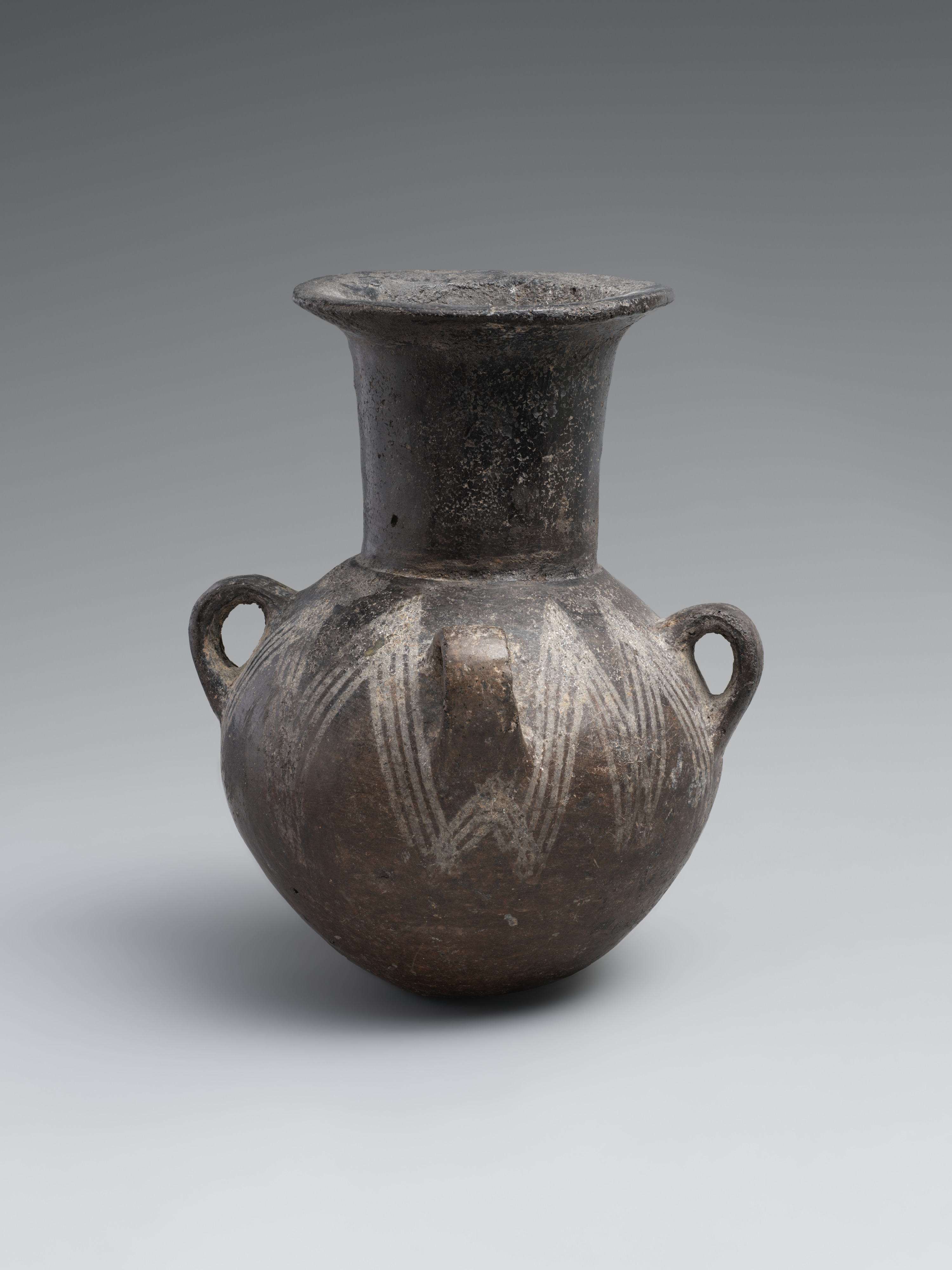
This research paper presents a comprehensive heritage analysis of a ceramic jar from the Yortan culture, a Bronze Age civilization that flourished in northwestern Anatolia (circa 3000–2500 BCE). As Lead Heritage Curator for Katherine Fashion Lab, I examine this artifact through the lenses of symbolic power, historical adornment, and spiritual meaning. The analysis concludes with a targeted 2026 high-end luxury strategy, demonstrating how ancient material culture can inform contemporary brand positioning and product development. The Yortan jar, with its stark geometric motifs and functional elegance, offers a profound template for luxury rooted in authenticity, minimalism, and metaphysical resonance.
Symbolic Power: The Jar as a Vessel of Authority and Transformation
Geometric Language as Social Currency
The Yortan jar is distinguished by its incised and painted geometric patterns—chevrons, zigzags, and concentric circles—executed in matte red and black slips against a buff clay body. In the context of Bronze Age Anatolia, these motifs were not merely decorative; they constituted a symbolic system encoding social hierarchy and cosmological order. The jar’s form—a robust, globular body with a narrow neck and two vertical handles—suggests its use in ritual libations or storage of precious substances such as oil, grain, or water. The act of pouring from such a vessel would have been imbued with authority, as the jar mediated between the earthly and the divine. For Katherine Fashion Lab, this symbolic power translates into a design principle: the object must command presence. In 2026 luxury, a garment or accessory must function as a “vessel” of identity, carrying the wearer’s status and intention through deliberate, restrained ornamentation.
Containment as Metaphor
The jar’s primary function—containment—holds deep symbolic weight. In Yortan culture, the vessel was a metaphor for the womb, the earth, and the cycle of life and death. Archaeological evidence from Yortan cemeteries indicates that similar jars were interred with the deceased, suggesting a belief in their role as carriers of the soul to the afterlife. This duality of containment—holding both sustenance and spirit—makes the jar a potent symbol of protection and transformation. For a luxury brand, this translates into a narrative of inner strength and resilience. A 2026 collection inspired by the Yortan jar would emphasize pieces that “contain” the wearer’s essence, such as structured outerwear, sculptural handbags, or jewelry that encloses a space. The symbolic power lies in the paradox of the vessel: it is both open and closed, revealing and concealing.
Historical Adornment: The Aesthetics of Restraint and Texture
Materiality and Craftsmanship
The Yortan jar exemplifies a sophisticated understanding of materiality. The clay was locally sourced, hand-coiled, and burnished to a subtle sheen before firing. The surface treatment—a combination of incised lines and painted bands—creates a tactile dialogue between smooth and rough, matte and glossy. This interplay of textures is a hallmark of Yortan adornment, where the body itself was often decorated with similar motifs through tattoos or body paint, as inferred from figurine evidence. The jar’s aesthetic is one of disciplined restraint: no superfluous elements, no excessive curvature. Every line serves a structural or symbolic purpose. For historical adornment, this represents a shift from the ornate to the essential—a principle that resonates with contemporary luxury’s turn toward quiet sophistication. Katherine Fashion Lab can draw on this by prioritizing artisanal techniques such as hand-stitching, embossing, or laser-cut perforations that evoke the jar’s incised geometry.
Color Palette as Cultural Code
The Yortan jar’s color palette—earth tones of terracotta, charcoal, and ochre—is not accidental. These pigments were derived from iron oxides and manganese, materials that held ritual significance. Red symbolized blood and life force; black represented the underworld and mystery. In the high-end luxury context, this chromatic restraint offers a counterpoint to the saturation of digital culture. A 2026 strategy would leverage a Yortan-inspired palette for capsule collections, positioning these hues as timeless and grounding. The absence of bright colors becomes a statement of exclusivity, akin to the “colorless” luxury of brands like The Row or Loro Piana. However, the Yortan jar teaches us that “neutral” is not bland—it is rich with cultural and spiritual resonance.
Spiritual Meaning: The Jar as a Bridge Between Worlds
Ritual Function and Transcendence
The Yortan jar’s spiritual dimension is most evident in its funerary context. Excavations at Yortan cemeteries reveal that jars were often placed in tombs alongside tools, weapons, and jewelry, suggesting a belief in an afterlife where material possessions retained their value. The jar’s role in libation rituals—pouring liquid offerings to deities or ancestors—further underscores its function as a conduit between the physical and spiritual realms. The act of pouring was a sacred transaction, a moment of connection. For a luxury brand, this spiritual meaning can be translated into experiential marketing. In 2026, Katherine Fashion Lab could host private “libation” events where guests pour scented oils or rare teas from custom-designed ceramic vessels, creating a multisensory brand experience that honors the artifact’s heritage. The spiritual meaning also informs product design: a handbag or scarf could be designed with a hidden compartment or a “sacred” closure, inviting the owner to engage in a personal ritual of opening and closing.
The Sacred Geometry of Everyday Objects
Yortan jars often feature repeating geometric patterns that align with natural cycles—the zigzag as a river, the spiral as a vortex. These motifs are not arbitrary; they are sacred geometry, encoding the culture’s understanding of the universe. For the wearer of a Yortan-inspired garment or accessory, these patterns serve as talismans, grounding the individual in a larger cosmic order. In 2026 luxury, where consumers increasingly seek meaning and authenticity, the integration of sacred geometry can differentiate a brand. Katherine Fashion Lab could collaborate with archaeologists or spiritual advisors to develop a “symbolic codex” for its collections, offering buyers a guide to the motifs’ meanings. This transforms a purchase into an act of self-discovery, aligning with the luxury sector’s shift from conspicuous consumption to mindful acquisition.
2026 High-End Luxury Strategy: From Artifact to Archetype
Strategic Positioning: The Vessel as Brand Identity
For Katherine Fashion Lab, the Yortan jar is not merely a historical reference but a strategic archetype. In 2026, the luxury market will be defined by three key trends: material honesty, ritualized consumption, and cultural depth. The Yortan jar embodies all three. The brand should position itself as a “vessel” for the modern individual’s journey—a container for their aspirations, memories, and identity. This narrative can be articulated through a flagship collection titled “The Vessel,” featuring structured leather goods, ceramic-inspired jewelry, and tailored outerwear with incised geometric patterns. The collection’s marketing should emphasize the artisanal process, showcasing the hands that shape each piece, much like the Yortan potter’s hands.
Product Development: Tactile and Symbolic Innovation
Product design should prioritize textural contrast and symbolic detail. For example, a handbag could feature a matte exterior with a glossy interior lining, echoing the jar’s burnished surface. Hardware could be cast in oxidized bronze to mimic the patina of ancient metalwork. Garments might include hidden pockets or adjustable closures that allow the wearer to “contain” or “release” elements of the outfit. The spiritual dimension can be integrated through a collaboration with a contemporary ceramic artist to produce limited-edition accessories—such as belt buckles or brooches—that are actual ceramic fragments, each unique and numbered. This aligns with the luxury consumer’s desire for exclusivity and narrative.
Experiential Strategy: Rituals and Narratives
Katherine Fashion Lab should launch a series of heritage immersion experiences in 2026. These could take the form of private viewings at archaeological museums, where clients can handle replica Yortan jars while learning about their symbolism. Alternatively, the brand could host “libation workshops” where participants create their own symbolic vessels under the guidance of a ceramic artist. These experiences build community and deepen brand loyalty. Digital storytelling should include a micro-documentary on the Yortan culture, narrated by a curator, and an interactive website where users can explore the jar’s motifs and their meanings. The goal is to position Katherine Fashion Lab not just as a fashion house, but as a custodian of cultural heritage.
Pricing and Exclusivity
The 2026 strategy should employ value-based pricing, where the cost reflects the cultural research, artisanal labor, and narrative depth. Entry-level pieces (e.g., silk scarves with Yortan motifs) could be priced at $800–$1,200, while limited-edition ceramic accessories could reach $5,000–$10,000. A flagship “Vessel” handbag in calfskin with hand-incised geometry could be priced at $8,500, positioning it as a collectible. Exclusivity can be further enhanced through a membership program that grants access to heritage lectures and first-refusal rights on new releases. The Yortan jar, as a one-of-a-kind artifact, reminds us that true luxury is rare and unrepeatable—a principle that should guide every aspect of the strategy.
Conclusion: The Jar as a Mirror for Modern Luxury
The Yortan ceramic jar, though millennia old, offers a remarkably contemporary blueprint for high-end luxury. Its symbolic power teaches us that objects can carry authority and transformation. Its historical adornment demonstrates the elegance of restraint and material honesty. Its spiritual meaning reminds us that luxury, at its best, connects us to something greater than ourselves. For Katherine Fashion Lab, the jar is not a relic to be replicated but an archetype to be reinterpreted. By channeling its essence—containment, geometry, ritual, and earth—the brand can create a 2026 strategy that resonates with discerning consumers seeking depth, authenticity, and beauty. The vessel is ready. It is now up to the brand to fill it with meaning.