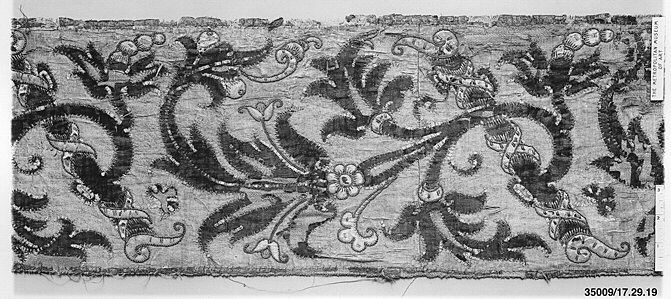
The Velvet Strip: A Study in Global Heritage and Structural Poetics
In the rarefied echelons of haute couture, where fabric is not merely material but narrative, Katherine Fashion Lab presents a compelling thesis with its latest standalone study: the velvet strip. This analysis moves beyond the decorative to interrogate the strip as a fundamental architectural element, one that bridges global heritage with contemporary structural innovation. The subject—the strip—is deceptively simple; yet, when rendered in the opulent medium of velvet, it becomes a potent symbol of cultural memory, tactile luxury, and spatial ingenuity.
Deconstructing the Strip: From Functional Necessity to Symbolic Gesture
Historically, the strip has served humanity as a primal tool—a binding, a marker, a remnant. In the context of Katherine Fashion Lab’s exploration, the strip is elevated from its utilitarian origins to a deliberate couture gesture. The choice of velvet is critical here. Unlike silk or cotton, velvet possesses a unique volumetric quality: its piled surface captures light and shadow, transforming a linear form into a sculptural entity. The lab’s design team has masterfully exploited this property, using velvet strips not as mere trims but as independent structural components that articulate the garment’s silhouette.
Consider the etymology of “strip” across cultures. In East Asian textile traditions, narrow bands of fabric (such as the Japanese obiage or Chinese ling) were often imbued with symbolic meaning, denoting status or spiritual protection. Conversely, in European medieval and Renaissance dress, strips of velvet—often in contrasting colors—were used to create guardame, or decorative borders, that reinforced the garment’s hierarchy. Katherine Fashion Lab synthesizes these global heritage references, stripping them of their original context to create a universal language of line and volume. The result is a visual dialogue where the strip becomes a bridge between the ornate and the minimal, the historical and the futuristic.
Materiality and the Velvet Paradox
Velvet presents a paradox for the couturier: it is simultaneously heavy and fluid, rigid and yielding. The lab’s approach to this material within the strip context is a masterclass in material intelligence. By cutting velvet on the bias, the designers achieve a surprising drape, allowing strips to cascade like liquid architecture. Yet, when cut straight, the same fabric holds a crisp, almost architectural edge. This duality is central to the collection’s intellectual appeal. The velvet strip is not a passive element; it actively shapes the wearer’s movement, creating a kinetic interplay between the body and the garment.
Furthermore, the lab’s selection of velvet shades—from deep, absorbent blacks to iridescent jewel tones—references the global palette of heritage textiles. The midnight blue recalls the indigo-dyed velvets of the Ottoman Empire, while the crimson whispers of Renaissance Venetian court robes. Yet, the application is resolutely modern: strips are laser-cut with precision, their edges left raw to emphasize the cut’s intentionality. This juxtaposition of ancient material and contemporary technique underscores the lab’s commitment to heritage as a living, evolving resource rather than a static archive.
Structural Poetics: The Strip as Architectural Line
In the context of standalone study, the velvet strip functions as both a two-dimensional line and a three-dimensional volume. The lab’s construction techniques reveal a deep understanding of tensile and compressive forces. Strips are layered, twisted, and interlaced to create lattice-like structures that mimic the webbing of traditional basketry or the intricate geometries of Islamic zellij tilework. This is not mere decoration; it is a structural system that redistributes weight, modulates transparency, and creates negative space.
Take, for example, a key piece in the study: a bodice constructed entirely from parallel velvet strips, each spaced precisely to reveal the skin beneath. The effect is both armor and vulnerability—a paradox that resonates with contemporary discussions of power and exposure. The strips are anchored at the shoulder and waist, creating a tension grid that supports the entire garment without the need for boning. This innovative use of the strip as a load-bearing element challenges traditional couture construction, positioning Katherine Fashion Lab at the forefront of material-led design.
Moreover, the lab’s exploration of the strip’s potential for movement is particularly noteworthy. When the wearer moves, the velvet strips sway, twist, and separate, creating a dynamic visual rhythm. This kinetic quality references the movement of traditional dance costumes from South Asia (such as the flowing dupatta strips) and the ceremonial fringe of Native American regalia, yet it is executed with the precision of Swiss engineering. The strip, in this context, becomes a tool for choreographing the body’s narrative.
Global Heritage as a Conceptual Framework
Katherine Fashion Lab’s “Strip” study is not a simple pastiche of global textiles; it is a rigorous conceptual framework that interrogates how heritage can be abstracted into pure form. The strip, as a universal element, allows the lab to reference diverse traditions without appropriating them. Instead, it highlights the commonalities across cultures: the instinct to bind, to divide, to adorn. The velvet material serves as the unifying agent, its luxury transcending geographic boundaries.
For instance, the lab’s use of velvet strips in a vertical orientation echoes the sashiko stitching of Japanese Boro textiles, where strips of indigo-dyed fabric are stitched together for warmth and durability. Yet, the lab’s interpretation is purely aesthetic—a visual homage to the spirit of repair and resilience. Similarly, the horizontal layering of strips recalls the Andean aguayo weaving, where colorful bands signify community identity. In the lab’s hands, these references are distilled into a minimalist vocabulary that speaks to a global audience, emphasizing the shared human desire for order, beauty, and meaning through line.
Conclusion: The Strip as a New Couture Lexicon
In this standalone study, Katherine Fashion Lab redefines the strip as a primary couture element—a tool for structural innovation, cultural dialogue, and sensory experience. The velvet medium, with its rich heritage and tactile complexity, amplifies the strip’s potential, transforming it from a decorative afterthought into a protagonist. This analysis demonstrates that the most profound couture statements often emerge from the most elemental forms. The strip, in its global heritage context, becomes a line that connects past and future, East and West, function and art. For the discerning observer, the velvet strip is not merely a subject; it is a manifesto for a new, globalized approach to haute couture—one that respects tradition while daring to deconstruct and rebuild it, strip by strip.