Heritage Analysis: The Kris with Sheath as a Strategic Artifact for Katherine Fashion Lab
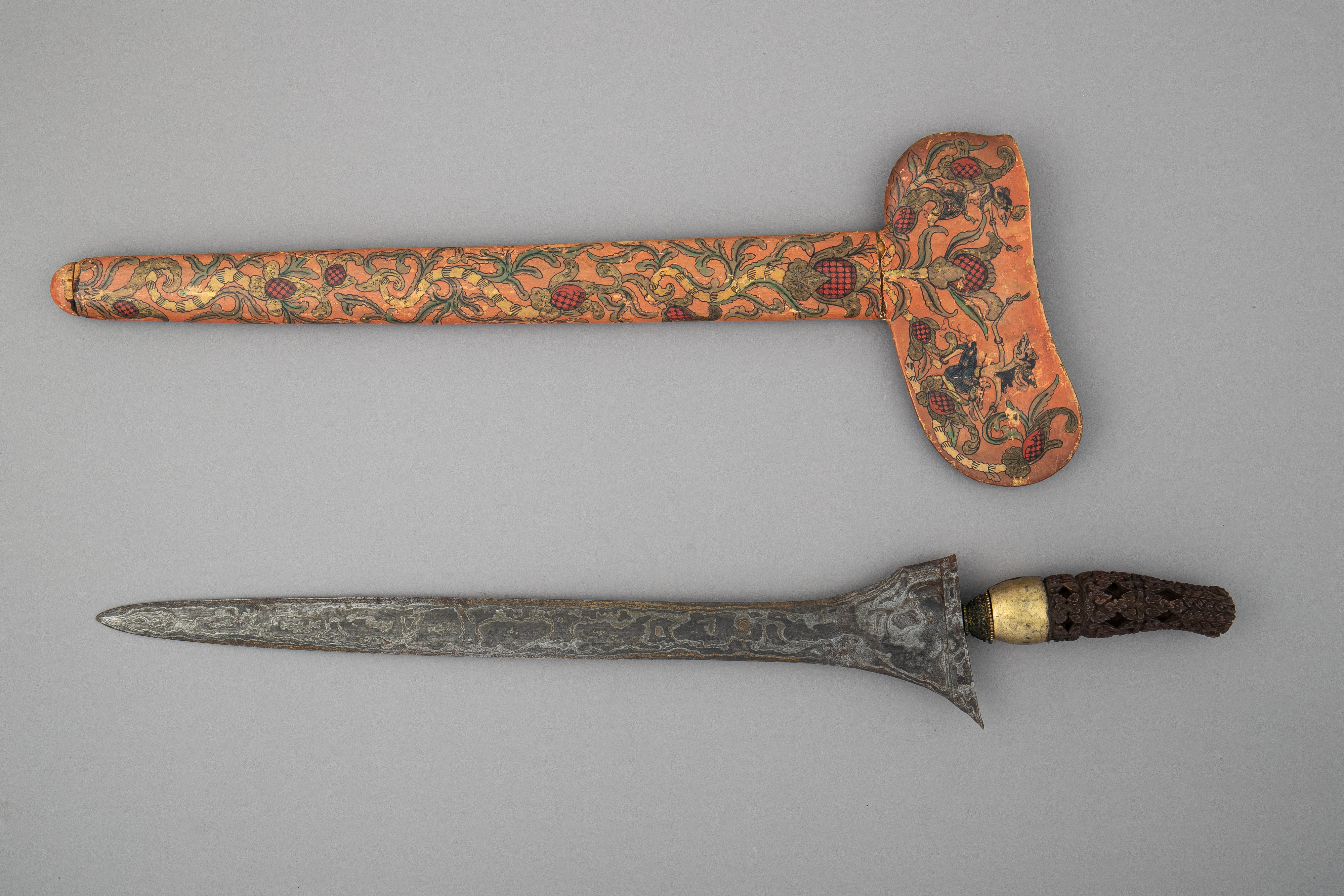
The Kris with Sheath, a ceremonial dagger originating from the Indonesian archipelago, represents one of the most potent symbols of spiritual authority, social hierarchy, and artisanal mastery in Southeast Asian material culture. For Katherine Fashion Lab, this artifact—crafted from steel, wood, silver, and gold, with polychrome embellishments—offers a rare convergence of historical adornment and symbolic power that can inform a 2026 high-end luxury strategy rooted in authenticity, narrative, and exclusivity. This analysis examines the kris’s cultural provenance, its layered symbolism, and its potential as a strategic reference for luxury branding.
Cultural Provenance and Material Synthesis
The kris under study exhibits a complex hybridity characteristic of the Nusantara archipelago, where Madurese, Javanese, and possibly Balinese influences coalesce. The blade, forged from layered steel through a ritualized process of folding and quenching, reflects the Javanese tradition of pamor—a pattern believed to imbue the weapon with metaphysical properties. The grip, likely carved from wood and adorned with silver or gold, demonstrates Madurese craftsmanship, known for its intricate floral and geometric motifs. The sheath, often the most ornate component, is a canvas for polychrome lacquerwork and precious metal inlay, a practice refined in Balinese courts. This synthesis of materials—steel, wood, silver, gold, and polychromy—is not merely decorative; it encodes the kris as a status object, a spiritual conduit, and a marker of lineage.
Historically, the kris was more than a weapon. It was a talisman, believed to possess a tuah (spiritual potency) that could protect its bearer, influence fortune, or even channel ancestral power. The process of forging a kris involved propitiatory rites, and the finished blade was often consecrated through meditation and offerings. This spiritual dimension elevates the kris beyond functional utility into the realm of sacred adornment—an object worn not only for display but for metaphysical alignment.
Symbolic Power and Spiritual Meaning
At the core of the kris’s symbolic power is its dual role as microcosm and macrocosm. The blade represents the kṣatriya (warrior) ethos, embodying courage and authority, while the sheath symbolizes the womb—a protective, nurturing force that contains and tempers the blade’s aggression. This yin-yang dynamic is central to Javanese cosmology, where balance between opposing forces is essential for harmony. The polychrome decoration, often featuring red, gold, and black lacquer, reinforces this symbolism: red signifies life force and courage, gold denotes divinity and royalty, and black represents the primordial void or spiritual depth.
For the bearer, the kris functioned as a social passport. In Javanese and Balinese courts, the style, material, and ornamentation of a kris indicated the wearer’s rank, achievements, and even their spiritual alignment. A kris with gold pendok (sheath overlay) was reserved for royalty, while silver denoted nobility. The polychrome finish—achieved through labor-intensive layering of natural resins and pigments—was a mark of the patron’s wealth and the artisan’s virtuosity. This hierarchy of adornment offers a direct parallel to contemporary luxury: exclusivity is communicated through material rarity, craftsmanship complexity, and symbolic resonance.
Historical Adornment: The Kris as Wearable Heritage
The kris was worn as part of formal court attire, tucked into the waist sash or carried during ceremonial processions. Its visibility was deliberate: the sheath’s curvature and the grip’s sculptural form were designed to be seen and admired. This makes the kris a precursor to modern luxury accessories—a piece that communicates identity without words. The polychrome elements, often applied to the sheath’s upper band (gandar) and lower ferrule (warangka), created a visual rhythm that drew the eye, much like a signature motif in a luxury handbag or jewelry line.
From a historical adornment perspective, the kris embodies sartorial diplomacy. When presented as a gift between rulers, it signified alliance, respect, or fealty. The material choices—gold, silver, rare woods—were not arbitrary; they were coded messages of power and intent. For Katherine Fashion Lab, this principle of material storytelling is directly transferable: a luxury product must communicate its narrative through every element, from metal finishes to color palettes.
Strategic Application for 2026 High-End Luxury
Katherine Fashion Lab’s 2026 strategy can leverage the kris’s heritage to differentiate in an increasingly saturated luxury market. The following strategic pillars emerge from this analysis:
1. Narrative-Driven Craftsmanship. The kris’s making process—ritual forging, layered materials, consecration—offers a blueprint for artisanal storytelling. Katherine Fashion Lab can position its 2026 collection as “consecrated” through a similar process of meticulous handcraft and symbolic intent. Limited-edition pieces, each with a unique pamor-inspired pattern or polychrome finish, would command premium pricing and collector interest.
2. Material Semiotics. The kris’s use of gold, silver, and polychromy as status markers can inform a material hierarchy within the collection. For example, a “Royal” tier using 24-karat gold and rare woods, a “Noble” tier with silver and ebony, and a “Spiritual” tier featuring hand-painted polychrome on sustainably sourced materials. This stratification allows for price segmentation while maintaining brand coherence.
3. Spiritual Positioning. In an era where consumers seek meaning beyond materiality, the kris’s spiritual dimension offers a powerful emotional anchor. Katherine Fashion Lab can frame its products as talismanic accessories—objects meant to protect, empower, or align the wearer with their inner purpose. This resonates with the growing trend of “conscious luxury,” where provenance and intention matter as much as aesthetics.
4. Collaborative Provenance. Partnering with living master craftspeople from Madura, Java, or Bali would authenticate the narrative and support cultural preservation. Such collaborations would yield certified heritage pieces, each accompanied by a provenance document detailing the artisan, materials, and symbolic meaning. This aligns with the 2026 luxury consumer’s demand for transparency and ethical production.
5. Polychromy as Brand Signature. The kris’s polychrome finish—rare in modern luxury—can become Katherine Fashion Lab’s visual signature. A proprietary palette of red, gold, and black, applied to leather goods, jewelry, or accessories, would create instant brand recognition. The labor-intensive process of hand-painting or lacquering would also justify higher price points and reinforce the brand’s commitment to slow luxury.
Conclusion
The Kris with Sheath is not merely a historical artifact; it is a strategic archetype for luxury brand differentiation. Its synthesis of Madurese, Javanese, and Balinese traditions, its layered symbolism of power and spirituality, and its hierarchy of materials offer Katherine Fashion Lab a rich lexicon for 2026. By translating the kris’s ritualized craftsmanship, material semiotics, and talismanic resonance into a contemporary luxury context, the brand can create products that are not only beautiful but meaningful—appealing to a discerning clientele seeking authenticity, exclusivity, and spiritual depth. In doing so, Katherine Fashion Lab will position itself not as a follower of trends, but as a curator of heritage reborn for the modern age.