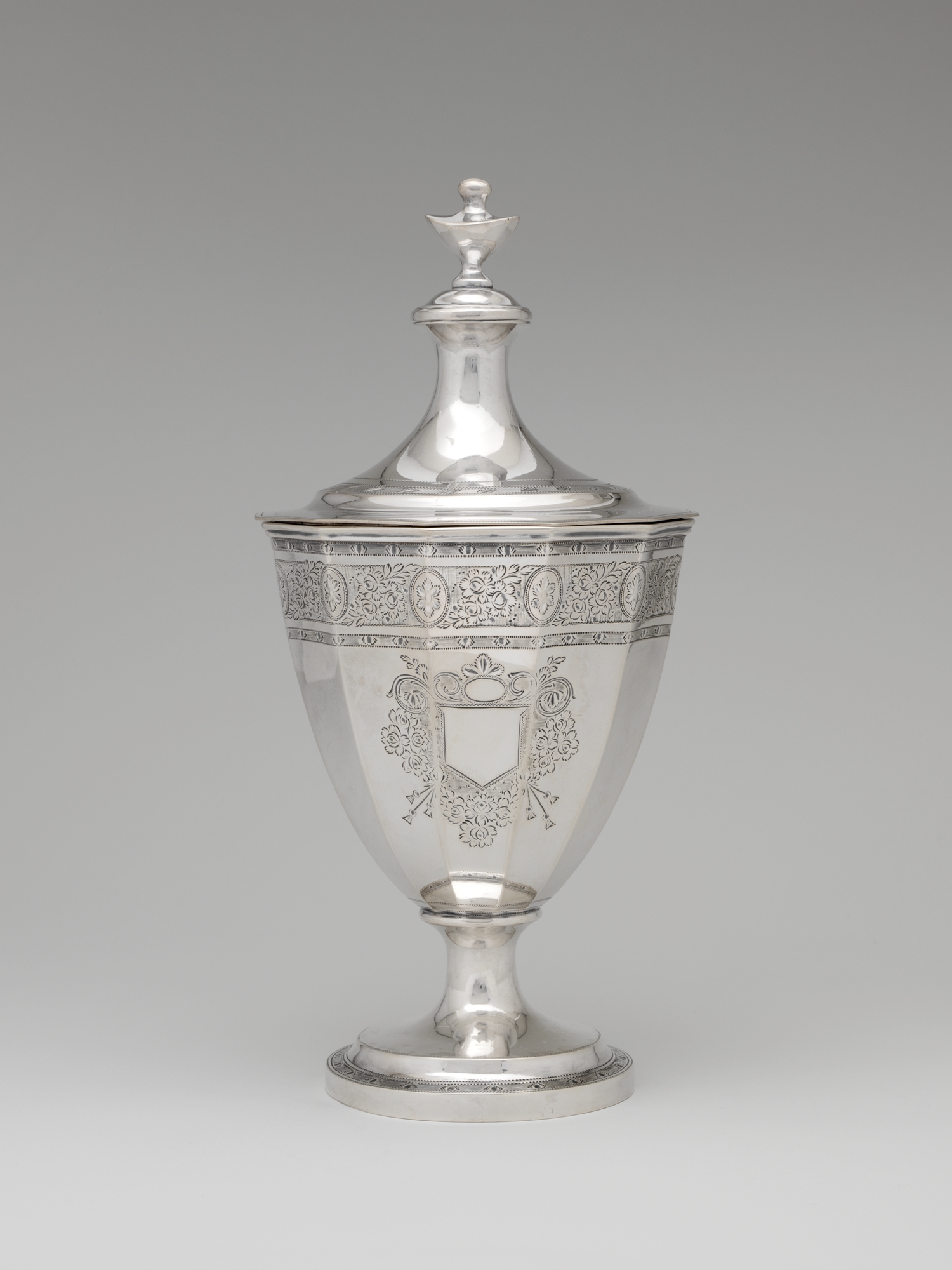
Heritage Analysis: The American Silver Sugar Urn
This report presents a strategic heritage analysis of an American silver sugar urn with cover, commissioned by Katherine Fashion Lab as part of a Standalone Research initiative. The object, a refined example of early American silversmithing, serves as a potent artifact for understanding symbolic power, historical adornment, and spiritual meaning. These insights are then applied to formulate a high-end luxury strategy for the 2026 market, aligning with the Lab’s commitment to cultural depth and brand elevation.
Symbolic Power: The Urn as a Vessel of Status and Sustenance
The sugar urn, in its material and form, embodies profound symbolic power within American social history. Silver, as a medium, was not merely decorative; it was a tangible indicator of wealth, refinement, and transatlantic taste. In the 18th and 19th centuries, sugar itself was a luxury commodity, often referred to as “white gold” due to its high cost and labor-intensive production. The urn, therefore, functioned as a ceremonial object that transformed the act of sweetening tea or coffee into a ritual of hospitality and social distinction.
The urn’s cover, typically domed or finial-topped, further amplifies this symbolism. It signifies containment and preservation—not just of the sugar’s physical properties, but of the household’s prosperity and the host’s ability to offer abundance. The act of lifting the cover to reveal the sugar was a performative gesture, one that communicated generosity and control over precious resources. In a strategic context, this symbolic power translates directly into luxury branding: the sugar urn becomes a metaphor for the brand’s ability to contain and dispense exclusivity, craftsmanship, and cultural capital.
Historical Adornment: Silversmithing and American Aesthetics
The historical adornment of the silver sugar urn reflects a fusion of European design traditions and emerging American identity. Neoclassical motifs, such as reeded bands, urn-shaped bodies, and delicate finials, were popular in the Federal period (circa 1790–1820), influenced by archaeological discoveries in Pompeii and Herculaneum. American silversmiths like Paul Revere and later firms such as Tiffany & Co. adapted these forms, emphasizing clean lines, balanced proportions, and a restrained elegance that distinguished American silver from its more ornate European counterparts.
The urn’s surface may feature engraved monograms, family crests, or decorative borders, each a form of personal adornment that linked the object to a specific lineage. This practice of engraving was a means of asserting identity and ownership, transforming a functional object into a heirloom. For Katherine Fashion Lab, this historical adornment offers a rich design vocabulary: the interplay of polished silver with engraved details, the contrast of matte and reflective surfaces, and the integration of personalized motifs that speak to individual heritage. These elements can be reimagined in contemporary jewelry, accessories, or packaging, creating a narrative of continuity and bespoke craftsmanship.
Spiritual Meaning: The Urn as a Sacred Vessel
Beyond its social and economic functions, the sugar urn carries spiritual meaning rooted in the concept of the vessel as a sacred container. In many cultures, urns have been associated with ritual, offering, and the preservation of essence. The silver material itself, historically linked to purity and light, enhances this spiritual dimension. Silver was believed to possess protective qualities, warding off negativity and symbolizing clarity of intention.
The act of storing sugar—a substance that provides energy and sweetness—within a silver urn elevates the object to a reliquary of life’s pleasures. The cover, often sealed with a tight fit, suggests a sacred enclosure, guarding the contents from contamination. This spiritual narrative resonates deeply with modern luxury consumers who seek meaning and authenticity in their possessions. The sugar urn becomes a symbol of inner richness, of preserving what is precious, and of the ritual of sharing that which sustains. For Katherine Fashion Lab, this opens a strategic avenue: positioning the brand not just as a purveyor of luxury goods, but as a guardian of heritage and a facilitator of meaningful rituals.
2026 High-End Luxury Strategy: Translating Heritage into Contemporary Value
Drawing from the symbolic, historical, and spiritual dimensions of the silver sugar urn, Katherine Fashion Lab can formulate a cohesive luxury strategy for 2026. The following pillars are recommended:
Pillar One: The Vessel Narrative. The brand should adopt the “vessel” as a core metaphor, emphasizing containment, preservation, and revelation. Product lines—whether jewelry, accessories, or home objects—should be designed with a sense of enclosure and unveiling. Packaging, for instance, could mimic the urn’s form, with a weighted lid that must be lifted to reveal the treasure within. This tactile experience reinforces the ritual of discovery, a key driver of high-end consumer engagement.
Pillar Two: Silver as a Signature Medium. Silver, with its historical and spiritual resonance, should be a defining material for the Lab’s 2026 collection. However, it must be reinterpreted through a contemporary lens: consider oxidized finishes for an aged patina, or high-polish surfaces that catch light like water. Collaborations with master silversmiths could produce limited-edition pieces that honor traditional techniques while pushing aesthetic boundaries. This aligns with the growing demand for craftsmanship and material integrity in luxury markets.
Pillar Three: Personalization as Ritual. The historical practice of engraving monograms and crests should be revived as a bespoke service. Clients could choose from a library of motifs inspired by American silversmithing—reeds, swags, finials—or commission entirely custom designs. This transforms the purchase into a ritual of self-expression, deepening the emotional bond between consumer and brand. Digital tools, such as augmented reality previews, could enhance this process, allowing clients to see their initials rendered on a virtual urn before committing.
Pillar Four: Storytelling and Provenance. Each piece should be accompanied by a narrative that traces its design lineage back to a specific historical sugar urn. This could be achieved through a digital passport, describing the original object’s maker, era, and symbolic meaning. Such transparency not only educates the consumer but also positions the Lab as a curator of cultural heritage. In an era of commoditized luxury, provenance is a powerful differentiator.
Pillar Five: The Ritual of Sharing. Finally, the spiritual meaning of the urn—as a vessel for sharing sweetness—should inform the brand’s experiential strategy. Hosting exclusive tasting events, where clients are invited to enjoy rare teas or coffees served from a silver urn, could create memorable brand encounters. These events would reinforce the idea that luxury is not just about possession, but about participation in a shared cultural tradition.
Conclusion
The American silver sugar urn with cover is far more than a historical artifact; it is a repository of symbolic power, historical adornment, and spiritual meaning. For Katherine Fashion Lab, it offers a rich foundation upon which to build a 2026 luxury strategy that is both deeply rooted and forward-looking. By embracing the vessel narrative, elevating silver as a medium, personalizing through ritual, and prioritizing provenance, the Lab can differentiate itself in a competitive market. The sugar urn reminds us that true luxury is not in the object alone, but in the stories it tells and the rituals it enables. This heritage analysis provides the strategic blueprint for translating that timeless wisdom into contemporary relevance.