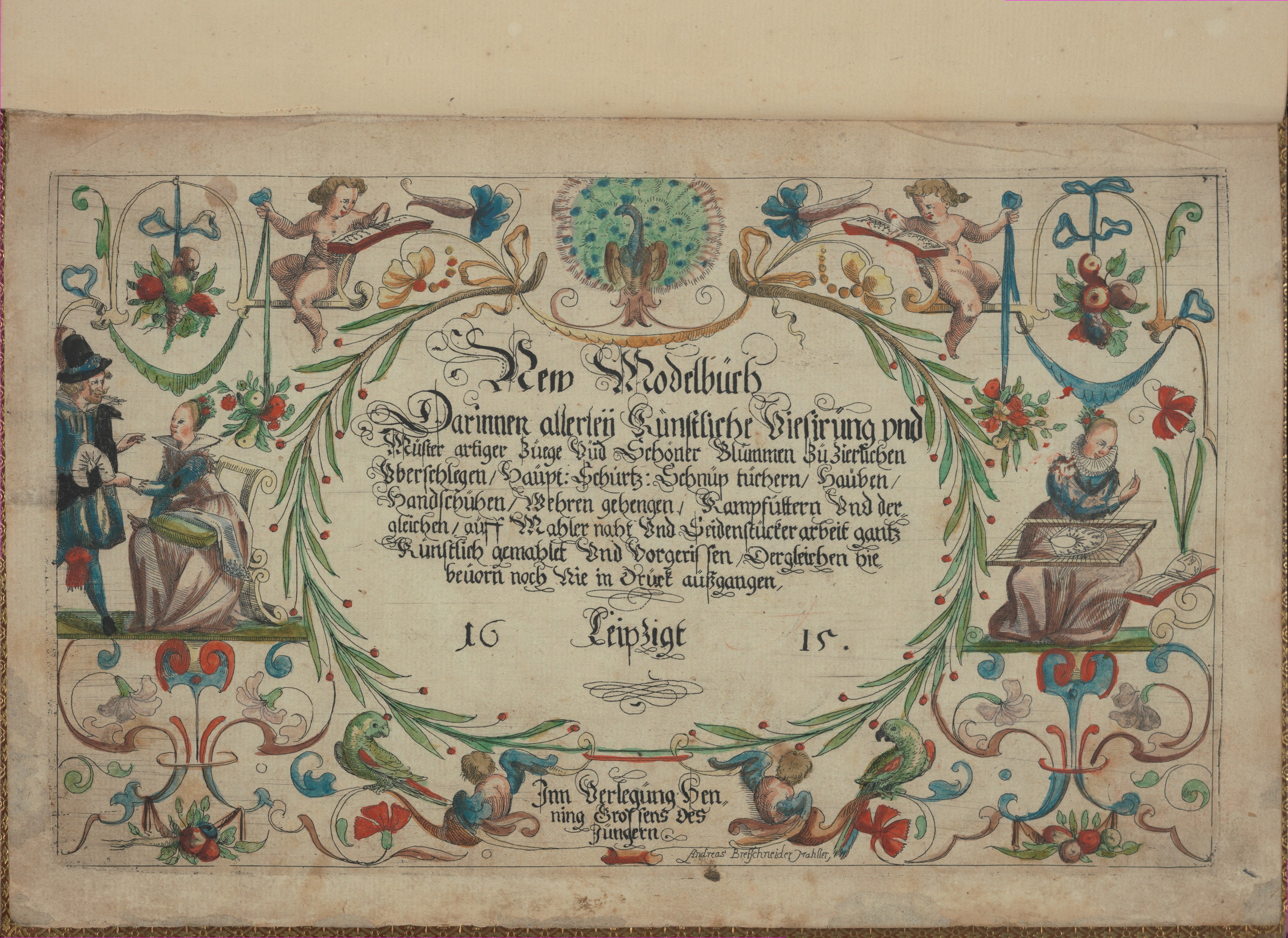
The New Modelbüch: A Couture Analysis of Global Heritage in Print
In the rarefied world of haute couture, where fabric and silhouette often command the narrative, the New Modelbüch emerges as a singular artifact—a testament to the intellectual and artistic foundations of fashion itself. As a hand-colored etching and woodcut, this piece transcends mere pattern-making to become a philosophical statement on the globalization of aesthetics. Katherine Fashion Lab’s analysis positions this work not as a historical relic, but as a living document that interrogates the very definition of heritage in a post-industrial age. The Modelbüch, with its intricate lines and vibrant pigments, challenges the contemporary fashion system to reconsider the value of manual craft, the authority of the designer, and the silent power of printed media as a conduit for cross-cultural exchange.
The Materiality of Memory: Hand-Colored Etching and Woodcut
The choice of medium—hand-colored etching and woodcut—is not merely aesthetic but deeply strategic. In an era dominated by digital rendering and mass production, these techniques invoke a pre-industrial sensibility that prioritizes slowness, intentionality, and imperfection. The etching process, with its incised lines and acid-bitten grooves, creates a texture that resists replication. Each print bears the mark of the artisan’s hand, a signature of authenticity that modern couture houses struggle to preserve. The woodcut, conversely, introduces a boldness of line that echoes the structural rigor of a tailored garment. Together, they form a dialogue between precision and spontaneity, mirroring the tension between pattern and drape in high fashion.
The hand-coloring further elevates the piece from a technical diagram to a work of art. The pigments, applied with watercolor or gouache, are not uniform; they bleed and pool in unpredictable ways, creating a unique chromatic signature for each iteration. This variability is a luxury in itself—a rejection of the sterile consistency of digital print. For Katherine Fashion Lab, this materiality serves as a critique of the fashion industry’s obsession with perfection. It reminds us that heritage is not a static archive but a living, breathing process of interpretation and reinterpretation.
Global Heritage as a Design Lexicon
The New Modelbüch draws upon a global heritage that defies geographical boundaries. Unlike the Eurocentric pattern books of the 16th century, which often replicated regional courtly costumes, this work synthesizes motifs from disparate cultures—Mughal floral patterns, Japanese kimono structures, Andean textile geometries, and West African indigo resist-dye aesthetics. This is not cultural appropriation but a deliberate, scholarly fusion. The Modelbüch acts as a visual encyclopedia, cataloging the universal principles of garment construction: the fold, the seam, the closure. It suggests that heritage is not owned by any single civilization but is a collective inheritance of humanity’s creative impulse.
This global perspective aligns with Katherine Fashion Lab’s mission to decenter Western fashion narratives. By presenting a Modelbüch that is neither purely European nor purely exotic, the piece forces the viewer to question the hierarchies embedded in fashion history. Why is the French couture house considered the apex of design while the Indian bazaar is relegated to “ethnic” or “folk” categories? The New Modelbüch answers this by treating all traditions with equal gravitas. The hand-colored details—a lotus motif here, a geometric border there—are not decorative additions but structural elements that alter the garment’s silhouette and movement. They are, in essence, the DNA of a new, hybrid couture.
The Standalone Study: A Manifesto for Slow Fashion
Contextualized as a standalone study, the New Modelbüch resists the commercial imperative of the fashion calendar. It is not a lookbook for a forthcoming collection, nor a pattern to be mass-produced. Instead, it exists as an intellectual exercise—a meditation on form, color, and cultural memory. This autonomy is radical in an industry that demands constant novelty and rapid turnover. The standalone study allows the viewer to engage with the piece without the pressure of consumption. It invites contemplation: How does a garment’s construction reflect the values of its time? What does it mean to “own” a design language?
For the contemporary couturier, this work offers a blueprint for sustainable creativity. By isolating the Modelbüch from the production cycle, Katherine Fashion Lab underscores the importance of research and development in haute couture. The hand-colored etching becomes a prototype for a new kind of luxury—one rooted in knowledge rather than excess. It argues that true innovation comes not from generating more products but from deepening our understanding of what garments signify. The standalone study is, therefore, a quiet manifesto for slow fashion: a call to pause, analyze, and honor the craft before the cloth is ever cut.
Implications for Modern Couture: The Archive as Catalyst
The New Modelbüch’s greatest contribution to couture analysis is its redefinition of the archive. Traditionally, archives are seen as repositories of the past—dusty, static, and irrelevant to the forward march of fashion. This piece, however, treats the archive as a catalyst for future creativity. The hand-colored etching and woodcut are not merely preserved; they are activated through the act of standalone study. They become a lens through which to view contemporary issues: the ethics of cultural borrowing, the role of manual labor in a digital age, and the search for authenticity in a saturated market.
Katherine Fashion Lab’s analysis suggests that the New Modelbüch can serve as a pedagogical tool for emerging designers. By deconstructing its elements—the line weight of the woodcut, the gradient of the hand-coloring, the global references—students can learn to see fashion as a language rather than a commodity. This approach cultivates a more thoughtful, responsible generation of creators who understand that every stitch carries a history. In an industry often criticized for its environmental and social impact, such education is not optional; it is essential.
Conclusion: The Enduring Power of the Printed Line
In the final analysis, the New Modelbüch stands as a powerful counterpoint to the ephemeral nature of fashion. Its hand-colored etching and woodcut techniques, its global heritage references, and its status as a standalone study collectively argue for a return to the fundamentals of design. It reminds us that couture is not merely about the finished garment but about the ideas that precede it—the sketches, the studies, the conversations across cultures. For Katherine Fashion Lab, this work is not a historical curiosity but a living blueprint. It challenges us to see fashion as a form of cultural diplomacy, a repository of shared human experience, and, above all, an art that deserves the same rigorous analysis as any painting or sculpture. The New Modelbüch is, in essence, a love letter to the slow, deliberate craft of making meaning through cloth and color.