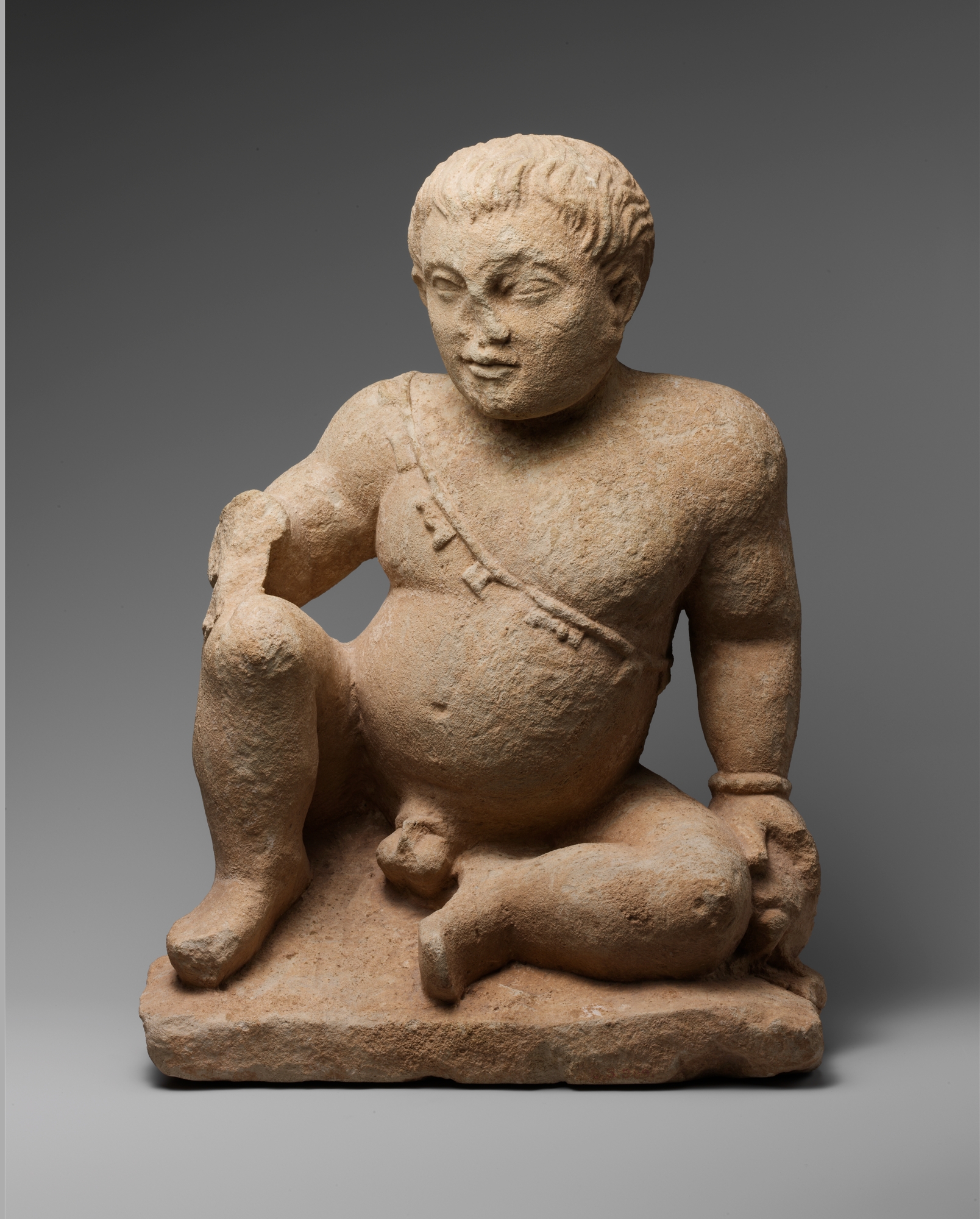
Heritage Analysis: Limestone Statuette of a Temple Boy (Cypriot, ca. 5th–4th Century BCE)
Introduction: The Object as a Nexus of Symbolic Power
The limestone statuette of a temple boy, originating from Cyprus during the Classical period (circa 5th–4th century BCE), represents a profound intersection of spiritual devotion, social hierarchy, and material culture. Carved from locally sourced limestone—a medium both durable and malleable—this object was not merely decorative but functioned as a votive offering, a tangible conduit between the mortal and the divine. For Katherine Fashion Lab, this artifact offers a strategic blueprint for 2026 high-end luxury: the deliberate fusion of sacred symbolism with personal adornment, and the elevation of raw materials into carriers of transcendent meaning.
Symbolic power in this statuette is encoded through its posture, scale, and context. The temple boy is depicted in a standing or kneeling pose, often with hands clasped or holding an offering such as a flower or a bird. This gesture of supplication and humility signals a relationship of deference to the gods, but also of agency—the boy is not a slave but a chosen participant in a sacred economy. In luxury strategy, this translates into the power of the curated gesture: every design element must communicate a deliberate, hierarchical relationship between wearer and object, brand and consumer. The statuette’s symbolic resonance lies in its ability to embody both vulnerability and devotion, qualities that modern luxury consumers seek in narratives of authenticity and spiritual grounding.
Historical Adornment: The Body as a Canvas for the Sacred
Adornment in ancient Cyprus was not an afterthought but a primary mode of identity construction. The temple boy statuette, though often unadorned in its current state, originally may have been painted or gilded. Traces of red and blue pigment on similar Cypriot limestone figures suggest that color was applied to highlight hair, eyes, and garments, imbuing the stone with lifelike presence. This practice of temporary or permanent embellishment parallels contemporary haute couture’s use of hand-painted fabrics, beading, and embroidery to transform a base material into a unique artifact.
For Katherine Fashion Lab, historical adornment lessons are clear: adornment is never neutral. The temple boy’s potential painted details served not only aesthetic purposes but also ritualistic ones—color choices held symbolic associations (e.g., red for life force or sacrifice, blue for divinity or the sky). A 2026 luxury strategy must therefore treat every embellishment as a semiotic act. A single embroidered thread, a specific gemstone setting, or a hand-applied finish should carry a documented narrative, linking the wearer to a lineage of sacred craft. This aligns with the growing consumer demand for traceability and intentionality in luxury goods, where the “why” behind a design is as valuable as the “what.”
Spiritual Meaning: The Votive Economy and the Luxury of Transcendence
The spiritual meaning of the temple boy statuette is inseparable from its function as a votive object. In Cypriot religious practice, individuals dedicated such figures to sanctuaries—often those of Apollo or Aphrodite—as tangible prayers for healing, fertility, or protection. The act of commission and dedication was an investment in spiritual capital, a transaction that transcended material value. The statuette’s limestone medium, while less prestigious than marble or bronze, was chosen for its local availability and symbolic connection to the earth, grounding the offering in the island’s sacred geography.
For Katherine Fashion Lab, this introduces a strategic framework for spiritual luxury. The 2026 consumer is increasingly drawn to products that offer not just status but transcendence—objects that serve as talismans, reminders of personal intention, or links to ancestral wisdom. The temple boy model suggests that luxury brands can create “votive collections” where each piece is designed for a specific aspirational purpose (e.g., confidence, protection, legacy). The limestone’s humble origin becomes a virtue: material humility as a marker of authenticity. Just as the ancient worshiper chose limestone for its sincerity, a modern luxury house can elevate locally sourced, unglamorous materials (e.g., raw-cut crystals, unpolished woods) to iconic status through narrative and craftsmanship.
Furthermore, the statuette’s spiritual meaning underscores the importance of ritual in consumption. The temple boy was not a passive object; it was activated by prayer, placement, and periodic offerings. Luxury brands can emulate this by designing experiences around acquisition—private ceremonies, personalized inscriptions, or digital blessings—that transform a purchase into a meaningful life event. This aligns with the broader 2026 trend toward experiential luxury, where the value lies in the memory and meaning rather than the object alone.
2026 High-End Luxury Strategy: Translating Cypriot Heritage into Modern Capital
To operationalize this heritage analysis, Katherine Fashion Lab must adopt a three-pillar strategy for 2026: Narrative Materiality, Symbolic Curation, and Ritualized Commerce.
Narrative Materiality positions limestone—or analogous materials—as protagonists. The brand can develop a “Sacred Stone” capsule collection using local, ethically sourced limestone or its contemporary equivalents (e.g., reconstituted stone, ceramic composites). Each piece should be hand-finished by artisans, with visible tool marks or color traces that echo ancient Cypriot techniques. The marketing narrative must foreground the material’s geological and spiritual history: “This stone was formed 200 million years ago, shaped by Cypriot hands 2,500 years ago, and reimagined for your life today.” This creates a vertical narrative that connects deep time, ancient culture, and personal identity.
Symbolic Curation involves selecting specific attributes from the temple boy—posture, gesture, offering—and translating them into design motifs. For instance, the clasped hands can inspire a modular bracelet that “locks” when the wearer sets an intention. The offering bird can become a pendant with a hidden compartment for a written wish. Each design should come with a symbolic index card explaining its historical and spiritual significance, akin to the museum labels that accompany ancient artifacts. This educates the consumer and elevates the product from fashion to cultural artifact.
Ritualized Commerce reimagines the retail environment as a sanctuary. Katherine Fashion Lab’s flagship stores should include a “dedication chamber” where clients can learn about Cypriot votive traditions and participate in a modern ritual: lighting a candle, writing a prayer, or anointing their purchase with a scented oil. The transaction becomes a ceremony, and the product becomes a talisman. This strategy leverages the growing consumer interest in mindfulness and slow luxury, where purchase decisions are deliberate and imbued with personal meaning.
Conclusion: The Eternal Resonance of the Votive Boy
The limestone statuette of a temple boy is not an artifact of a dead culture but a living template for how luxury can reclaim its ancient role as a mediator between the human and the transcendent. By studying its symbolic power, historical adornment, and spiritual meaning, Katherine Fashion Lab can craft a 2026 strategy that is both academically rigorous and commercially innovative. The key lies in respecting the object’s integrity while adapting its essence for a contemporary audience—transforming a Cypriot boy’s prayer into a universal language of aspiration and devotion. In doing so, the brand does not simply sell clothing or accessories; it offers a piece of sacred history, reincarnated for the modern soul.