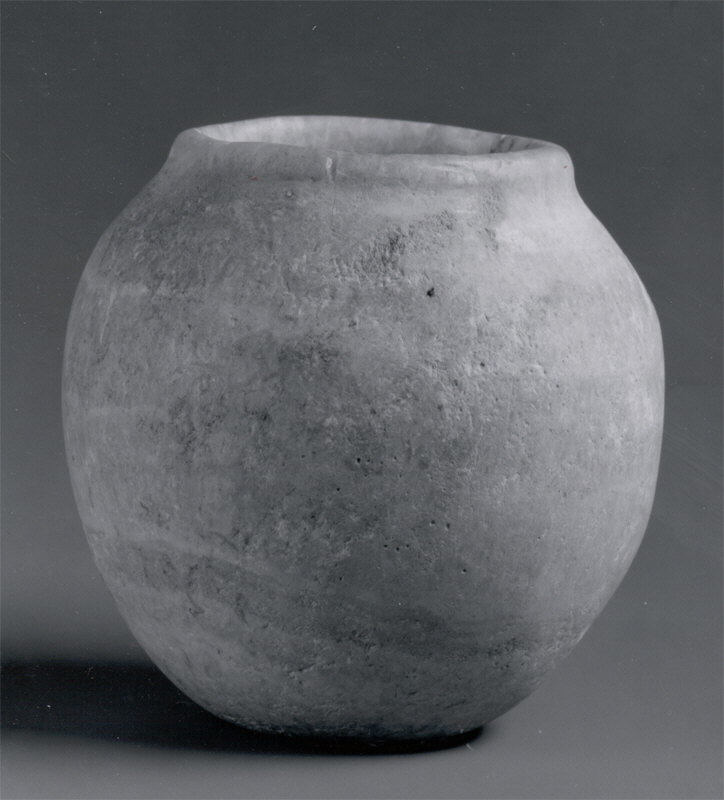
Strategic Heritage Analysis: The Bactrian-Margiana Marble Jar
This analysis, prepared for the Katherine Fashion Lab’s 2026 luxury strategy, examines a marble jar from the Bactria-Margiana Archaeological Complex (BMAC), circa 2300–1700 BCE. As a standalone artifact of profound symbolic and material significance, this vessel offers a unique lexicon for high-end design—one rooted in spiritual authority, historical adornment, and the alchemy of power. The following sections decode its heritage to inform a differentiated luxury narrative for the coming season.
Symbolic Power: The Vessel as a Microcosm of Authority
The BMAC marble jar is not a utilitarian object but a ceremonial vessel designed to mediate between the earthly and the divine. Its form—a rounded body with a narrow neck—mirrors the cosmic womb, a symbol of creation and containment. In BMAC society, such jars were interred in elite tombs, often alongside gold, lapis lazuli, and etched carnelian beads, signifying their role as anchors of spiritual and political power. The jar’s material, pure white marble, was sourced from distant quarries, a testament to the ruler’s ability to command resources across the Oxus River basin. This symbolic power is not merely decorative; it is a statement of control over life, death, and the unseen forces that govern both. For the 2026 luxury consumer, this translates into a design language that prioritizes containment as authority—pieces that enclose, protect, and project an aura of unassailable presence. The jar’s sealed form suggests that true power is internal, hidden, and revealed only to the initiated.
Historical Adornment: The Aesthetics of Prestige and Trade
The BMAC civilization, situated at the crossroads of the Iranian Plateau, Central Asia, and the Indus Valley, was a nexus of ancient luxury trade. The marble jar’s surface, though now weathered, would have originally been polished to a luminous sheen, perhaps inlaid with gold leaf or bitumen to highlight incised geometric patterns. These patterns—concentric circles, zigzag lines, and stepped motifs—are not random; they echo the designs found on BMAC seals and textiles, serving as markers of identity and status. Historical adornment in this context is a language of prestige: the jar was likely displayed in ritual feasts or funerary processions, its reflective surface catching torchlight to create an effect of otherworldly radiance. For Katherine Fashion Lab, this mandates a 2026 strategy that elevates surface treatment as narrative. Consider materials like polished alabaster, liquid-metal finishes, or micro-engraved patterns that shift under light. The jar teaches us that adornment is not additive but integral—every line, every curve, must carry the weight of a thousand years of trade and tribute.
Spiritual Meaning: The Vessel as a Bridge to the Afterlife
In BMAC cosmology, the marble jar was a conduit for spiritual transformation. Excavations at sites like Gonur Tepe reveal that such vessels often contained traces of organic residues—possibly cannabis, ephedra, or fermented drinks—used in ritual to induce altered states of consciousness. The jar’s narrow neck and sealed lid were designed to trap vapors or preserve sacred substances, turning the act of opening into a moment of revelation. This spiritual meaning aligns with the concept of liminality: the jar exists at the threshold between the mundane and the sacred, the living and the dead. For the 2026 luxury strategy, this translates into a focus on ritual and transformation. High-end products should be conceived as tools for personal metamorphosis—a perfume that unlocks memory, a garment that alters posture, a jewelry piece that becomes an heirloom of intention. The jar’s spiritual dimension challenges the industry to move beyond surface aesthetics and into the realm of experience, where purchase is an act of devotion and ownership is a form of guardianship.
2026 High-End Luxury Strategy: From Artifact to Archetype
The Bactrian marble jar offers a clear directive for Katherine Fashion Lab’s 2026 collection: reclaim the vessel as a symbol of curated power. In an era of digital saturation and fast fashion, the luxury consumer seeks objects that feel ancient, intentional, and rare. The following strategic pillars emerge from this heritage analysis:
1. Material Authenticity as Differentiation. The BMAC jar’s value derived from its marble—a material that was difficult to quarry, transport, and carve. For 2026, Katherine Fashion Lab should prioritize materials that require mastery: hand-carved stone, cast bronze, or woven metals from heritage ateliers. Each piece must tell a story of provenance, from mine to studio to client, reinforcing the idea that luxury is labor made visible.
2. Geometric Symbolism as Brand Language. The jar’s incised patterns are not decorative but communicative—they encode status, lineage, and cosmology. For the 2026 collection, develop a proprietary motif system inspired by BMAC geometry. Use these patterns in leather goods, jewelry, and textile prints as a signature that whispers of ancient roots. This creates a visual code that loyal clients can recognize and collect, transforming each purchase into a chapter of a larger narrative.
3. Ritual Experience as Product Ecosystem. The jar was never sold; it was consecrated. For 2026, consider launching a limited Ritual Vessel Collection—a series of objects (boxes, flasks, containers) designed for daily ceremonies: a morning perfume ritual, an evening meditation with a weighted object, a gift exchange that feels like an offering. Each vessel should be accompanied by a heritage card explaining its BMAC origin, turning the consumer into a custodian of history.
4. Spiritual Authority in Brand Positioning. The BMAC elite used the jar to project control over the unknown. In 2026, position Katherine Fashion Lab as a brand that understands the deeper currents of desire—not just for beauty, but for meaning. Marketing campaigns should emphasize silence, containment, and revelation. Use visual storytelling that evokes tomb chambers, desert light, and the slow unveiling of hidden treasures. This approach appeals to the ultra-high-net-worth individual who values discretion and depth over visibility.
5. Strategic Scarcity and Archival Legacy. The marble jar is one of fewer than 200 complete BMAC vessels known to exist. For 2026, apply this principle of extreme scarcity to production. Limit the Ritual Vessel Collection to 100 numbered pieces globally, each with a certificate of authenticity and a digital archive link. This creates a secondary market for resale and a sense of belonging to an exclusive circle of initiates.
Conclusion: The Jar as a Mirror for Modern Luxury
The Bactrian-Margiana marble jar is more than an archaeological curiosity; it is a strategic artifact that reveals the enduring principles of high-end value: material rarity, symbolic depth, spiritual resonance, and controlled access. For Katherine Fashion Lab, this analysis provides a blueprint for a 2026 collection that eschews trend-driven design in favor of timeless, ritualistic luxury. By channeling the jar’s authority, adornment, and sacred function, the brand can position itself not merely as a fashion house but as a guardian of ancient wisdom—a curator of objects that matter. The luxury of the future is not in novelty, but in the rediscovery of what has always been powerful.