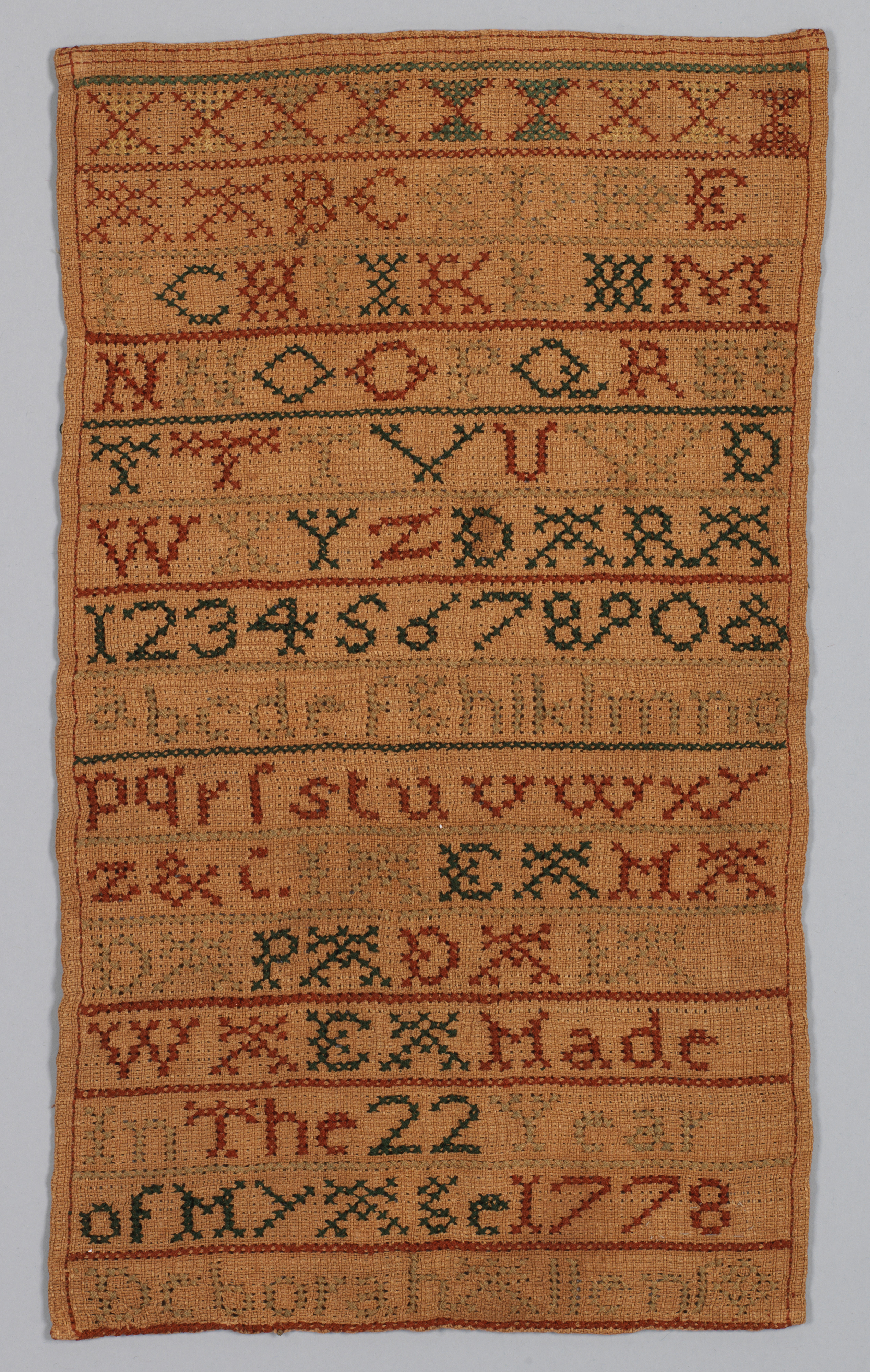
The Sampler: A Stitch in Global Heritage at Katherine Fashion Lab
In the rarefied world of haute couture, where each garment is a dialogue between tradition and innovation, the Sampler emerges as a profound artifact of textile mastery. At Katherine Fashion Lab, we have long championed the idea that fashion is not merely a reflection of the present but a conversation with the past. The Sampler—executed in silk on linen canvas and rooted in a global heritage that transcends borders—stands as a standalone study of craftsmanship, cultural memory, and the meticulous art of embroidery. This piece is not a garment in the conventional sense; it is a cartography of stitches, a narrative stitched in thread, and a testament to the enduring power of handwork in an age of mechanized production.
The Material Lexicon: Silk on Linen Canvas
The choice of materials in the Sampler is deliberate and evocative. Silk thread, with its natural luster and tensile strength, offers a luminous quality that captures light and shadow with each stitch. Silk has been a symbol of luxury and trade for millennia, from the ancient Silk Road to the courts of Europe and Asia. Its use here signifies a reverence for historical opulence while demanding a level of precision that only the most skilled artisans can achieve. The linen canvas, in contrast, provides a robust, grounded foundation. Linen, derived from the flax plant, is one of the oldest textile fibers known to humanity, associated with durability, breathability, and a subtle, organic texture. Together, silk and linen create a dialectic of refinement and resilience—the delicate dancing upon the durable. This interplay is not accidental; it mirrors the tension between ephemeral beauty and lasting heritage that defines couture itself.
From a technical standpoint, the silk-on-linen construction requires a mastery of tension management. Silk threads, if pulled too taut, can distort the linen weave; too loose, and the embroidery loses its crisp definition. The Sampler’s execution demonstrates an intimate understanding of both materials’ behaviors, a knowledge passed down through generations of embroiderers across cultures. The resulting surface is a tactile landscape where each motif—be it floral, geometric, or figurative—emerges with a three-dimensional presence, inviting touch as much as sight.
Global Heritage: A Cartography of Stitches
The Sampler’s design vocabulary is a global anthology, drawing from embroidery traditions that span continents. European samplers, historically used as pedagogical tools for young women to practice alphabets, numerals, and decorative motifs, inform the compositional structure—a grid-like arrangement that balances symmetry with variation. Yet, the motifs themselves transcend European boundaries. The inclusion of Asian-inspired floral scrolls, reminiscent of Chinese Suzhou embroidery, introduces a sinuous, organic flow. These are juxtaposed with Middle Eastern geometric patterns, echoing the repetitive, meditative designs of Islamic textile art, where infinite patterns symbolize the divine. Additionally, African inspired cross-stitch motifs—rooted in the textile traditions of the Yoruba and Kuba peoples—add a rhythmic, graphic quality that anchors the composition.
This fusion is not mere appropriation but a scholarly curation of heritage. Each stitch technique—whether satin, chain, or French knot—carries its own cultural lineage. The satin stitch, for instance, dominates in East Asian embroidery for its smooth, reflective surfaces; the chain stitch, prevalent in Indian and Persian work, offers a looped texture that suggests movement. By weaving these techniques into a single canvas, the Sampler becomes a global textile lexicon, a visual encyclopedia of human creativity. It challenges the viewer to recognize that embroidery, as a craft, is a shared inheritance—a universal language spoken in different dialects.
Standalone Study: The Art of the Fragment
In the context of contemporary couture, the Sampler is presented as a standalone study—a deliberate departure from the garment as the ultimate end. This curatorial choice elevates the Sampler from a mere decorative sample to an autonomous work of art. In the atelier, studies are often preparatory, tools for exploration that are later integrated into larger pieces. Here, the study is the final form. This reframing aligns with the modernist tradition of valuing process over product, where the sketch, the maquette, or the fragment holds intrinsic aesthetic and intellectual value.
The standalone study also invites a focused analysis of craft. Without the distraction of silhouette, draping, or function, the viewer’s attention is directed entirely to the micro-gestures of the hand. Each stitch becomes a decision: the angle of a needle, the length of a thread, the pressure of the fingers. This intimacy with process is a luxury in itself—a slowing down of time in an industry defined by speed. For the connoisseur, the Sampler offers a chance to read the hand of the artisan, to discern the subtle variations in tension that reveal human touch. It is a meditation on the labor of beauty, a reminder that couture’s true value lies not in its final form but in the countless hours of invisible effort that bring it to life.
Contextualizing the Sampler in Contemporary Couture
At Katherine Fashion Lab, we position the Sampler within a broader discourse on sustainability and cultural preservation. In an era of fast fashion and digital replication, hand embroidery is a vanishing art. The Sampler serves as a counter-narrative—a tangible argument for the preservation of handcraft techniques that are at risk of extinction. By isolating the embroidered study, we emphasize that these skills are not merely decorative but are repositories of cultural knowledge. Each stitch is a link to ancestral practices, to the women and men who have maintained these traditions for centuries.
Furthermore, the Sampler’s global heritage narrative challenges the Western-centric bias of high fashion. It asserts that aesthetic excellence is not the monopoly of any single culture. The piece demands that we reconsider the hierarchy of textile arts, elevating the embroiderer to the status of artist. In the atelier, the Sampler is a pedagogical tool for our apprentices, a living archive of techniques that must be learned by hand, not by algorithm. It is a statement that the future of couture depends on the preservation of its past.
Conclusion: The Stitch as Signature
The Sampler, in its quiet, meticulous presence, encapsulates the ethos of Katherine Fashion Lab: a reverence for global heritage, a commitment to material integrity, and a belief in the transformative power of craft. It is a standalone study that speaks volumes—a testament to the idea that in a world of mass production, the hand-stitched line remains the most authentic signature of human creativity. As we continue to explore the boundaries of couture, the Sampler reminds us that true luxury is not in the ostentatious but in the intimate, the precise, and the enduring. It is a stitch in time, connecting us to the global tapestry of our shared textile heritage.