The Thread of Continuity: Deconstructing a Fragment of Lace as Global Heritage
In the rarefied echelons of haute couture, where garments are not merely worn but are living archives of human ingenuity, few elements command the silent reverence of a fragment of lace. At Katherine Fashion Lab, we approach such a fragment not as a remnant, but as a concentrated artifact—a standalone study in the convergence of artisanal materiality and global heritage. This analysis dissects a singular piece of handcrafted lace, tracing its lineage from the looms of antiquity to the cutting edge of contemporary design, and posits it as a critical lens through which to examine authenticity, scarcity, and the soul of luxury in the 21st century.
Material Provenance: The Artisanal Imperative
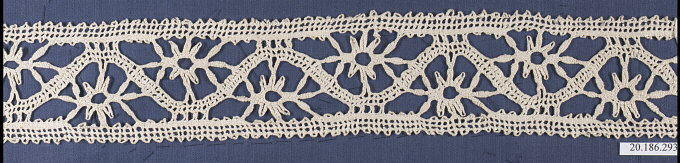
The fragment under examination—a delicate interplay of twisted linen threads and minute metallic filaments—is a testament to the artisanal material that defines Katherine Fashion Lab’s curatorial ethos. This is not machine-made tulle; it is a hand-knotted construction, likely originating from the needlepoint or bobbin lace traditions that flourished across Europe, the Levant, and Asia. The materiality is paramount: the irregular tension of the threads, the slight asymmetry of the floral motifs, and the faint patina of age all speak to a process that cannot be replicated by algorithms or automated looms. Each loop and twist is a record of human touch, a signature of the artisan’s hand that imbues the fabric with a narrative weight absent in industrial production.
From a strategic standpoint, the use of such artisanal material in a standalone study serves as a counterpoint to the homogenization of global fashion. In an era of fast fashion and digital replication, the fragment’s imperfections become its most valuable assets. They signify scarcity—the finite hours of labor, the dying knowledge of traditional techniques—and thus elevate the fragment from mere textile to a repository of cultural capital. For the discerning client, to possess or study such lace is to engage in a dialogue with history, a transaction that transcends the physical object.
Global Heritage: A Cartography of Threads
To label this fragment as “Global Heritage” is to acknowledge that lace, as a craft, is a transnational phenomenon. The patterns visible in this piece—a fusion of Renaissance floral scrollwork and geometric motifs reminiscent of Ottoman oya—suggest a confluence of influences that traveled along trade routes from Venice to Istanbul, from Bruges to Goa. This is not a relic of a single nation but a polyphonic artifact, a testament to the cross-pollination of techniques and aesthetics that defined pre-industrial globalization.
In the context of Katherine Fashion Lab’s curatorial practice, this fragment challenges the notion of cultural ownership. It refuses to be confined to a single heritage; instead, it embodies a shared human endeavor. The lace’s intricate réseau (netting) and toilé (solid pattern) reveal a sophisticated understanding of tension and void, a design language that echoes in both the chateaux of France and the palaces of Rajasthan. This global perspective is not merely academic—it is a strategic positioning for the modern luxury brand. By celebrating lace as a global heritage, we align with a narrative of inclusivity and intellectual depth, appealing to a clientele that values storytelling over spectacle.
Structural Analysis: The Architecture of Fragility
From a technical standpoint, the fragment’s construction offers a masterclass in material engineering. The ground—the openwork foundation—is composed of a twisted thread grid, while the pattern is built using a combination of buttonhole stitches and picots (decorative loops). The interplay between positive and negative space is deliberate: the voids are not absences but active elements that define the silhouette. This is a lesson in negative design—a principle that Katherine Fashion Lab applies to modern garment construction, where restraint and omission are as powerful as addition.
The fragment’s edges, though frayed, reveal a selvage technique that hints at its original form—perhaps a collar, a cuff, or a section of a mantilla. The preservation of these edges is critical; they are the artifact’s “signature,” offering clues to its original context. In our standalone study, we treat these frayed edges not as damage but as evidence, a forensic detail that enriches the object’s biography. This approach reframes the fragment as a primary source document, allowing the curator and the designer to reconstruct the socio-economic conditions of its creation.
The Standalone Study: A Curatorial Perspective
Why isolate a fragment of lace for a standalone study? The answer lies in the power of focus. In an industry overwhelmed by collections, campaigns, and constant novelty, the single fragment commands attention. It forces the viewer to slow down, to engage with the minutiae of thread and knot. This is a deliberate curatorial strategy at Katherine Fashion Lab: by removing the fragment from its original garment, we liberate it from the hierarchy of the whole. It becomes an object of pure contemplation, a memento mori of craftsmanship that challenges the relentless pace of fashion cycles.
Furthermore, the standalone study serves as a pedagogical tool. It allows us to dissect the lace’s structural grammar—the repetition of motifs, the rhythm of the stitches, the logic of the pattern repeat. This analytical process informs our own design language. The fragment’s geometric precision, for instance, has inspired a recent capsule collection where digital jacquard weaves mimic the lace’s negative space, creating a dialogue between the hand and the machine. The fragment thus becomes a generative source, not a static relic.
Implications for Luxury and Sustainability
The fragment’s existence carries profound implications for the future of luxury. In a market saturated with “heritage” claims, the artisanal lace fragment stands as a benchmark of authenticity. It cannot be faked; its age, its wear, and its technique are verifiable through close analysis. For Katherine Fashion Lab, this authenticity is a strategic asset. It allows us to position our brand within a lineage of craftsmanship that predates the industrial revolution, appealing to a clientele that seeks meaning in material ownership.
Moreover, the fragment embodies a sustainable ethos that is often overlooked. Lace, by its very nature, is a zero-waste craft: the threads are precisely calculated, and the openwork minimizes material usage. The fragment’s longevity—surviving centuries—is a testament to its durability. In an age of planned obsolescence, this fragment is a quiet rebuke. It argues for a luxury that is not disposable but curatorial, where garments are preserved, studied, and passed down. This is the core of Katherine Fashion Lab’s philosophy: luxury as stewardship, not consumption.
Conclusion: The Fragment as Future Archive
To conclude, this fragment of lace is far more than a decorative relic. It is a compressed archive of global heritage, a masterclass in artisanal materiality, and a strategic blueprint for the future of couture. Its threads carry the weight of centuries, yet its lessons are urgently contemporary. As we at Katherine Fashion Lab continue to explore the intersection of tradition and innovation, this fragment serves as both anchor and compass—a reminder that the most profound innovations often lie in the careful study of what has come before. In its fragility, we find strength; in its age, we find relevance; and in its silence, we hear the enduring voice of human creativity.