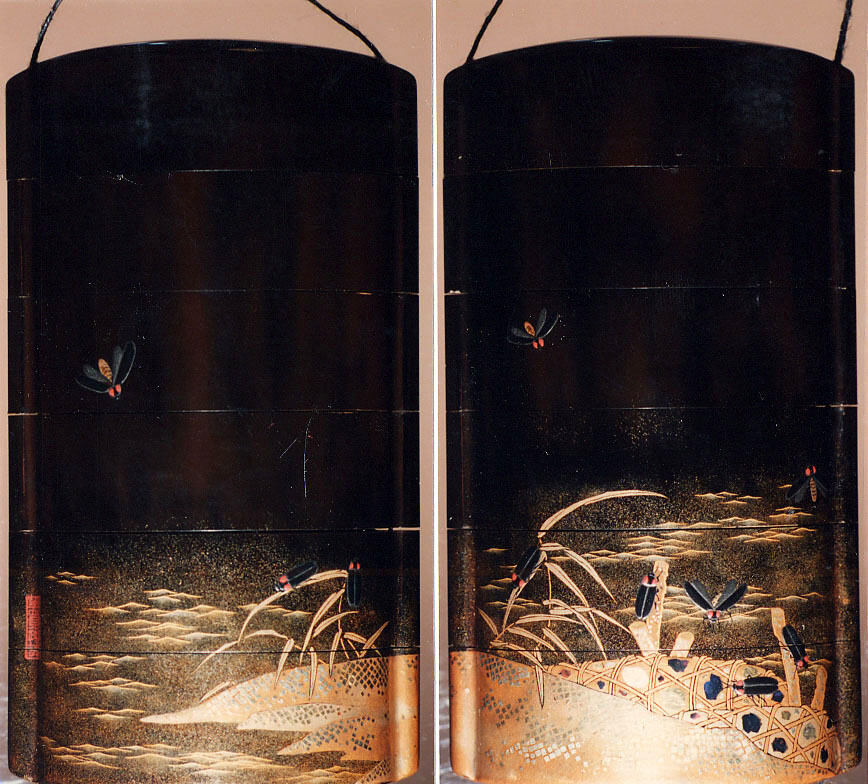
Heritage Analysis: Case (Inrō) with Design of Fireflies in Flight and Climbing on Stone Baskets and Reeds at the Shore
Introduction: The Inrō as a Canvas of Cultural Prestige
The inrō, a traditional Japanese case worn suspended from the obi (sash) of a kimono, served a dual purpose in the Edo period (1603–1868): it was a practical accessory for carrying personal seals and medicines, and a profound statement of social status, aesthetic sensibility, and spiritual alignment. The present artifact—a lacquered inrō depicting fireflies in flight and climbing on stone baskets and reeds at the shore—represents a masterful synthesis of material artistry and symbolic narrative. Crafted in roiro (a lustrous black lacquer) with hiramakie (flat sprinkled gold), togidashi (polished-out lacquer), nashiji (pear-skin gold flecks), and kirigane (cut gold leaf), this piece embodies the pinnacle of Edo-period craftsmanship. For Katherine Fashion Lab, this artifact offers a strategic blueprint for integrating heritage symbolism into 2026 high-end luxury strategies, where authenticity, narrative depth, and spiritual resonance define market leadership.
Symbolic Power: Fireflies as Transient Beauty and Spiritual Light
In Japanese culture, the firefly (hotaru) is a potent symbol of ephemeral beauty, passion, and the fleeting nature of life—a concept deeply rooted in the Buddhist principle of mujō (impermanence). The design of fireflies in flight, climbing on stone baskets and reeds, evokes a nocturnal riverscape where these luminous insects signal the arrival of summer and the transient joy of warm evenings. The stone baskets (ishigame) and reeds (ashi) ground the composition in a specific ecological moment, reinforcing the idea that beauty is most precious when it is temporary. For a luxury brand, this symbolism translates into a powerful narrative: exclusivity is not about permanence but about the heightened value of rare, ephemeral experiences. The firefly’s light, captured in gold and lacquer, becomes a metaphor for the brand’s ability to transform fleeting moments into enduring luxury artifacts. In 2026, as consumers increasingly seek meaning over material accumulation, this symbolism can be leveraged to position Katherine Fashion Lab’s collections as containers of memory and emotion—much like the inrō itself.
Historical Adornment: The Inrō as a Mark of Distinction
The inrō was not merely a functional object but a curated accessory that signaled the wearer’s taste, wealth, and cultural literacy. During the Edo period, sumptuary laws regulated the use of gold and lacquer, making such pieces markers of elite status. The intricate hiramakie technique—where gold powder is sprinkled onto wet lacquer and then polished—required exceptional skill and time, often taking months to complete. The inclusion of nashiji, a technique that creates a shimmering, pearlescent effect, and kirigane, which involves cutting gold leaf into precise shapes, further elevates the piece’s value. This historical context underscores a critical lesson for modern luxury: craftsmanship is the ultimate differentiator. In an era of mass production, the inrō’s labor-intensive creation process becomes a model for Katherine Fashion Lab’s 2026 strategy. By emphasizing artisanal techniques—such as hand-painted details, precious metal applications, and limited-edition runs—the brand can reclaim the aura of exclusivity that defined historical adornment. Moreover, the inrō’s portability (worn on the body) aligns with contemporary trends in wearable luxury, where accessories serve as totems of personal identity.
Spiritual Meaning: Lacquer as a Vessel for Transcendence
Lacquerware in Japan is imbued with spiritual significance, often associated with Shinto purification rituals and Buddhist meditation. The glossy, reflective surface of roiro lacquer was believed to mirror the soul, while the layering process (applying up to 30 coats of lacquer) symbolized patience and spiritual refinement. The firefly motif adds a layer of transcendent meaning: in Japanese folklore, fireflies are considered souls of the departed or messengers between the human and spirit worlds. The stone baskets and reeds, often found at water’s edge, represent the boundary between the mundane and the sacred. For Katherine Fashion Lab, this spiritual dimension offers a narrative of transformation. The brand can position its 2026 collections as ritual objects that facilitate personal growth, mindfulness, and connection to heritage. By incorporating elements like lacquer finishes, nature-inspired motifs, and limited-edition releases tied to seasonal cycles, the brand can tap into the growing consumer desire for meaningful consumption. The inrō teaches that luxury is not just about owning an object but about participating in a story of creation, beauty, and transcendence.
2026 High-End Luxury Strategy: Heritage as Competitive Advantage
As the global luxury market evolves toward cultural authenticity and experiential value, Katherine Fashion Lab can deploy the inrō’s heritage as a strategic asset. The following actionable insights are derived from this analysis:
1. Narrative-Driven Product Design: The inrō’s design is not decorative but narrative. For 2026, Katherine Fashion Lab should develop collections that tell stories through symbolic motifs—fireflies, reeds, stone baskets—that evoke specific emotions and cultural references. This approach transforms products from commodities into conversation pieces that resonate with discerning clients.
2. Craftsmanship as Luxury Currency: The inrō’s value lies in its technical virtuosity. The brand should invest in master artisans who can replicate traditional techniques (e.g., hiramakie, nashiji) in modern contexts, such as handbags, jewelry, or limited-edition accessories. This creates a rarity premium that cannot be replicated by mass-market competitors.
3. Spiritual and Seasonal Marketing: The firefly’s association with summer and impermanence offers a seasonal luxury strategy. Katherine Fashion Lab can launch limited-edition collections tied to natural cycles (e.g., “Firefly Summer” capsules), using storytelling to emphasize the fleeting nature of beauty. This aligns with the 2026 trend of slow luxury, where consumers value anticipation and scarcity.
4. Wearable Heritage: The inrō’s role as a personal talisman suggests a product category shift toward adornment that carries meaning. Katherine Fashion Lab can develop bespoke accessories—such as lacquered pendants, clutches, or belt bags—that incorporate traditional motifs and allow clients to “wear” cultural heritage. This taps into the growing demand for identity-driven luxury.
5. Cross-Cultural Collaboration: The inrō’s Japanese origin offers a platform for cultural diplomacy. Collaborations with Japanese lacquer artists, museums, or heritage institutions can enhance brand credibility and create exclusive, co-branded pieces that command premium pricing. This strategy positions Katherine Fashion Lab as a custodian of global craftsmanship.
Conclusion: The Firefly’s Light as a Beacon for Modern Luxury
The Case (Inrō) with Design of Fireflies in Flight and Climbing on Stone Baskets and Reeds at the Shore is more than a historical artifact; it is a strategic blueprint for luxury in 2026. Its symbolic power—rooted in impermanence and spiritual light—offers a narrative framework for brands seeking to connect with consumers on a deeper level. Its historical adornment underscores the enduring value of craftsmanship, while its spiritual meaning invites a shift toward ritualistic consumption. For Katherine Fashion Lab, this analysis reveals that the future of luxury lies not in novelty but in the rediscovery of heritage. By channeling the firefly’s ephemeral glow into products that celebrate beauty, meaning, and mastery, the brand can illuminate a path to enduring relevance in an ever-changing market.