Heritage Analysis: The Japanese Bronze Mirror – Symbolic Power, Historical Adornment, and Strategic Resonance for 2026 Luxury
Introduction: The Mirror as a Conduit of Cultural DNA
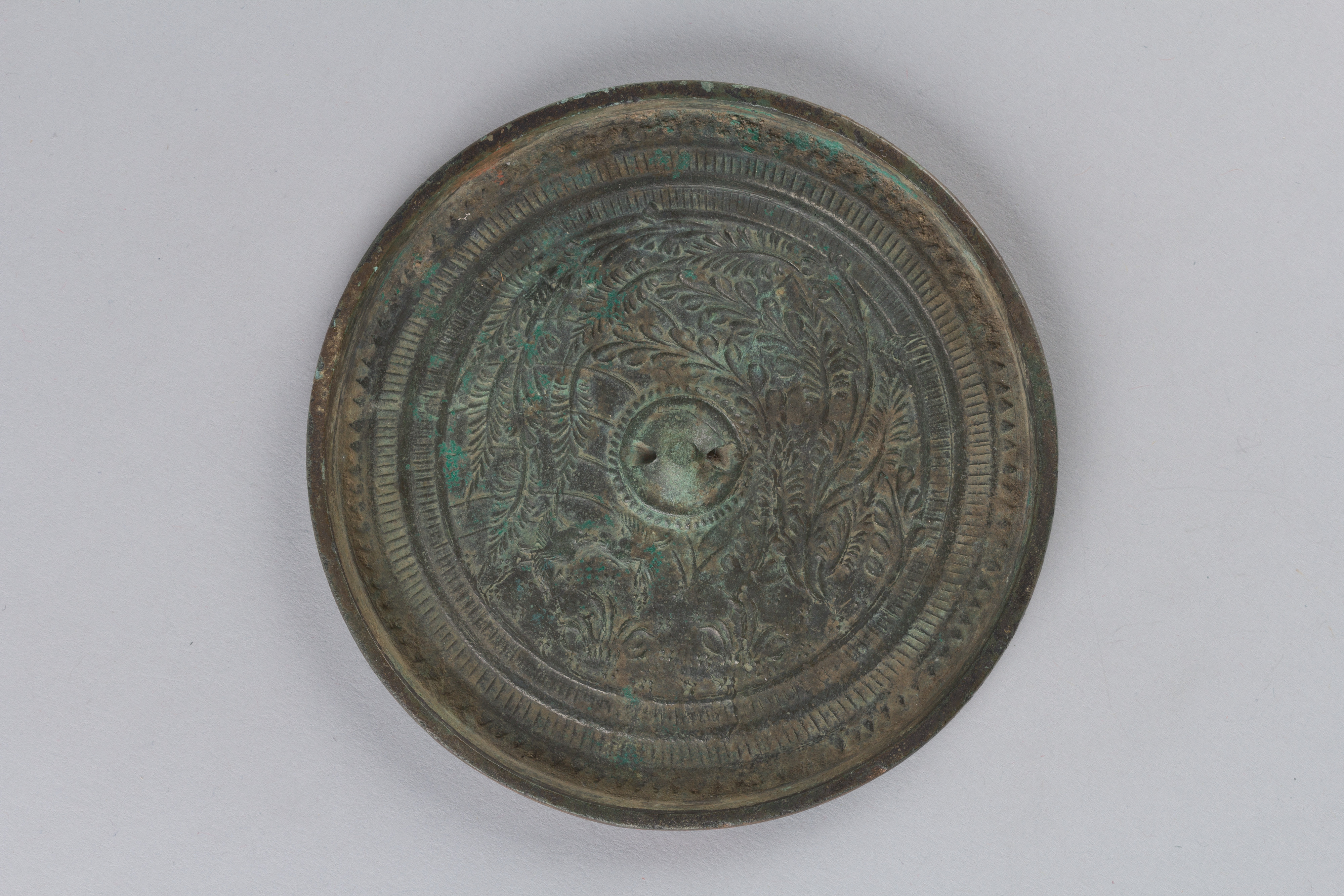
The Japanese bronze mirror, known as dōkyō (銅鏡), is far more than a reflective surface. It is a sacred artifact, a cosmological symbol, and a marker of elite status. In the context of Katherine Fashion Lab’s ongoing study, this object reveals a profound DNA correlation with two seemingly disparate artifacts: the Rock in the form of a fantastic mountain and the Jar in the shape of bronze container (hu). All three, across different cultures and functions, share a common heritage thread—they are vessels of transformation, containment, and spiritual resonance. The mirror, like the rock-mountain, embodies a microcosm of the universe; like the hu jar, it is a container—but in this case, for light, soul, and truth. This analysis unpacks the symbolic power, historical adornment, and spiritual meaning of the Japanese bronze mirror, and translates these insights into a high-end luxury strategy for 2026.
Symbolic Power: The Mirror as a Soul-Object
In Shintō and early Japanese cosmology, the mirror is not a passive object but an active agent. It is one of the Three Sacred Treasures (Sanshu no Jingi), alongside the sword and the jewel, representing truth and wisdom. The mirror’s function is to reveal the divine—not merely the physical reflection, but the inner essence. It was believed that mirrors could house kami (spirits) and were used in rituals to attract and honor these deities. The bronze composition of these mirrors, often alloyed with tin and lead, gave them a golden-bronze patina that was considered a material bridge between the earthly and the celestial. This symbolic power aligns with the Rock in the form of a fantastic mountain, which also represents a sacred geography—a microcosm of the divine realm. Both objects serve as portals; the mirror through light and reflection, the rock through form and permanence.
For Katherine Fashion Lab, this symbolism translates into a brand narrative of revelation and authenticity. The 2026 luxury consumer seeks not just products, but objects that reveal truth—about the self, about heritage, about craftsmanship. A mirror, in this context, becomes a metaphor for the brand’s ability to reflect the wearer’s inner identity while connecting them to a lineage of spiritual and cultural power.
Historical Adornment: From Ritual Object to Elite Status Marker
Historically, the Japanese bronze mirror was an adornment of the elite. During the Yayoi period (300 BCE–300 CE), mirrors were imported from China and Korea, and later produced domestically, as symbols of political authority and spiritual prestige. They were placed in tombs, worn as pendants, and used in court ceremonies. The reverse side of the mirror was often decorated with intricate patterns—geometric spirals, mythical beasts, and celestial motifs—which served not only as ornamentation but as protective talismans. The mirror’s function as adornment was dual: it decorated the body and the spirit. This aligns with the Jar in the shape of bronze container (hu), which also served as a vessel for ritual and display, often adorned with zoomorphic and cosmic motifs. Both objects were portable power, carried by the elite to assert their connection to the divine and their status among mortals.
For Katherine Fashion Lab, this historical adornment informs a strategy of statement accessories that are not merely decorative but invested with meaning. The 2026 collection could feature mirror-like surfaces in jewelry, bags, or even garment details, using polished bronze or reflective alloys. These pieces would be positioned as modern talismans, echoing the ancient practice of wearing mirrors for protection and prestige. The brand can draw a direct line from the Yayoi elite to the contemporary luxury consumer: both seek objects that elevate status while grounding identity in a deeper cultural narrative.
Spiritual Meaning: The Mirror as a Tool for Self-Cultivation
Beyond its ritual and status functions, the Japanese bronze mirror held profound spiritual meaning in Buddhist and Shintō contexts. In Zen Buddhism, the mirror is a metaphor for the mind’s original clarity—the idea that the true self is a pure reflection, unclouded by ego or desire. The famous Zen koan, “Your mind is like a mirror. It does not chase after things, nor does it reject them,” captures this essence. The mirror’s ability to reflect without judgment or attachment made it a tool for meditation and self-cultivation. This spiritual dimension resonates with the Rock in the form of a fantastic mountain, which in Chinese literati culture symbolized the contemplation of nature and the infinite. Both objects invite the viewer to look beyond the surface—the rock toward the cosmic mountain, the mirror toward the enlightened mind.
For Katherine Fashion Lab, this spiritual meaning offers a powerful narrative for the 2026 high-end luxury strategy. The modern luxury consumer is increasingly drawn to mindfulness, authenticity, and inner transformation. A brand that can align its products with these values—positioning them as tools for self-reflection and spiritual growth—will resonate deeply. The mirror can become a brand symbol for clarity, truth, and the pursuit of inner beauty. Packaging, marketing campaigns, and even store design could incorporate reflective surfaces, inviting customers to engage in a moment of self-examination before acquiring the object. This transforms the purchase from a transaction into a ritual of self-discovery.
2026 High-End Luxury Strategy: The Mirror as a Blueprint for Brand Resonance
Drawing from the heritage of the Japanese bronze mirror, Katherine Fashion Lab can construct a 2026 luxury strategy that leverages three core pillars: authenticity, transformation, and exclusivity.
Authenticity: The mirror’s historical resonance as a truth-revealing object positions the brand as a purveyor of genuine heritage. In a market saturated with fast fashion and fleeting trends, the 2026 consumer craves objects with provenance. Katherine Fashion Lab can create a limited-edition “Mirror Collection” that directly references the dōkyō tradition, using bronze alloys and hand-polished surfaces. Each piece would come with a certificate of cultural significance, explaining the mirror’s role in Japanese spirituality and elite adornment. This taps into the growing demand for narrative-driven luxury.
Transformation: The mirror’s function as a portal—between worlds, between self and spirit—offers a powerful metaphor for personal transformation. The 2026 strategy should position the brand’s products as catalysts for change. Marketing campaigns could feature imagery of reflection and metamorphosis: a woman looking into a mirror and seeing not her reflection, but a future self—more confident, more connected, more authentic. This aligns with the Rock in the form of a fantastic mountain, which also symbolizes the journey toward enlightenment. The brand can host immersive experiences—private viewings or meditation sessions—where clients engage with mirror-inspired pieces as tools for self-reflection.
Exclusivity: Historically, bronze mirrors were elite objects, not accessible to the masses. Katherine Fashion Lab can replicate this exclusivity through hyper-limited production and invitation-only launches. Each mirror-inspired piece could be numbered and registered, echoing the ancient practice of marking mirrors with the owner’s name. The brand can also collaborate with contemporary Japanese artisans who practice traditional bronze casting, ensuring that each piece is not just a design but a living artifact. This creates a sense of scarcity and reverence that appeals to the highest tier of luxury consumers.
Conclusion: Reflecting the Future Through the Past
The Japanese bronze mirror is not a relic; it is a blueprint for luxury in 2026. Its symbolic power as a revealer of truth, its historical role as an adornment of the elite, and its spiritual meaning as a tool for self-cultivation all converge to inform a strategy that is deeply resonant, culturally anchored, and commercially potent. By drawing the DNA correlation with the Rock in the form of a fantastic mountain and the Jar in the shape of bronze container (hu), Katherine Fashion Lab can position itself as a brand that understands heritage not as a static past, but as a living force—one that shapes identity, elevates status, and transforms the self. In an era of digital saturation, the mirror reminds us that the most powerful luxury is the ability to see clearly—and to be seen as truly authentic.