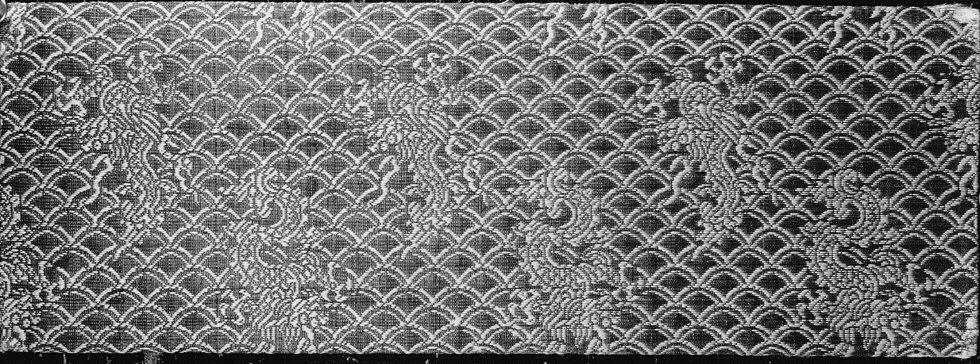
Heritage Analysis: The Sutra Cover as a Strategic Artifact for Katherine Fashion Lab
In the rarefied domain of high-end luxury, where provenance and narrative define value, few artifacts possess the concentrated symbolic power and historical gravitas of the Chinese Sutra Cover. For Katherine Fashion Lab, this object—crafted from silk and imbued with centuries of spiritual and cultural significance—offers a profound foundation for a 2026 luxury strategy. This analysis examines the Sutra Cover’s historical adornment, its spiritual resonance, and its potential to anchor a collection that transcends mere fashion to become a statement of heritage, exclusivity, and transcendent meaning.
Historical Adornment: The Sutra Cover as Sacred Craft
The Sutra Cover, or jing yi (经衣), served as more than a protective sheath for Buddhist scriptures. It was a ceremonial object, a testament to the patron’s devotion, and a canvas for the highest levels of Chinese craftsmanship. Originating during the Tang Dynasty (618–907 CE) and flourishing through the Ming and Qing dynasties, these covers were typically made from heavy, woven silk, often in deep imperial hues of gold, crimson, and indigo. The materials were not arbitrary: silk, as a precious commodity, symbolized the value of the text, while the colors carried specific cosmological meanings—gold for enlightenment, red for vitality, and blue for the infinite sky.
Embroidery techniques, such as suzhou (Su-style) and kesi (silk tapestry), were employed to depict lotus blossoms, dragons, phoenixes, and Buddhist symbols like the vajra or the chakra. These motifs were not merely decorative; they functioned as visual mantras, reinforcing the sacredness of the text within. The cover’s three-dimensional structure—often with a central panel, borders, and a protective flap—echoed the architectural principles of a temple gate, inviting the reader into a sacred space. This layered, symbolic adornment positions the Sutra Cover as a masterpiece of functional art, where every stitch held intention and every fold carried ritual weight.
Symbolic Power: The Intersection of Faith and Status
The Sutra Cover’s symbolic power resides in its dual role as a spiritual conduit and a marker of social hierarchy. In Buddhist practice, the act of covering a sutra was an act of reverence, protecting the dharma (teachings) from physical and spiritual contamination. The cover thus became a threshold between the mundane and the sacred, a tactile reminder of the believer’s commitment to enlightenment. Simultaneously, the lavishness of the cover—often commissioned by emperors, court officials, or wealthy merchants—signaled the patron’s piety, wealth, and political influence. A Sutra Cover gifted to a monastery could elevate the donor’s status within the community, merging religious merit with social capital.
For Katherine Fashion Lab, this duality is exceptionally strategic. The Sutra Cover offers a narrative of devotion as luxury—a concept that resonates deeply with today’s high-net-worth consumers seeking meaning beyond materialism. The object’s symbolic power can be distilled into three core elements: protection (of knowledge, heritage, and self), transcendence (from the ordinary to the extraordinary), and legacy (as an heirloom that connects generations). These are not fleeting trends; they are enduring human desires that align with the values of a discerning clientele.
Spiritual Meaning: The Sutra Cover as a Meditative Object
Beyond its physical form, the Sutra Cover embodies a profound spiritual meaning rooted in Buddhist philosophy. The sutra itself is considered the body of the Buddha’s teachings, and the cover acts as a vessel—a sacred container that preserves and honors this body. In this context, the cover is not an accessory but a reliquary. Its creation involved ritual purification, meditation, and prayer by the artisans, imbuing the object with spiritual energy. The act of opening a sutra cover was a ritual in itself, a moment of preparation for the mind to receive wisdom.
This spiritual dimension offers Katherine Fashion Lab a unique entry point into the mindful luxury segment, which is projected to grow significantly by 2026. Consumers are increasingly seeking products that offer not just aesthetic pleasure but also emotional and spiritual resonance. A collection inspired by the Sutra Cover could incorporate elements such as tactile meditation—through the use of heavy, weighted silks and embroidered patterns that invite touch—and ritualized dressing, where garments are designed to be worn slowly, intentionally, as a form of daily devotion. The color palette, drawn from historical covers, can evoke a sense of calm and transcendence, moving away from ostentatious display toward quiet, powerful presence.
2026 High-End Luxury Strategy: From Artifact to Archetype
For Katherine Fashion Lab, the Sutra Cover is not a literal reproduction but a strategic archetype. The 2026 strategy should position the brand as a guardian of heritage while innovating for the future. The following strategic pillars are recommended:
1. The “Sacred Container” Silhouette
Translate the Sutra Cover’s structural logic into garment design. Outer layers—coats, capes, and wraps—should feature clean, architectural lines with hidden closures, echoing the cover’s protective flap. Inner layers, such as silk blouses or dresses, can incorporate embroidered motifs that are revealed only when the outer layer is opened, creating a sense of discovery and intimacy. This design philosophy aligns with the luxury consumer’s desire for exclusivity through subtlety.
2. Material Alchemy: Silk as Spiritual Medium
Silk remains the core medium, but with a contemporary twist. Katherine Fashion Lab should source heritage-grade silks from Suzhou, China, and collaborate with master embroiderers to create limited-edition pieces. The use of natural dyes—indigo, madder, and saffron—can evoke the historical palette while appealing to the eco-conscious luxury buyer. Each piece should come with a certificate of provenance, detailing the artisan, the techniques used, and the spiritual significance of the motifs. This transforms the garment into a collectible, akin to a work of art.
3. Narrative-Driven Marketing: The “Ritual of Adornment”
The marketing campaign for 2026 should center on the concept of adornment as ritual. Rather than focusing on seasonal trends, the brand should tell stories of the Sutra Cover’s journey from sacred object to modern garment. Collaborations with Buddhist scholars, art historians, and contemporary artists can lend authenticity. A series of short films, exhibited in exclusive pop-up spaces or through private viewings, can explore the themes of protection, transcendence, and legacy. The target audience is not simply buying a garment; they are acquiring a talisman—a piece of heritage that carries spiritual weight.
4. Pricing and Exclusivity: The Heirloom Model
The 2026 collection should be priced at the apex of the market, with pieces ranging from $5,000 for a silk blouse to $50,000 for a fully embroidered coat. Production should be strictly limited—no more than 100 pieces per design—to maintain scarcity. Each piece should be numbered and registered, with the option for clients to commission bespoke variations. This aligns with the ultra-high-net-worth individual (UHNWI) preference for unique, investment-grade items that appreciate in value over time.
Conclusion: The Sutra Cover as a Strategic Compass
The Chinese Sutra Cover is far more than a historical artifact; it is a blueprint for a luxury strategy rooted in meaning, craft, and exclusivity. For Katherine Fashion Lab, it offers a narrative that transcends fashion, tapping into the universal human quest for protection, transcendence, and legacy. By 2026, the brand that can successfully translate this sacred object into a contemporary luxury archetype will not only capture market share but also establish itself as a cultural arbiter—a brand that understands that true luxury is not about possession, but about reverence. The Sutra Cover teaches us that the most powerful luxury is the one that protects what is sacred, whether that be knowledge, heritage, or the self. Katherine Fashion Lab has the opportunity to become that vessel.