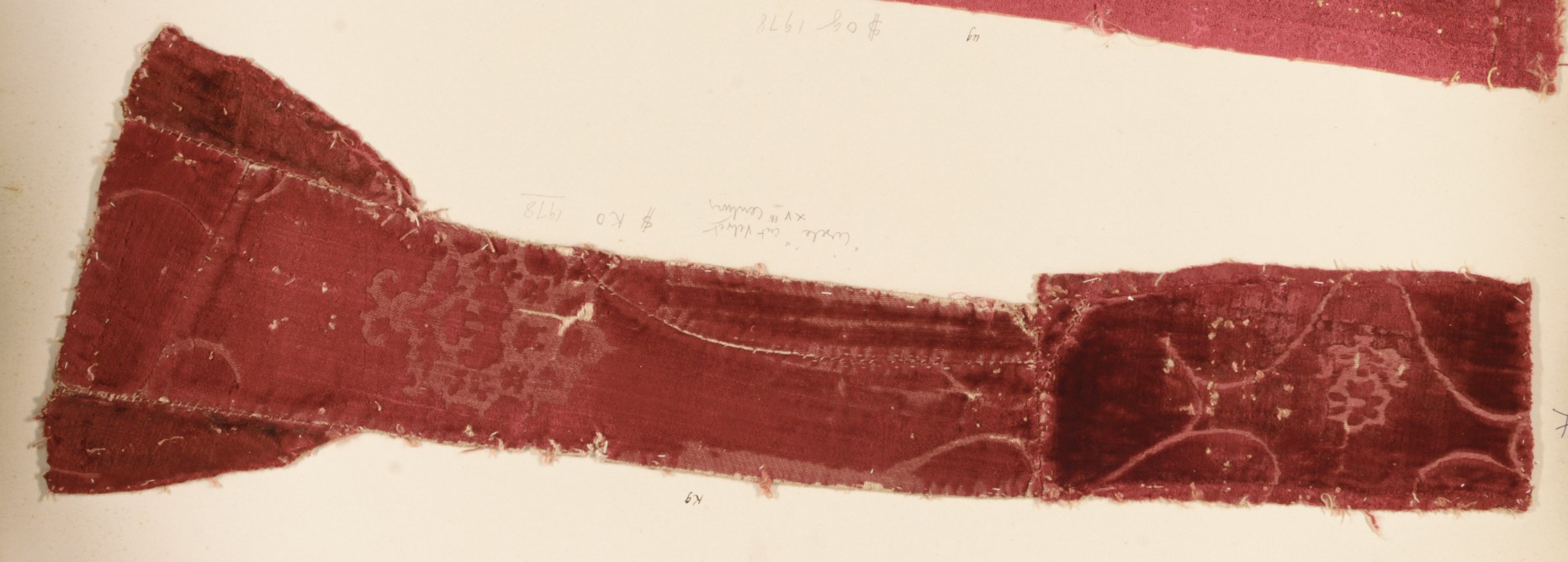
Executive Summary: The Fragment as Foundational Luxury Code
For Katherine Fashion Lab, the strategic examination of the Fragment—specifically as manifested in the silk artifacts of ancient civilizations—is not an academic exercise, but a critical mining of primal luxury DNA. This analysis posits that the fragmented silk remnant, far from being a mere archaeological curiosity, is the ultimate symbol of intrinsic value, narrative scarcity, and spiritual continuity. By deconstructing its historical and symbolic power, we can architect a 2026 high-end luxury strategy that moves beyond ephemeral trends to anchor the brand in timeless, profound desirability. This research contextualizes the fragment as a non-verbal communication system of status and belief, providing a strategic blueprint for product, narrative, and experiential innovation.
Historical & Symbolic Archaeology: The Fragment in Ancient Silk Cultures
The discovery of silk fragments along the Silk Road, in Han Dynasty tombs, or within the reliquaries of the Byzantine Empire, presents a potent paradox: the most fragile, perishable material becomes the most enduring vessel of meaning. Unlike intact garments, a fragment exists in a state of arrested decay, its frayed edges and partial patterns speaking louder than a complete whole. In ancient China, silk was more than apparel; it was a currency, a diplomatic tool, and a medium for sacred texts and paintings. A fragment of such silk carried the symbolic power of the entire imperial system—a tangible piece of the Mandate of Heaven, often adorned with protective symbols like dragons or clouds. It was not merely cloth; it was a conduit of spiritual meaning, believed to protect the deceased in the afterlife or to serve as a votive offering.
The Semiotics of the Incomplete: Adornment as Narrative
Historical adornment was rarely solely decorative; it was a coded language. A fragment amplifies this code through absence. The missing portions invite projection and completion by the viewer (or wearer), creating a personal, participatory narrative. In the context of luxury, this transforms the object from a closed statement to an open dialogue. A gold-embroidered fragment from a Sogdian trader’s coat, for instance, speaks of perilous journeys, cultural fusion, and lost kingdoms. Its value is multiplied by its survival, not in spite of its damage but because of it. This aligns perfectly with a modern luxury consumer’s search for authenticity and depth—a rejection of the mass-produced perfect in favor of the uniquely storied.
Strategic Translation: Core Principles for a 2026 Luxury Framework
The analysis of the ancient silk fragment yields four core strategic principles that can inform Katherine Fashion Lab’s 2026 high-end collections and brand architecture. These principles are designed to create intellectual and emotional scarcity in a saturated market.
Principle 1: Valorization of the Trace & The Patina of Time
Strategy must shift from presenting finished perfection to curating the evidence of existence. This involves techniques that mimic archaeological preservation: devoré silks that reveal underlying structures, intentional "fossilized" prints, and embroidery that appears partially reclaimed by time. Fabrics should tell a story of process and age, utilizing natural dyes that fade uniquely and weaves that incorporate irregular, "recovered" threads. The product is not new; it is newly discovered.
Principle 2: Narrative Scarcity through Fragmented Storytelling
Complete histories are less compelling than hinted mysteries. Marketing and client communication should emulate the fragmentary reveal. Instead of full lookbooks, release detailed, microscopic studies of textile textures, partial sketches of motifs, and audio clips of the weave's sound. Each touchpoint is a fragment of a larger, unreleased narrative, building a mythos that cannot be copied. This turns each collection into an archaeological dig, with clients as co-interpreters.
Principle 3: Spiritual Heirlooming & Non-Fungible Value
Modern luxury seeks transcendence beyond material worth. Pieces must be conceived as future fragments—heirlooms designed to carry meaning across generations. This involves embedding narrative literally and figuratively: numbered artifacts with sealed provenance documents, designs based on client-specific ancestral symbols, and repair services that add to the story. The goal is to create a modern talisman, an object that possesses spiritual meaning as a protector of personal legacy, mirroring the ancient fragment’s role in burial and votive practices.
Principle 4: The Curatorial Retail Experience
The physical and digital retail environment must transition from store to conservation lab or archive study room. Imagine appointments where pieces are presented under focused light on archival trays, accompanied by magnifying glasses and textile swatch histories. Digital extensions could include AR overlays that reconstruct the "complete" historical garment from which the modern fragment is inspired. This transforms purchase into a rite of passage—an act of cultural curation rather than consumption.
Conclusion: From Fragment to Foundation
For Katherine Fashion Lab, the ancient silk fragment is a strategic Rosetta Stone. It decrypts the enduring human desire for objects that bridge the temporal and the spiritual, the material and the symbolic. By adopting its core language—incompleteness as depth, survival as value, and adornment as sacred code—the brand can construct a 2026 luxury position of unassailable authority. This strategy deliberately distances itself from the cyclical frenzy of fashion, offering instead a permanent, intellectual, and emotional value proposition. The fragment teaches us that the most powerful stories are not those told in full, but those whispered by a surviving thread, inviting the wearer to weave the rest. Katherine Fashion Lab’s mandate is to craft those exquisite, provocative whispers into the defining luxury dialogue of the coming era.