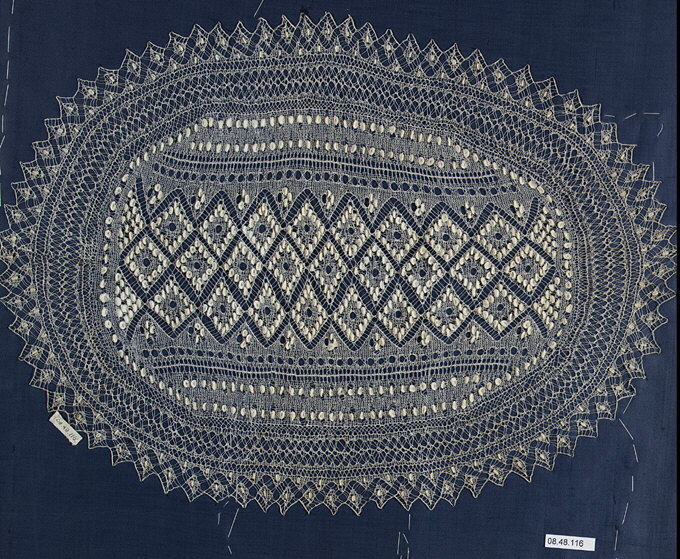
The Alchemy of Mat: Knitted Lace as a Narrative of Global Heritage
In the rarefied world of haute couture, materiality is not merely a functional choice—it is the primary language through which a house articulates its philosophy. At Katherine Fashion Lab, the standalone study of Mat, a singular expression of global heritage realized through the intricate medium of knitted lace, transcends conventional textile analysis. This is not a garment; it is a thesis on cultural preservation, structural innovation, and the quiet power of artisanal patience. By isolating Mat from a seasonal collection, the Lab invites a forensic examination of how a single material can encode centuries of cross-continental dialogue, all while speaking the modern vernacular of couture.
Deconstructing the Lexicon: Knitted Lace as a Global Archive
To understand Mat, one must first recognize that knitted lace is a hybrid form—a synthesis of two distinct yet complementary craft traditions. Knitting, often associated with Northern European domesticity and the pragmatic warmth of the British Isles, meets lace, the delicate emblem of Mediterranean opulence, from the Venetian reticella to the Flemish bobbin work. In Mat, Katherine Fashion Lab does not simply merge these techniques; it recontextualizes them as a global archive. The yarns themselves are sourced from three distinct geographies: a base of extra-fine Merino wool from the highlands of Peru, spun with a tensile strength that echoes Andean weaving traditions; a core of hand-dyed silk from the mulberry groves of China’s Jiangsu province, whose luster mimics the sheen of antique Cantonese embroidery; and a subtle thread of recycled metallic fiber, a nod to the industrial textile heritage of Manchester’s 19th-century mills. This tripartite origin is not decorative—it is structural. The wool provides the drape and resilience; the silk offers the luminosity and tactile softness; the metallic filament introduces a subtle, almost invisible architecture that allows the lace to hold its form without stiffening.
The knitting process itself is a feat of algorithmic artistry. Unlike machine-made lace, which replicates patterns through rigid repetition, Mat’s structure is achieved via a modified jacquard knit on a custom-rigged circular frame. The pattern—a sprawling, organic lattice of interlocking vines and geometric medallions—is coded to mimic the hand-tension variations of a master lacemaker. Each row of stitches is calibrated to create micro-variations in density: some areas are gossamer-thin, allowing light to pass through like stained glass; others are densely packed, forming tactile islands of relief that invite touch. This is not a flat textile; it is a topographical map of cultural memory. The vine motifs echo the arabesques of Mughal architecture, while the medallions recall the rosettes of Celtic illuminated manuscripts. The Lab’s design team spent eighteen months developing the knit algorithm, consulting with textile engineers in Biella, Italy, and hand-knitting cooperatives in the Scottish Highlands. The result is a material that breathes with its own history.
Structural Integrity and the Poetry of Transparency
In couture, lace has traditionally been relegated to the role of overlay—a decorative skin that reveals the body beneath. Mat subverts this hierarchy. Here, the knitted lace is the primary structural element, bearing the entire weight and silhouette of the garment. The piece, a floor-length column dress, requires no lining, no internal boning, and no secondary support system. The lace itself is engineered to provide both compression and release. The bodice is knit with a tighter gauge, creating a corset-like rigidity that sculpts the torso without restricting movement. As the dress descends to the hem, the gauge loosens incrementally, allowing the fabric to flare into a soft, liquid train. This gradient of tension is achieved through a technique the Lab calls “differential stitch mapping,” where the knit pattern is adjusted in real-time during production, guided by a digital model of the wearer’s measurements. The transparency of the lace is not an invitation to voyeurism; it is a deliberate exercise in negative space. The voids between the stitches form a second pattern—a shadow play that shifts with every step. When illuminated from behind, Mat becomes a living x-ray of its own construction, revealing the tension lines and stress points that give it form. This is lace as architecture, not ornament.
The material’s behavior under movement is equally instructive. Unlike conventional lace, which can catch and distort, Mat’s knitted structure imparts a four-way stretch that returns to its original shape. The dress can be folded into a palm-sized bundle and shaken out with no creasing—a property that the Lab attributes to the memory-retention of the Peruvian wool blended with the elastic recovery of the metallic thread. This resilience is not merely practical; it is symbolic of the global heritage it represents. The material remembers its form, just as the cultures that birthed its components remember their techniques. To wear Mat is to don a wearable palimpsest, where each stitch overwrites the last, yet the original text remains legible.
Beyond the Garment: The Semiotics of Material Culture
Standalone studies like Mat challenge the fashion industry’s obsession with novelty and seasonality. Here, the material is not a trend; it is a permanent artifact. The Lab positions Mat as a counterpoint to fast fashion’s disposability, arguing that a single, meticulously engineered textile can contain more narrative depth than an entire collection of disposable garments. The choice to foreground knitted lace—a material often dismissed as either “grandmotherly” or “bridal”—is a deliberate provocation. It forces the viewer to reconsider what constitutes luxury. In Mat, luxury is not in the rarity of the fiber alone, but in the cumulative labor of global communities: the Peruvian shepherd, the Chinese sericulturist, the Scottish knitter, the Italian engineer. Each stitch is a transaction across borders, a negotiation of tradition and technology.
The cultural semiotics of lace are also reexamined. Historically, lace has signified status, modesty, and eroticism in equal measure. In Mat, the transparency is neither modest nor overtly sexual; it is intellectual. The body is visible, but only through the filter of a complex geometric code. The wearer becomes a walking encryption of heritage, visible only to those who understand the language of the stitches. This aligns with the Lab’s broader mission to treat fashion as a form of material anthropology. Mat is not a dress; it is a dissertation on how we weave identity from the threads of our collective past.
Conclusion: The Future of Heritage in a Stitch
Katherine Fashion Lab’s analysis of Mat offers a blueprint for how couture can evolve beyond spectacle into scholarship. By isolating a single material and tracing its global lineage, the Lab demonstrates that innovation in fashion is not about inventing new fibers, but about reimagining the relationships between old ones. Knitted lace, in this context, becomes a metaphor for connection itself—a web of cultural, economic, and technical dependencies that, when pulled taut, forms something both fragile and unbreakable. As the fashion industry grapples with questions of sustainability and cultural appropriation, Mat presents a third path: one of conscious integration, where heritage is not borrowed but built upon, where the global is not a trend but a responsibility. In the hands of the Katherine Fashion Lab, a single yard of knitted lace is no longer a textile; it is a testament to the enduring power of human hands, guided by the wisdom of ancestors, to create something that has never existed before—and will never need to be replaced.