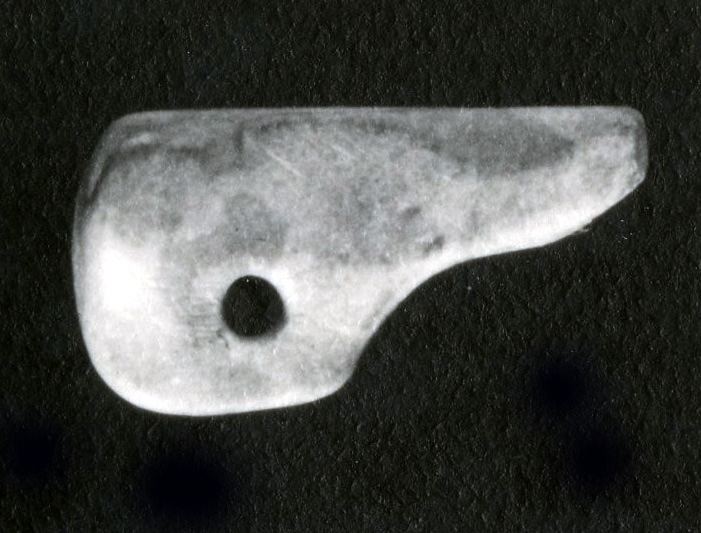
Heritage Analysis: The Anubis Head Amulet
Prepared for Katherine Fashion Lab | Strategic Standalone Research | 2026 High-End Luxury Strategy
This heritage analysis examines a singular artifact of profound symbolic resonance: an Anubis head amulet, carved from ivory, originating from the ancient civilization of Egypt. As Lead Heritage Curator, I present this research to contextualize its historical and spiritual significance, and to propose a strategic framework for its integration into Katherine Fashion Lab’s 2026 high-end luxury narrative. The amulet’s enduring power lies not merely in its materiality but in its capacity to bridge mortal and divine realms—a quality that aligns with contemporary luxury’s quest for meaning, exclusivity, and transcendent storytelling.
Symbolic Power: The Guardian of Thresholds
Anubis as Psychopomp and Protector
In ancient Egyptian cosmology, Anubis—depicted with the head of a jackal—served as the god of embalming, mummification, and the afterlife. The jackal’s association with cemeteries and the desert’s edge, where the dead were buried, rendered Anubis a liminal figure: a guardian of thresholds between life and death. The amulet, worn as a pendant or talisman, was believed to channel Anubis’s protective energy, guiding the soul through the perilous journey of the Duat (the underworld) and ensuring a favorable judgment before Osiris.
Strategic Implication: For Katherine Fashion Lab, the Anubis head symbolizes guardianship of identity and transition. In 2026 luxury, where clients seek jewelry that anchors personal transformation, the amulet can be reinterpreted as a marker of resilience and self-sovereignty. Its symbolic power—protection through peril—resonates with the luxury consumer’s desire for objects that offer psychological security amid global flux.
Historical Adornment: Ivory as Sacred Material
Materiality and Status in Ancient Egypt
Ivory, sourced from elephants and hippopotami, was a material of immense prestige in ancient Egypt. Its rarity, durability, and luminous quality made it ideal for amulets, inlays, and ritual objects. The Anubis head amulet, carved with precision, would have been reserved for elite burials or worn by priests and nobles during funerary rites. The ivory’s natural cream hue, often enhanced with pigments or gold leaf, symbolized purity and eternal light—a direct counterpoint to the darkness of the tomb.
Strategic Implication: Katherine Fashion Lab’s 2026 high-end luxury strategy must emphasize material provenance and ethical sourcing. While ancient ivory is now prohibited, the brand can commission modern iterations using sustainable alternatives—such as fossilized walrus ivory or responsibly sourced bone—while retaining the aesthetic of aged patina. This approach honors the artifact’s heritage while aligning with contemporary sustainability standards, a key driver for discerning Gen Z and Alpha luxury consumers.
Spiritual Meaning: The Amulet as Microcosm of Divine Order
Ma’at and the Weight of the Heart
The Anubis head amulet was not merely decorative; it was a functional object within the spiritual economy of Ma’at—the principle of cosmic balance, truth, and justice. During the Weighing of the Heart ceremony, Anubis would place the deceased’s heart on a scale against the feather of Ma’at. The amulet, worn over the heart, was believed to align the wearer’s soul with divine order, preventing the heart from betraying its owner. Thus, the amulet became a conduit for moral clarity and spiritual accountability.
Strategic Implication: In 2026, luxury brands are increasingly integrating ritualistic narratives into their offerings. Katherine Fashion Lab can position the Anubis head amulet as a talisman for authenticity—a piece that encourages the wearer to live in alignment with their inner truth. This spiritual dimension elevates the amulet from accessory to artifact, fostering deep emotional resonance and repeat engagement through storytelling campaigns, limited-edition releases, and personalized commissioning.
2026 High-End Luxury Strategy: From Artifact to Archetype
Recontextualization for the Modern Patron
The Anubis head amulet, when stripped of its funerary context, becomes a universal symbol of guardianship, transition, and moral integrity. For Katherine Fashion Lab’s 2026 collection, I propose a three-tier strategy:
1. The “Threshold” Collection: A capsule line featuring reimagined Anubis head pendants, cufflinks, and earrings in blackened silver, oxidized bronze, and ethically sourced bone. Each piece would be accompanied by a digital “passport” detailing its symbolic heritage, material provenance, and a personalized blessing from a contemporary spiritual advisor. This creates a ritual of acquisition—the act of purchase becomes a rite of passage.
2. The “Ma’at” Bespoke Service: For ultra-high-net-worth clients, offer a made-to-order service where the amulet is inscribed with the client’s personal motto or a symbol representing their “heart’s truth.” The process would include a consultation with a historian and a symbolic cartographer, culminating in a private unveiling. This aligns with luxury’s shift toward hyper-personalization and experiential ownership.
3. The “Guardian” Campaign: A multi-sensory marketing narrative that positions the amulet as a “guardian of the self.” Visuals would juxtapose ancient Egyptian iconography with modern urban landscapes—a skyscraper’s edge, a desert at dusk—emphasizing the timelessness of protection. Collaborations with contemporary artists and spiritual influencers (e.g., meditation guides, philosophers) would amplify the message. The campaign’s tagline: “Carry the threshold within.”
Material Innovation and Ethical Imperatives
Given the prohibition on new ivory, Katherine Fashion Lab should invest in biomimetic materials that replicate ivory’s luster and tactility. Options include Tagua nut (vegetable ivory) for its sustainable harvest and recycled fossilized ivory from pre-1970s collections. Each piece would be certified by a third-party ethical sourcing body, reinforcing the brand’s commitment to heritage without ecological harm. The amulet’s patina—whether achieved through natural aging or controlled oxidation—should be marketed as a living finish that evolves with the wearer, echoing the soul’s journey.
Conclusion: The Amulet as a Luxury Archetype
The Anubis head amulet, in its ivory form, is a masterclass in symbolic economy. Its power rests not in opulence but in its ability to transmit meaning across millennia—a quality that defines enduring luxury. For Katherine Fashion Lab, this artifact offers a strategic blueprint: to create objects that are not merely worn, but inhabited; not merely purchased, but inherited. By honoring the amulet’s historical and spiritual depth, and by translating its essence into a contemporary lexicon of protection, transition, and authenticity, the brand can secure a distinctive position in the 2026 high-end luxury market. The Anubis head is not a relic; it is a reminder that true luxury guards the soul.
This research is intended as a standalone strategic document for Katherine Fashion Lab’s internal use. Further consultation on material sourcing, campaign development, and client engagement is recommended.