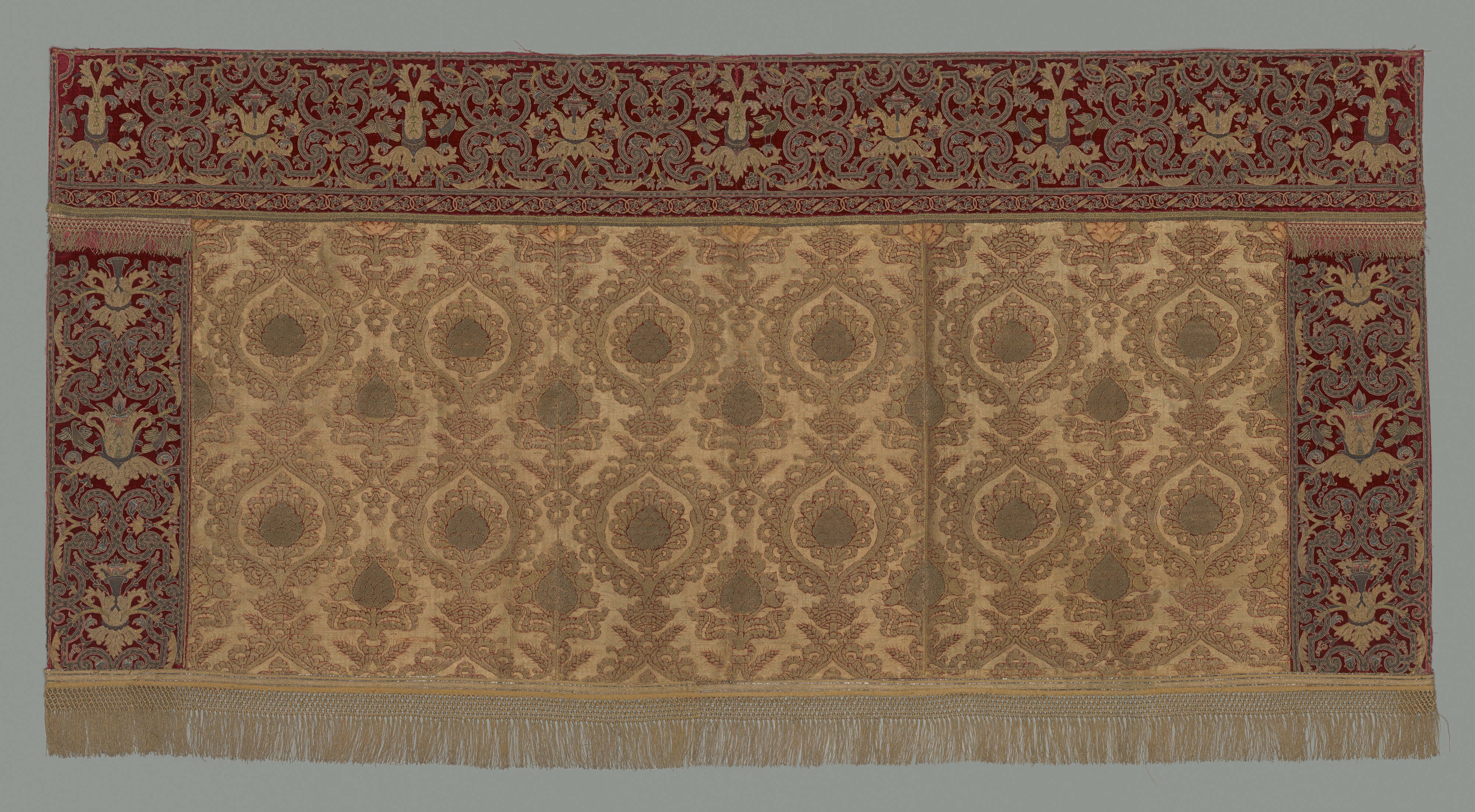
A Study in Sacred Opulence: The Global Heritage Altar Frontal
Introduction: The Altar Frontal as a Textile Testament
In the rarefied domain of couture, where fabric becomes narrative and stitch transforms into symbol, few artifacts command the gravitas of the altar frontal. Within the Katherine Fashion Lab’s Global Heritage collection, this singular piece—crafted from lustrous silk and interwoven with precious metal thread—stands as a masterclass in the intersection of liturgical tradition, artisanal virtuosity, and cross-cultural design philosophy. This analysis deconstructs the altar frontal not merely as a religious vestment but as a textile artifact that embodies the zenith of material culture, demanding a sophisticated appraisal of its aesthetic, technical, and historical dimensions.
Material Lexicon: Silk and Metal Thread as Conduits of Divinity
The choice of materials in this altar frontal is neither arbitrary nor merely decorative; it is a deliberate invocation of the sacred through the profane. The warp and weft of the base fabric, a heavy, high-density silk, provide a luminous ground that catches ambient light with a subtle, almost ethereal sheen. Silk, historically prized for its association with imperial courts and ecclesiastical power, here serves as a tactile metaphor for purity and transcendence. Its fluid drape, when mounted on an altar, transforms the static object into a living, breathing surface that responds to the flicker of candlelight and the shifting shadows of a sacred space.
More arresting, however, is the integration of metal thread—likely a blend of gilded silver or gold-wrapped silk, a technique perfected across centuries in Byzantine, Italian, and Ottoman workshops. The metal thread is not applied as an afterthought but is structurally embedded within the weave, creating a complex interplay of light and texture. In the context of the Global Heritage collection, this material choice transcends mere ornamentation. It echoes the pre-Columbian Andean use of metal in ceremonial textiles, the Mughal predilection for zari work, and the European medieval fascination with opus anglicanum. The metal thread becomes a universal signifier of the divine, a material that bridges the earthly and the celestial, while simultaneously asserting the altar frontal’s status as a pinnacle of textile engineering.
Design Architecture: Geometry, Iconography, and the Global Gaze
The design of this altar frontal resists a singular cultural attribution, instead offering a syncretic visual language that speaks to the Global Heritage ethos. The composition is structured around a central vertical axis, a common liturgical device that directs the viewer’s gaze upward, mimicking the spiritual ascent. This axis is flanked by symmetrical, stylized vegetal motifs—palmettes, lotus blossoms, and vine scrolls—that draw from both Islamic arabesque traditions and the naturalistic flora of Renaissance embroidery. The fusion is seamless: the geometric precision of the former tempers the organic exuberance of the latter, creating a rhythm that is at once orderly and lush.
Notably, the iconography avoids explicit figuration, a choice that respects multiple religious and cultural sensibilities while amplifying the piece’s abstract power. Instead, the metal thread is used to articulate interlocking circles and octagonal stars, motifs that resonate with the kaftan aesthetics of the Safavid court and the qalamkari patterns of South Asia. This deliberate ambiguity is a curatorial masterstroke. The altar frontal becomes a blank canvas for devotion, its symbols open to interpretation by a global audience, whether in a cathedral, a mosque, or a museum. The border, a dense band of metallic filigree, anchors the composition, its repetitive pattern evoking the endlessness of prayer.
Technical Virtuosity: The Weave as a Testament to Craft
From a technical standpoint, this altar frontal is a monument to the weaver’s art. The silk and metal thread are combined using a compound weave structure, likely a lampas or brocade technique, where the metal thread is floated on the surface to create a raised, embossed effect. This method, which reached its apogee in the silk workshops of 17th-century Lyon and 18th-century China, requires an extraordinary level of precision. Each metal thread must be tensioned identically to prevent buckling, while the silk ground must be woven with a density that supports the weight of the metallic elements without distorting the pattern.
The interplay of warp and weft here is not merely functional but expressive. The metal threads are often paired with a supplementary weft of colored silk—deep crimson, sapphire blue, and emerald green—that peeks through the metallic overlay, creating a shimmering, polychromatic effect. This camaïeu technique, where subtle color variations emerge through the weave, adds depth and complexity. The reverse side of the fabric, though hidden against the altar, is equally refined, with a smooth, flat finish that indicates the use of a continuous brocading technique, where the metal thread is carried across the entire width of the loom rather than being cut and reapplied. This technical choice ensures durability, allowing the altar frontal to withstand the rigors of liturgical use and the passage of time.
Contextual Significance: The Altar Frontal in a Secular Age
To analyze this piece solely as a religious artifact would be to undersell its profound cultural resonance. In the context of the Katherine Fashion Lab’s Standalone Study, the altar frontal is repositioned as a design object that challenges the boundaries between fashion, art, and ritual. Its silk and metal construction aligns it with the haute couture tradition of using precious materials to elevate the everyday into the extraordinary. Yet, unlike a gown or a coat, this altar frontal is designed for a static, vertical presentation—a fact that demands a different kind of appreciation. It is a textile that is meant to be seen, not worn; to be contemplated, not touched.
The Global Heritage provenance further complicates its interpretation. This is not a relic of a single culture but a synthesis of global techniques and aesthetics, collected and curated to tell a story of human creativity that transcends borders. The altar frontal becomes a metaphor for the fashion lab’s mission: to mine the past for techniques that can inform a more inclusive, sophisticated future. In a world increasingly concerned with cultural appropriation, this piece offers a model of respectful homage, where the weaver’s skill is celebrated without erasing its origins.
Conclusion: The Thread That Binds
The Global Heritage altar frontal is more than a sum of its materials—it is a meditation on the power of textile to hold meaning across time and space. The silk whispers of ancient trade routes from China to the Mediterranean; the metal thread glints with the labor of artisans from Isfahan to Florence. As a standalone study, it challenges the viewer to look beyond the surface, to read the weave as a text that encodes centuries of devotion, innovation, and exchange. In the hands of the Katherine Fashion Lab, this altar frontal is not a relic but a living document—a testament to the enduring dialogue between craft and culture, and a reminder that the most profound beauty often lies in the threads that bind us all.