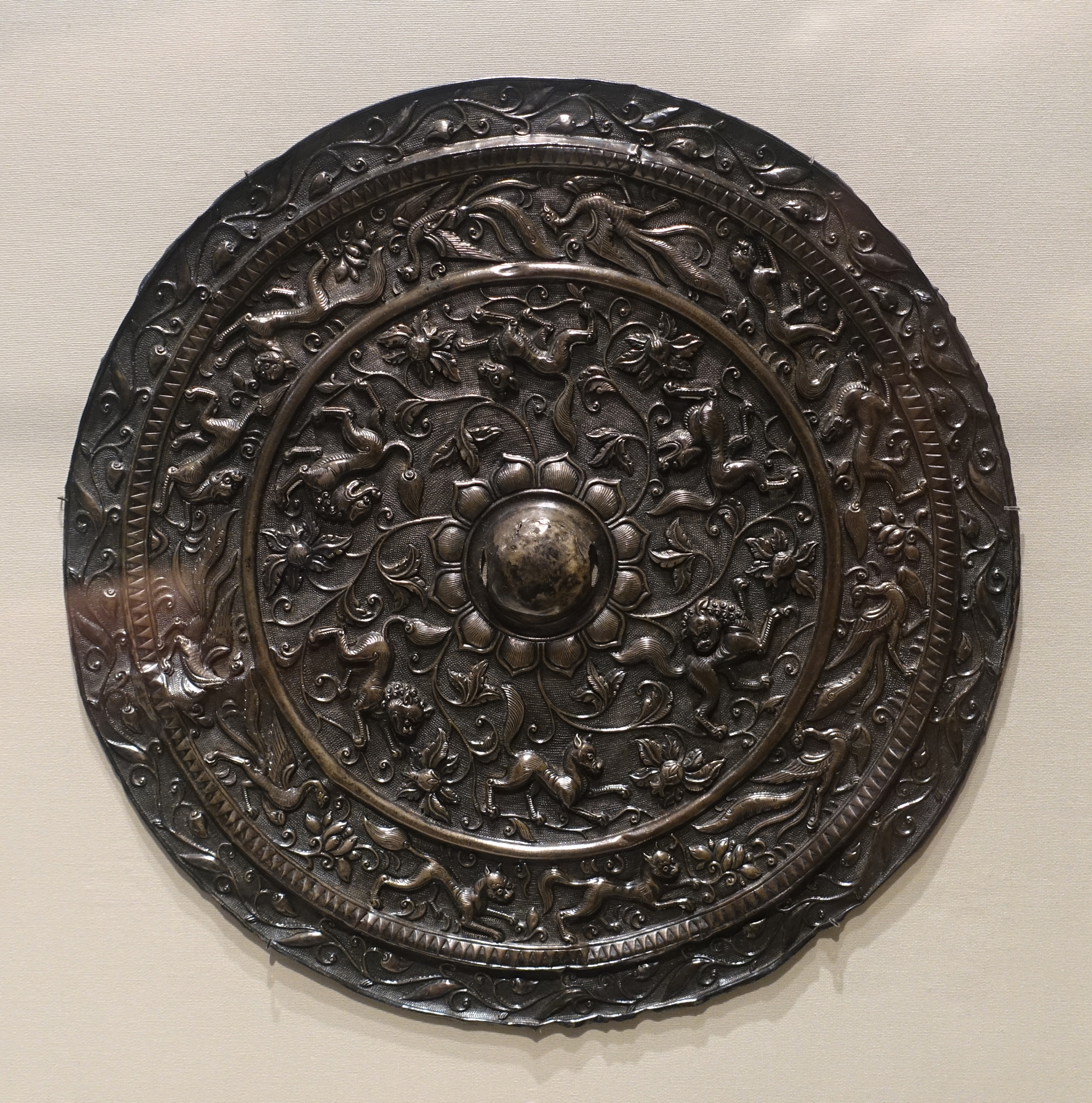
Heritage Analysis: Mirror Back with Birds and Animals in Repoussé
This research paper presents a strategic heritage analysis of the Mirror Back with Birds and Animals in Repoussé, a silver artifact from China. Commissioned by Katherine Fashion Lab, this study examines the object’s symbolic power, historical adornment context, and spiritual meaning, culminating in a 2026 high-end luxury strategy. The mirror back, crafted with repoussé technique—a method of hammering metal from the reverse side to create raised relief—serves as a material testament to Chinese cosmological and social hierarchies. Its intricate depiction of birds and animals offers profound insights into status, protection, and transcendence, making it a valuable asset for contemporary luxury positioning.
Symbolic Power: The Hierarchical Language of Fauna
Birds as Messengers of Celestial Harmony
In Chinese iconography, birds—particularly cranes, pheasants, and magpies—embody distinct virtues. Cranes symbolize longevity and immortality, often associated with Daoist sages. Pheasants represent beauty and literary refinement, while magpies signify joy and marital bliss. The mirror back’s avian motifs thus encode a multilayered discourse on spiritual aspiration and social order. For the elite Tang dynasty owner, these symbols were not mere decoration but active talismans, believed to attract auspicious energy (qi) and ward off malevolent forces. The repoussé technique amplifies this power: the raised forms catch light, creating dynamic shadows that animate the creatures, suggesting a living, breathing cosmos.
Animals as Guardians of Earthly Dominion
Animals such as lions, deer, and mythical beasts like the qilin reinforce terrestrial authority. The lion, a protector of Buddhist law, guards against chaos; the deer symbolizes wealth and official promotion due to its homophone (lu). The qilin, a chimera of benevolence, appears only during the reign of a virtuous ruler. This zoological assembly transforms the mirror into a microcosm of imperial cosmology, where the emperor mediates between heaven and earth. For Katherine Fashion Lab, this hierarchy offers a model for exclusive brand storytelling: each creature can represent a core value (e.g., longevity, integrity, prosperity) within a luxury collection, creating a symbolic lexicon that resonates with discerning clientele.
Historical Adornment: The Mirror as Status and Ritual Object
Materiality and Craftsmanship in Tang Dynasty China
Silver mirrors, especially those with repoussé decoration, were luxury items reserved for the aristocracy during the Tang dynasty (618–907 CE). The choice of silver—a precious metal associated with moonlight and purity—elevated the mirror beyond utility. Its reverse side, often hidden from view, was paradoxically the most ornate, reflecting a cultural emphasis on inner virtue and private opulence. The repoussé process required master silversmiths to work from the back, controlling relief height with precision—a metaphor for concealed mastery. This aligns with contemporary luxury’s focus on craftsmanship as a hidden signature of value.
Adornment as Social Currency
These mirrors were not merely functional but were exchanged as diplomatic gifts or heirlooms, cementing alliances and lineage. The birds and animals served as visual heraldry, signaling the owner’s rank and cultural literacy. In a 2026 context, Katherine Fashion Lab can reinterpret this through limited-edition accessories that feature repoussé-inspired motifs, using precious metals to symbolize rarity. The historical practice of gifting mirrors as tokens of esteem translates directly into modern luxury’s emphasis on exclusivity and relationship-building with high-net-worth individuals (HNWIs).
Spiritual Meaning: The Mirror as Portal and Protector
Daoist and Buddhist Cosmological Functions
Mirrors in Chinese spirituality were believed to reflect not only physical appearances but also the soul’s true nature. The mirror back’s imagery acted as a protective barrier against evil spirits, which were thought to be repelled by the reflection of celestial creatures. Birds and animals, particularly those with apotropaic attributes (e.g., the lion’s roar, the crane’s flight), enhanced this function. The repoussé technique created a tactile topography that was both seen and felt, engaging multiple senses in a ritual of purification. This spiritual dimension offers a unique narrative for modern wellness luxury, where objects are designed to foster inner peace and protection.
Transcendence and Immortality
The mirror’s circular form symbolizes the cosmic cycle, while the animals’ dynamic poses suggest perpetual motion—a Daoist ideal of harmony with the Tao. For the deceased, such mirrors were placed in tombs to guide the soul through the afterlife, ensuring safe passage. This esoteric meaning aligns with 2026 luxury trends that emphasize heritage storytelling and meaningful consumption. Katherine Fashion Lab can position its collections as modern talismans, offering clients not just aesthetic beauty but spiritual resonance—a key differentiator in a saturated market.
2026 High-End Luxury Strategy: From Artifact to Brand Asset
Strategic Positioning: Symbolic Heritage as Competitive Advantage
For Katherine Fashion Lab, the Mirror Back serves as a blueprint for brand differentiation. In 2026, luxury consumers seek authenticity and depth; they are drawn to brands that articulate a clear cultural lineage. By integrating the mirror’s symbolic language—birds for aspiration, animals for protection—the lab can develop a cohesive visual identity that transcends seasonal trends. This strategy leverages the artifact’s historical weight to create a timeless luxury narrative, appealing to both heritage enthusiasts and modern minimalists.
Product Innovation: Repoussé-Inspired Craftsmanship
Translating repoussé into contemporary accessories (e.g., handbag clasps, jewelry cuffs, shoe ornaments) requires artisanal collaboration. Katherine Fashion Lab should partner with master metalworkers to produce limited-edition pieces using recycled silver, aligning with sustainability imperatives. The tactile quality of repoussé—its raised contours and light-play—can be highlighted through digital marketing, using macro-photography and AR try-ons to convey the craftsmanship’s intimacy. This approach mirrors the historical practice of revealing hidden beauty, creating a sense of discovery for the consumer.
Experiential Retail: The Mirror as Ritual Space
Flagship stores can incorporate mirror-themed installations that evoke the artifact’s spiritual function. For example, a “Sanctuary Room” with repoussé-inspired wall panels and ambient lighting could offer clients a moment of reflection, aligning with wellness luxury. Limited-edition mirror compacts, engraved with individual animal motifs, could be offered as brand talismans for VIP clients, fostering loyalty and word-of-mouth. This experiential layer transforms the object from commodity to ritual artifact, deepening emotional attachment.
Marketing Narrative: The Language of Auspicious Symbols
Campaigns should explicitly decode the mirror’s symbols for global audiences. A series titled “The Auspicious Code” could feature short films explaining each creature’s meaning, tying them to modern virtues like resilience (lion) or creativity (magpie). This educational approach positions Katherine Fashion Lab as a cultural curator, not just a fashion house. In 2026, when AI-generated content dominates, authentic heritage storytelling will be a premium differentiator, commanding higher price points and deeper consumer trust.
Conclusion: The Mirror as a Strategic Compass
The Mirror Back with Birds and Animals in Repoussé is more than a historical artifact; it is a strategic template for Katherine Fashion Lab’s 2026 luxury vision. Its symbolic power offers a ready-made lexicon for brand values; its historical adornment context underscores the importance of craftsmanship and exclusivity; its spiritual meaning provides a foundation for wellness-oriented luxury. By translating these elements into product design, retail experience, and marketing narrative, the lab can achieve sustainable differentiation in a competitive landscape. The mirror’s enduring appeal—its ability to reflect both light and meaning—becomes a metaphor for the brand’s mission: to offer clients not just objects, but portals to heritage, protection, and transcendence.