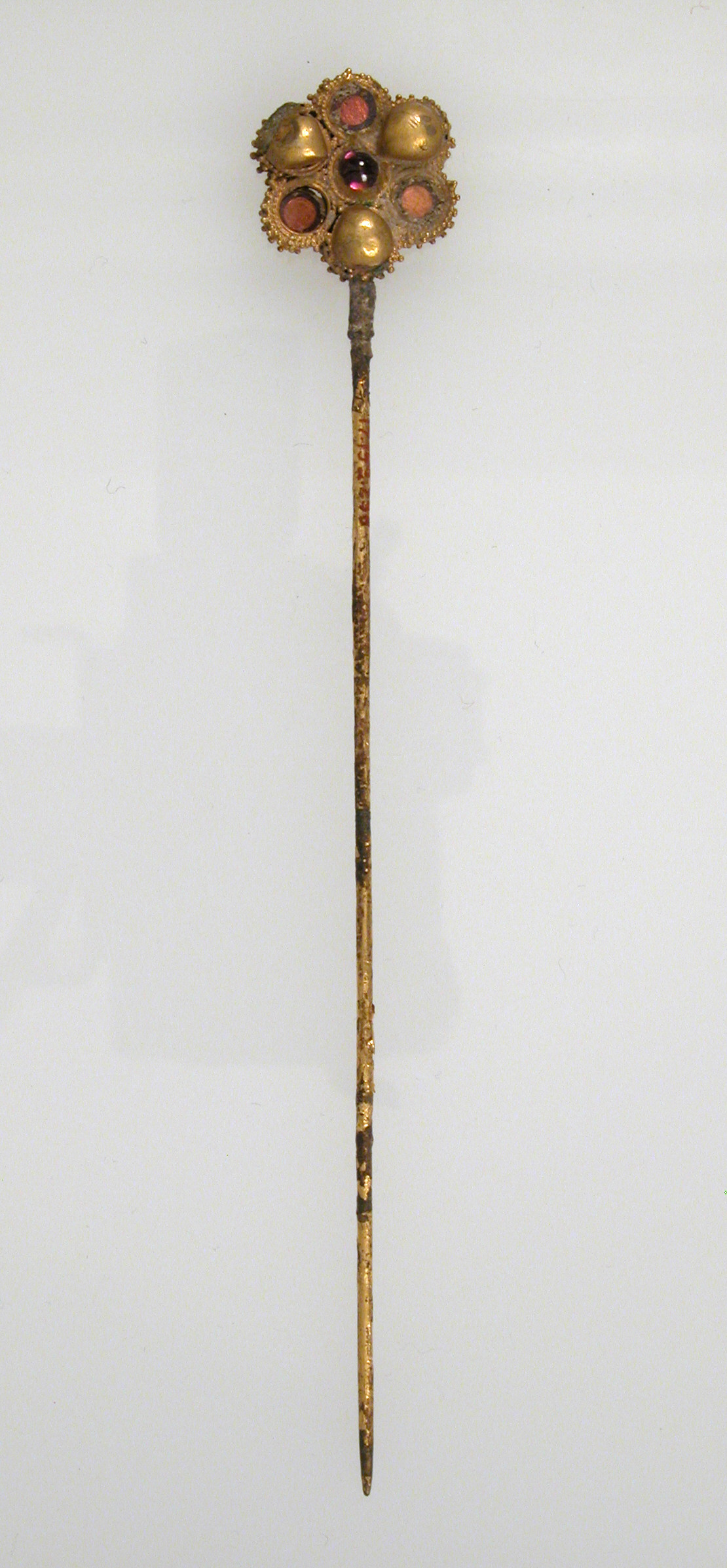
Heritage Analysis: The Frankish Hairpin as a Strategic Artifact for Katherine Fashion Lab
Introduction: The Artifact as a Cultural Signifier
The Frankish hairpin, crafted from gold or gilded metal, glass paste, and stone, is far more than a functional accessory. Within the context of Katherine Fashion Lab’s strategic research for 2026 high-end luxury, this artifact offers a profound case study in symbolic power, historical adornment, and spiritual meaning. The Frankish people, a confederation of Germanic tribes active from the 3rd to the 8th centuries, used personal ornamentation as a deliberate language of status, belief, and identity. For a luxury brand seeking to differentiate itself in an increasingly saturated market, the hairpin’s layered heritage provides a blueprint for creating objects that resonate with authenticity, exclusivity, and emotional depth.
Symbolic Power: The Hairpin as a Marker of Authority and Identity
In Frankish society, the hairpin was not merely decorative; it was a potent symbol of social hierarchy and political agency. Women of elite status wore elaborate pins to secure their veils or hair, often in public ceremonies and funerary contexts. The choice of gold or gilded metal signaled wealth and access to rare materials, while the intricate design—often featuring animal motifs, geometric patterns, or Christian crosses—communicated allegiance to both tribal tradition and emerging ecclesiastical power. This dual symbolism is critical for modern luxury strategy. The hairpin’s ability to simultaneously represent personal taste and collective identity offers a model for creating accessories that function as “wearable declarations.” For Katherine Fashion Lab, a 2026 collection could reinterpret this symbolic power by incorporating motifs that speak to contemporary values—such as sustainability, craftsmanship, or digital connectivity—while maintaining the artifact’s inherent sense of authority.
Historical Adornment: Craftsmanship and Materiality as Luxury Benchmarks
The Frankish hairpin’s medium—gold or gilded metal, glass paste, and stone—reflects a sophisticated understanding of material hierarchy and technical mastery. Gold, often sourced from Roman trade networks or local deposits, was reserved for the highest echelons of society. Gilding, a technique of applying a thin layer of gold to a base metal, allowed for the illusion of opulence while conserving precious resources—a concept that resonates with modern sustainable luxury. Glass paste, an early form of enamel, added vibrant color and durability, while stones such as garnet, amethyst, or carnelian were imported from distant regions, underscoring the wearer’s global connections. For a 2026 high-end luxury strategy, these materials offer a rich palette for differentiation. Katherine Fashion Lab could explore the use of recycled gold, lab-grown gemstones, or hand-painted enamel to evoke the same sense of rarity and artistry. The historical precedent of gilding also suggests an opportunity for “accessible exclusivity”—offering pieces that appear opulent without requiring the highest environmental or monetary cost.
Spiritual Meaning: The Hairpin as a Talisman and Ritual Object
Beyond its social function, the Frankish hairpin held profound spiritual significance. Many examples from archaeological sites, such as the Merovingian-era graves in present-day France and Germany, were found positioned near the head or chest, suggesting their role in funerary rituals. The materials themselves were believed to possess protective qualities: gold was associated with the sun and divine light, glass paste with the clarity of the heavens, and stones like garnet with blood and life force. Christian symbols, such as the cross or fish, were often integrated into designs, reflecting the syncretic blend of pagan and Christian beliefs during the period. This spiritual dimension is particularly relevant for 2026 luxury consumers, who increasingly seek products with meaning beyond material value. Katherine Fashion Lab can position its hairpin collection as “modern talismans”—objects that connect the wearer to heritage, personal intention, or global spirituality. Marketing narratives could emphasize the protective or empowering qualities of specific stones or motifs, aligning with trends in mindful consumption and self-care.
Strategic Implications for 2026 High-End Luxury
1. Heritage as a Differentiation Tool
In a luxury market dominated by digital saturation and fast fashion cycles, the Frankish hairpin offers a counter-narrative of permanence and intentionality. Katherine Fashion Lab can leverage this heritage by positioning each hairpin as a “cultural artifact” rather than a mere accessory. Limited-edition releases, inspired by specific Frankish motifs or materials, can create scarcity and collector appeal. Collaborations with historians or museums could further authenticate the brand’s narrative, appealing to discerning clients who value intellectual depth alongside aesthetic beauty.
2. Material Innovation with Historical Roots
The Frankish use of gilded metal and glass paste suggests a path for material innovation that honors tradition while embracing modernity. For 2026, Katherine Fashion Lab could develop a proprietary “heritage alloy”—a blend of recycled gold and base metals that mimics the patina of ancient gilding. Similarly, hand-painted glass paste techniques, revived from historical methods, could be used to create unique color gradients that differentiate the brand from mass-produced competitors. This approach not only reinforces sustainability but also elevates the product to the realm of artisanal luxury.
3. Spiritual and Emotional Resonance
The spiritual meaning of the Frankish hairpin aligns with the growing demand for “meaningful luxury.” Katherine Fashion Lab can create a “Talisman Collection” where each hairpin is associated with a specific intention—protection, prosperity, or connection to ancestry. Packaging could include a small card explaining the historical and symbolic significance of the materials and motifs. This narrative layer transforms the purchase into an experience, fostering emotional loyalty and word-of-mouth advocacy among high-net-worth clients.
4. Price Positioning and Exclusivity
Given the historical rarity of Frankish hairpins, a 2026 collection should be positioned at the ultra-luxury tier, with prices reflecting the craftsmanship and narrative value. Entry-level pieces could use gilded metal and glass paste, while top-tier offerings feature solid gold and rare stones. A made-to-order model, where clients select motifs and materials, would further enhance exclusivity and personalization—a key driver for luxury consumers in 2026.
Conclusion: The Frankish Hairpin as a Strategic Archetype
The Frankish hairpin is not merely a historical curiosity but a strategic archetype for Katherine Fashion Lab’s 2026 high-end luxury strategy. Its symbolic power, historical craftsmanship, and spiritual meaning offer a blueprint for creating accessories that transcend fashion to become enduring statements of identity, artistry, and belief. By decoding the cultural logic of this artifact, Katherine Fashion Lab can position itself at the intersection of heritage and innovation, appealing to a clientele that demands depth, authenticity, and emotional resonance from every purchase. In a world of fleeting trends, the hairpin reminds us that true luxury is timeless—and that the most powerful adornments are those that tell a story.