Divine Adornment: Deconstructing the Sacred Silhouette in Ecce Homo and Mater Dolorosa
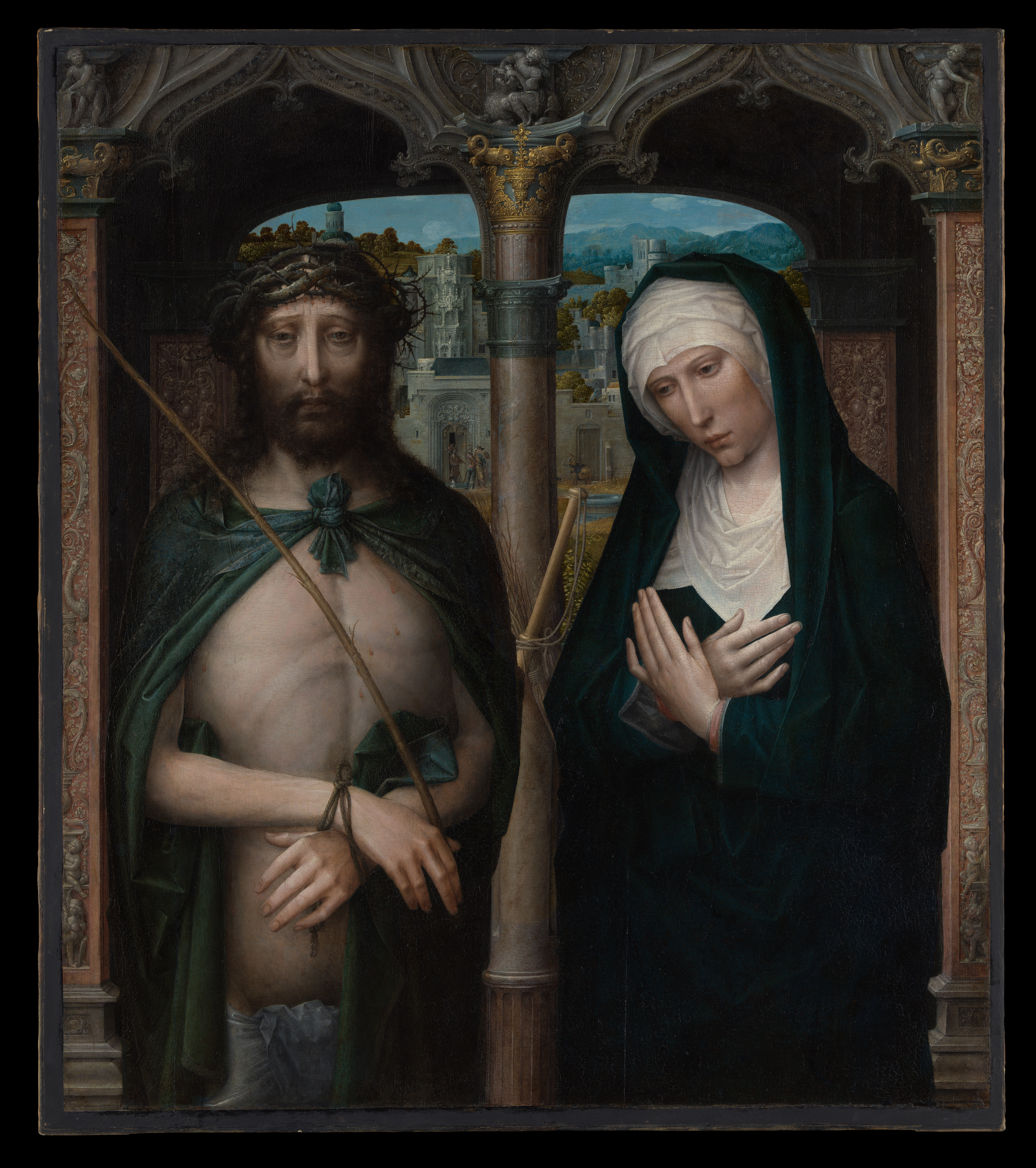
At Katherine Fashion Lab, we view the world through the lens of haute couture—where fabric, form, and emotion converge to tell a story of transcendent beauty and human vulnerability. In our latest analysis, we turn to two masterworks of the Global Heritage collection: Christ Crowned with Thorns (Ecce Homo) and the Mourning Virgin (Mater Dolorosa). These oil-on-canvas studies, transferred from wood, offer a profound meditation on suffering, dignity, and the architectural language of drapery. While traditionally interpreted as religious icons, we approach them as a standalone study in couture as narrative, where every fold, shadow, and texture speaks to the tension between the ephemeral and the eternal.
The Crown as Couture: Symbolism and Structure in Ecce Homo
Thorns as Textile: The Paradox of Adornment
The central motif of Ecce Homo—the crown of thorns—is not merely an instrument of torture but a deliberate, brutal form of headwear. In the language of fashion, a crown signifies sovereignty, yet here it is inverted: the thorns puncture the skin, drawing blood that mimics the crimson jewels of a royal diadem. The artist’s rendering of the thorns as interlocking, almost metallic, creates a texture that is both organic and artificial. This duality echoes the tension in high fashion between comfort and sacrifice—the corset, the stiletto, the restrictive silhouette that demands pain for beauty. The crown, then, becomes a statement piece that deconstructs power, exposing the fragility beneath the regal facade.
Drapery as Dialogue: The Fabric of Humiliation
Christ’s garment—a simple, ochre-toned cloak—is rendered with remarkable fluidity. The folds cascade downward, suggesting a weight that is both physical and metaphysical. In couture analysis, we examine how fabric interacts with the body to convey emotion. Here, the drapery is not protective but revealing: it clings to the shoulders, exposing the collarbone and the sinews of the neck, emphasizing vulnerability. The color palette—muted earth tones against the stark white of the flesh—creates a chromatic dissonance that heightens the sense of exposure. This is not the opulent silk of a royal court but the coarse wool of a condemned man. Yet, the artist’s brushwork imbues the fabric with a sheen, a subtle luminosity that suggests an inner, unassailable dignity. The garment becomes a second skin, one that cannot be stripped away, even as the body is stripped of its power.
The Gaze as Accessory: The Face as the Ultimate Couture
In Ecce Homo, the face is the focal point—the ultimate accessory that communicates the narrative without words. The eyes, half-lidded and weary, are framed by shadows that mimic the hollows of a couture hood. The lips, slightly parted, suggest a silent utterance, a prayer, or a lament. The artist’s use of chiaroscuro—the dramatic contrast of light and shadow—sculpts the face as if it were a textile, with highlights catching the cheekbones and the brow. This technique, reminiscent of the way a designer uses draping and pinning to shape a garment, transforms the visage into a living, breathing piece of art. The crown of thorns, the drapery, the skin—all are elements of a single, cohesive ensemble that speaks to the intersection of suffering and transcendence.
Mater Dolorosa: The Architecture of Grief
Veiling as Vessel: The Mantle of Mourning
In the Mater Dolorosa, the Virgin Mary is enveloped in a deep blue mantle—a hue traditionally associated with royalty and divinity, but here saturated with the darkness of sorrow. The fabric is not merely a covering but an architectural structure that contains and shapes her grief. The folds are severe, almost geometric, creating a series of vertical lines that elongate the figure and draw the eye upward, as if her sorrow is reaching toward heaven. This verticality is a deliberate design choice, echoing the columns of a cathedral or the pleats of a couture gown. The mantle’s weight is palpable; it seems to press down on her shoulders, yet it also provides a shield from the world. In fashion, we speak of “armor” in clothing—here, the fabric is both a prison and a protection.
The Handkerchief as Haute Couture: A Study in Micro-Textiles
A subtle but critical detail in the Mater Dolorosa is the handkerchief or cloth that Mary holds, often pressed to her cheek or clutched in her hands. This small textile object is a microcosm of the entire composition. The artist renders it with delicate brushstrokes, capturing the softness of the fabric against the rigidity of the mantle. In couture, the accessory can define the entire look—a scarf, a glove, a handkerchief. Here, the cloth is soaked with tears, a material manifestation of inner anguish. It is the emotional centerpiece of the painting, a piece of fabric that bears the weight of a mother’s sorrow. The contrast between the coarse, heavy mantle and the fine, almost translucent handkerchief creates a tactile dialogue that speaks to the complexity of grief: the public, stoic exterior versus the private, vulnerable interior.
Color as Couture: The Palette of Pathos
The color palette of the Mater Dolorosa is a masterclass in emotional branding. The deep blue of the mantle is offset by the pale, almost alabaster skin of Mary’s face and hands. This chromatic juxtaposition is reminiscent of a designer’s use of contrast to draw the eye—a white collar against a black dress, a gold trim on a navy coat. The red of her eyes and the faint blush on her cheeks are the only warm tones, suggesting the life force that remains despite her grief. The background is deliberately subdued, a dark, undefined space that isolates the figure and forces the viewer to focus on the texture and tone of the drapery. This is not a painting about place; it is a painting about the fabric of emotion.
Synthesis: The Global Heritage of Sacred Couture
Transferred from Wood: The Materiality of Time
The fact that these works were transferred from wood to canvas adds a layer of material history to our analysis. The transfer process itself is a form of restoration and transformation, akin to the way a couture garment is reworked, repaired, or repurposed over generations. The original wood panel—perhaps cracked, warped, or damaged—now lives on in the canvas, a testament to the longevity of design. In fashion, we value the patina of age—the way a vintage piece carries the story of its wearer. Similarly, these paintings carry the weight of centuries, their pigments faded, their surfaces textured by time. This materiality is not a flaw but a feature, an integral part of their narrative.
Standalone Study: The Power of Isolation
As a standalone study, these works are stripped of the narrative context of a larger altarpiece or devotional cycle. They exist in isolation, forcing the viewer to confront the raw emotion of the subjects without the distraction of surrounding figures or scenes. This is akin to the minimalist approach in contemporary fashion—a single, powerful silhouette on a bare runway, unadorned by accessories or backdrop. The Ecce Homo and Mater Dolorosa become archetypes of suffering and mourning, their garments speaking a universal language that transcends religious doctrine. They are, in essence, couture icons that embody the human condition through the medium of fabric, form, and color.
Conclusion: The Eternal Runway of the Sacred
In the hands of Katherine Fashion Lab, these paintings are not relics of a bygone era but living documents of the intersection between art, faith, and fashion. The crown of thorns, the mantle of mourning, the handkerchief of tears—all are garments of the soul, designed to convey the ineffable. As we continue to explore the Global Heritage collection, we are reminded that couture is not merely about clothing the body but about clothing the spirit. The Ecce Homo and Mater Dolorosa stand as timeless studies in the architecture of emotion, their drapery and textures offering a blueprint for how we might dress our own sorrows and dignities. In every fold, every shadow, every brushstroke, we find a lesson in the art of adornment—and the profound truth that even in suffering, there is beauty.