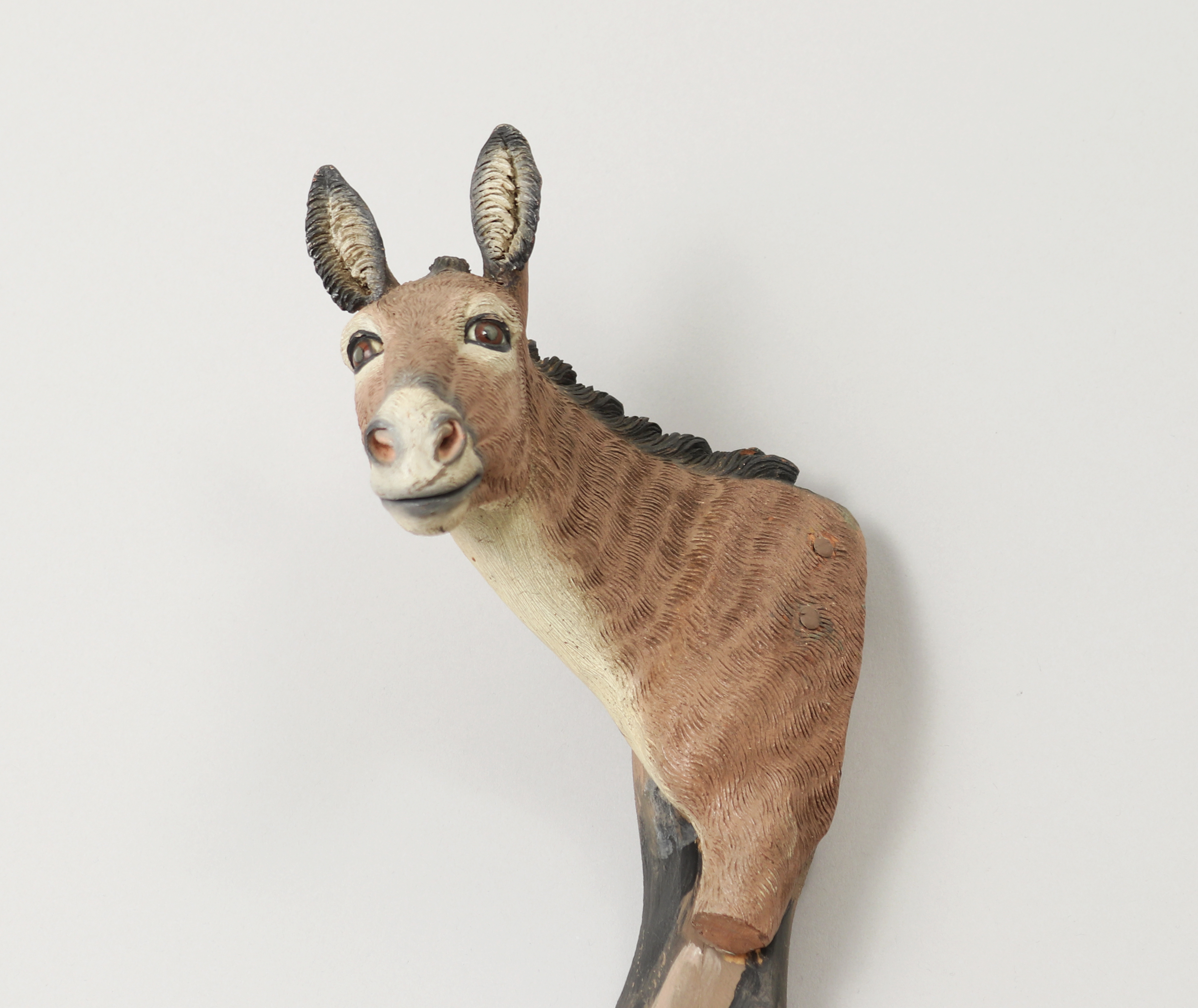
Heritage Analysis: The Donkey's Head in Polychromed Terracotta
Introduction: Reclaiming the Marginalized Symbol
In the annals of ancient material culture, the donkey’s head has been historically undervalued, often dismissed as a crude or comedic motif. Yet, within the framework of Katherine Fashion Lab’s strategic heritage research, this polychromed terracotta artifact emerges as a potent emblem of symbolic power, historical adornment, and spiritual meaning. This analysis repositions the donkey’s head not as a marginal figure, but as a deliberate, sophisticated icon of resilience, service, and sacred burden. For a 2026 high-end luxury strategy, this motif offers a rare opportunity to subvert conventional luxury narratives—moving from ostentatious display to quiet, intellectual depth.
Symbolic Power: The Donkey as an Ancient Archetype of Strength and Wisdom
Across ancient civilizations—from Mesopotamia to the Mediterranean—the donkey held a dualistic symbolic value. In Egyptian mythology, the god Set was often associated with the donkey, representing chaos, but also protective force and boundary-crossing power. In Greco-Roman culture, the donkey was linked to Dionysus and Silenus, embodying untamed instinct, fertility, and divine intoxication. The polychromed terracotta medium, with its vibrant, lasting pigments, amplifies this symbolism: the donkey’s head becomes a vessel of life force, painted to endure as a talisman of endurance and transformation.
For luxury branding, this symbolic power translates into a counter-narrative to fragility. While high-end fashion often valorizes the delicate and rare, the donkey’s head celebrates durability, humble strength, and unpretentious wisdom. In a 2026 market saturated with digital ephemera, this motif offers a grounded, tactile authenticity that resonates with discerning consumers seeking meaning over mere status.
Historical Adornment: The Terracotta as a Precious, Painted Surface
Polychromed terracotta was not a cheap or coarse medium in antiquity. It required skilled artisanship, precise firing techniques, and costly mineral pigments—ochre, azurite, cinnabar—to achieve its vivid hues. The donkey’s head, when rendered in this medium, was an object of domestic and ritual adornment, often placed in homes, temples, or tombs as a protective guardian. The act of painting the terracotta was itself a ritual of cultural consecration, transforming a common animal into a sacred object.
In a luxury context, this historical practice informs a material strategy for 2026: the use of hand-painted, artisanal finishes on accessories and garments. Katherine Fashion Lab can leverage the tactile richness of polychromed surfaces—glazed, matte, or burnished—to create limited-edition pieces that echo ancient adornment. The donkey’s head motif, rendered in high-craft enamel, embroidery, or lacquer, becomes a signature of cultural literacy and artisanal patronage.
Spiritual Meaning: The Burden as Blessing
Spiritually, the donkey’s head is a profound symbol of sacrifice and service. In ancient Near Eastern traditions, the donkey was the beast that carried sacred burdens—from the Ark of the Covenant to the processional images of gods. Its head, often severed and buried at thresholds, was believed to ward off evil and anchor spiritual energy. The polychromy enhanced this protective function: each color—red for life force, blue for the heavens, yellow for the sun—imbued the object with cosmic resonance.
For a 2026 luxury strategy, this spiritual dimension offers a narrative of purposeful consumption. The modern luxury consumer increasingly seeks objects with soul—items that carry stories of protection, heritage, and transcendence. Katherine Fashion Lab can position the donkey’s head as a modern talisman, a wearable or collectible artifact that grounds the wearer in ancient wisdom while elevating their personal narrative. This is not mere decoration; it is spiritual armor for the discerning elite.
2026 High-End Luxury Strategy: From Commodity to Cult Object
To operationalize this heritage analysis, Katherine Fashion Lab must adopt a curatorial approach to the donkey’s head motif. The strategy should focus on three pillars:
1. Artisanal Revival and Material Integrity
Partner with master ceramicists and enamel artisans to recreate the polychromed terracotta effect using sustainable, heritage techniques. Each piece should be hand-signed and numbered, with a certificate of provenance that traces the motif’s ancient lineage. The material integrity—terracotta, glaze, mineral pigments—becomes a tangible link to antiquity.
2. Narrative-Driven Collections
Launch a “Guardian” collection that features the donkey’s head as a central motif on clutches, brooches, scarves, and limited-edition jewelry. Each piece should be accompanied by a digital heritage dossier—a short, immersive narrative explaining the spiritual and cultural context. This transforms the product into a collectible artifact with investment value.
3. Experiential and Ritual Marketing
Create invitation-only salons where clients can witness the hand-painting process and participate in a modern blessing ritual—a curated experience that mirrors ancient consecration. This elevates the purchase from transaction to transformation, reinforcing the brand’s position as a purveyor of meaning.
Conclusion: The Donkey’s Head as a Luxury Icon of Resilience
The donkey’s head, when stripped of its pejorative associations and recontextualized through the lens of ancient polychromed terracotta, emerges as a powerful archetype for 2026 luxury. It speaks to a post-status consumer who values substance over spectacle, heritage over hype, and spiritual depth over surface glamour. Katherine Fashion Lab, by embracing this motif, can redefine luxury as a quiet, resilient force—a counterpoint to the ephemeral trends of the digital age. The donkey’s head is not a relic; it is a blueprint for a more meaningful material culture.