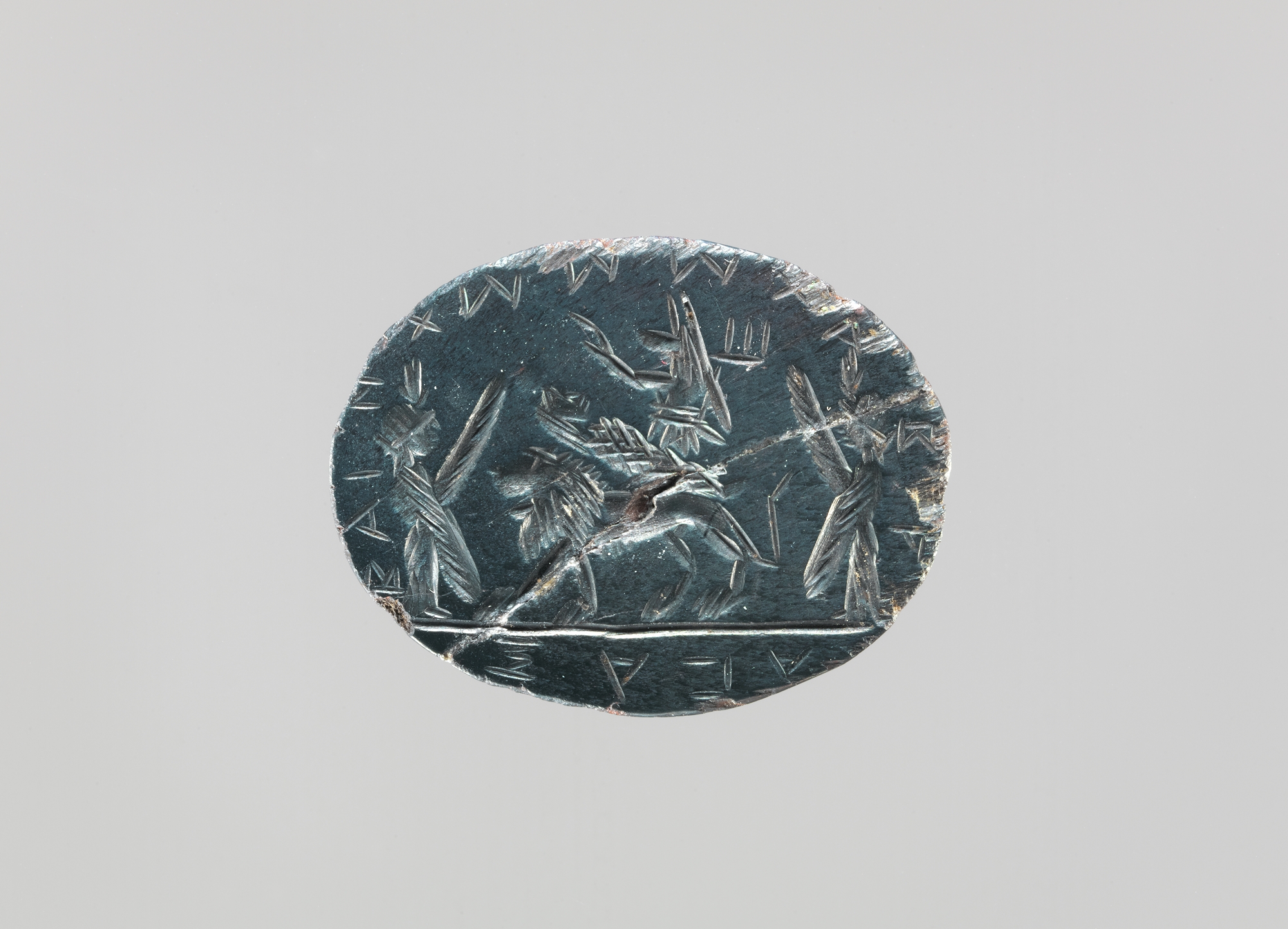
Executive Heritage Analysis: Hematite Intaglio – Mummy of Osiris
This strategic research paper, prepared for Katherine Fashion Lab, examines a Roman-era hematite intaglio depicting the Mummy of Osiris. The analysis integrates symbolic power, historical adornment, spiritual meaning, and a forward-looking 2026 high-end luxury strategy. As a standalone heritage document, it provides a foundational framework for integrating ancient talismanic resonance into contemporary luxury branding.
Symbolic Power and Cultural Resonance
The hematite intaglio, dating from the Roman Imperial period (circa 1st–3rd century CE), represents a sophisticated fusion of Egyptian and Greco-Roman religious iconography. The central motif—the Mummy of Osiris—embodies the god of the afterlife, resurrection, and fertility, wrapped in linen bandages that signify both death and rebirth. In Roman Egypt, hematite (haematites, meaning “bloodstone”) was prized for its deep, metallic luster and perceived connection to the life force. The stone’s dark, reflective surface was believed to absorb and redirect negative energy, making it a potent amulet for protection and spiritual transformation.
Symbolically, Osiris’s mummified form represents the triumph of order over chaos, a narrative deeply embedded in Roman funerary practices. The intaglio’s carved details—the atef crown, crook, and flail—reinforce his kingship over the underworld. For the Roman wearer, this object was not mere decoration; it was a talismanic device that mediated between the mortal and divine realms. The hematite’s association with Mars (the god of war) further amplified its protective qualities, aligning the wearer with both martial vigor and eternal renewal.
Historical Adornment and Material Significance
Hematite intaglios were commonly set into rings, pendants, or amuletic necklaces, worn by individuals across social strata—from soldiers seeking invincibility to priests conducting mystery rites. The choice of hematite over more precious stones like carnelian or jasper was deliberate: its weight and density conveyed a sense of permanence and gravity. The intaglio’s reverse carving technique, where the image is incised into the stone, allowed for precise impressions in wax or clay, serving both decorative and practical functions as a seal of authority.
In the context of Roman adornment, such objects were integral to personal identity. They communicated the wearer’s piety, social status, and esoteric knowledge. The Mummy of Osiris motif, in particular, signaled initiation into the Osirian mysteries—a cult that promised personal salvation after death. This made the intaglio a status marker for elites who could afford both the stone and the specialized craftsmanship of Alexandrian or Roman lapidaries. The hematite’s natural hardness (5.5–6.5 on the Mohs scale) required exceptional skill to carve, further elevating its value as a luxury item.
Spiritual Meaning and Talismanic Function
The spiritual dimension of the hematite intaglio extends beyond its iconography. In Greco-Roman magical traditions, hematite was classified as a “stone of blood,” believed to stem hemorrhages, ward off evil spirits, and enhance courage. When combined with the Osiris motif, the amulet became a psychopompic tool—guiding the soul through the underworld and ensuring a favorable judgment. The intaglio’s small size (typically 15–25 mm) allowed it to be worn close to the skin, maximizing its apotropaic (protective) efficacy.
Moreover, the act of wearing such an object was performative. The wearer engaged in a daily ritual of touch and gaze, reinforcing the amulet’s power through intention. In Roman religious practice, pietas (duty to the gods) was expressed through material culture; owning and displaying a hematite Osiris intaglio was a tangible declaration of one’s spiritual allegiance. This interplay of materiality, symbol, and ritual creates a rich narrative for luxury branding—one that transcends mere aesthetics to embrace metaphysical resonance.
2026 High-End Luxury Strategy: The Katherine Fashion Lab Perspective
For Katherine Fashion Lab, the hematite intaglio of Osiris offers a compelling blueprint for a 2026 luxury strategy rooted in heritage, exclusivity, and spiritual storytelling. The following strategic pillars are proposed:
1. Talismanic Heritage as Brand DNA
In an era where consumers seek authenticity and meaning, luxury brands must move beyond surface-level ornamentation. The hematite intaglio exemplifies how a single object can encapsulate protection, status, and transcendence. For 2026, Katherine Fashion Lab should position its collections as modern talismans, with each piece carrying a narrative of personal empowerment. This can be achieved through limited-edition “amulet capsules” that reference ancient motifs—such as the Osiris mummy—while using contemporary materials like oxidized silver, black onyx, or matte-finished hematite alloys. The brand should emphasize the craftsmanship lineage, collaborating with master engravers who revive intaglio techniques, thereby creating objects that are both wearable and heirloom-worthy.
2. Spiritual Storytelling Through Experiential Retail
The spiritual meaning of the intaglio can be translated into immersive retail experiences. In 2026, Katherine Fashion Lab could launch pop-up “sanctuaries” in key luxury markets (e.g., Paris, Tokyo, Dubai) where clients engage in personalized rituals—such as selecting a gemstone based on its protective properties or having a piece consecrated through a curated ceremony. This aligns with the growing demand for transformative luxury, where purchase is not just transactional but emotionally and spiritually enriching. The brand’s marketing narrative should foreground the Osiris myth as a metaphor for resilience and rebirth, resonating with contemporary themes of self-renewal.
3. Material Innovation and Symbolic Weight
Hematite’s visual and tactile qualities—its metallic sheen, cool temperature, and substantial weight—can inspire a new material language for Katherine Fashion Lab. For 2026, consider developing a proprietary composite that mimics hematite’s luster while allowing for intricate carving, or reintroducing natural hematite in high-jewelry pieces. The stone’s historical association with blood and life force can be leveraged in campaigns that emphasize vitality and protection—a powerful counterpoint to the digital fatigue of the modern era. Limited-run collections should be numbered and accompanied by a certificate of authenticity detailing the stone’s provenance and symbolic history.
4. Exclusivity Through Archival Curation
The intaglio’s rarity as a Roman artifact underscores the value of scarcity. Katherine Fashion Lab should adopt a curatorial approach to product drops, releasing each piece as part of a numbered “archival series” that references specific historical artifacts. For example, a “Mummy of Osiris” ring could be released with a monograph explaining its iconography, material science, and cultural context. This transforms the product into a collectible investment, appealing to connoisseurs who value both aesthetics and knowledge. Strategic partnerships with museums or archaeological institutes could further authenticate the brand’s heritage credentials.
5. Digital Integration: The Virtual Amulet
To engage younger, tech-savvy luxury consumers, Katherine Fashion Lab could develop a digital layer for its talismanic pieces. Using NFC chips or augmented reality, clients could access a “spiritual dossier” for their intaglio—including historical imagery, meditative audio guides, or personalized affirmations based on the Osiris myth. This hybrid approach marries ancient symbolism with phygital luxury, creating an ongoing relationship between the wearer and the object. In 2026, such innovation will be key to differentiating the brand in a crowded market.
Conclusion
The Roman hematite intaglio of the Mummy of Osiris is far more than an archaeological curiosity; it is a testament to the enduring human desire for objects that protect, elevate, and connect us to the sacred. For Katherine Fashion Lab, this heritage analysis provides a strategic foundation for a 2026 luxury vision that honors the past while innovating for the future. By embracing talismanic heritage, spiritual storytelling, material innovation, exclusivity, and digital integration, the brand can position itself as a purveyor of meaningful luxury—where every piece carries the weight of history and the promise of transformation.