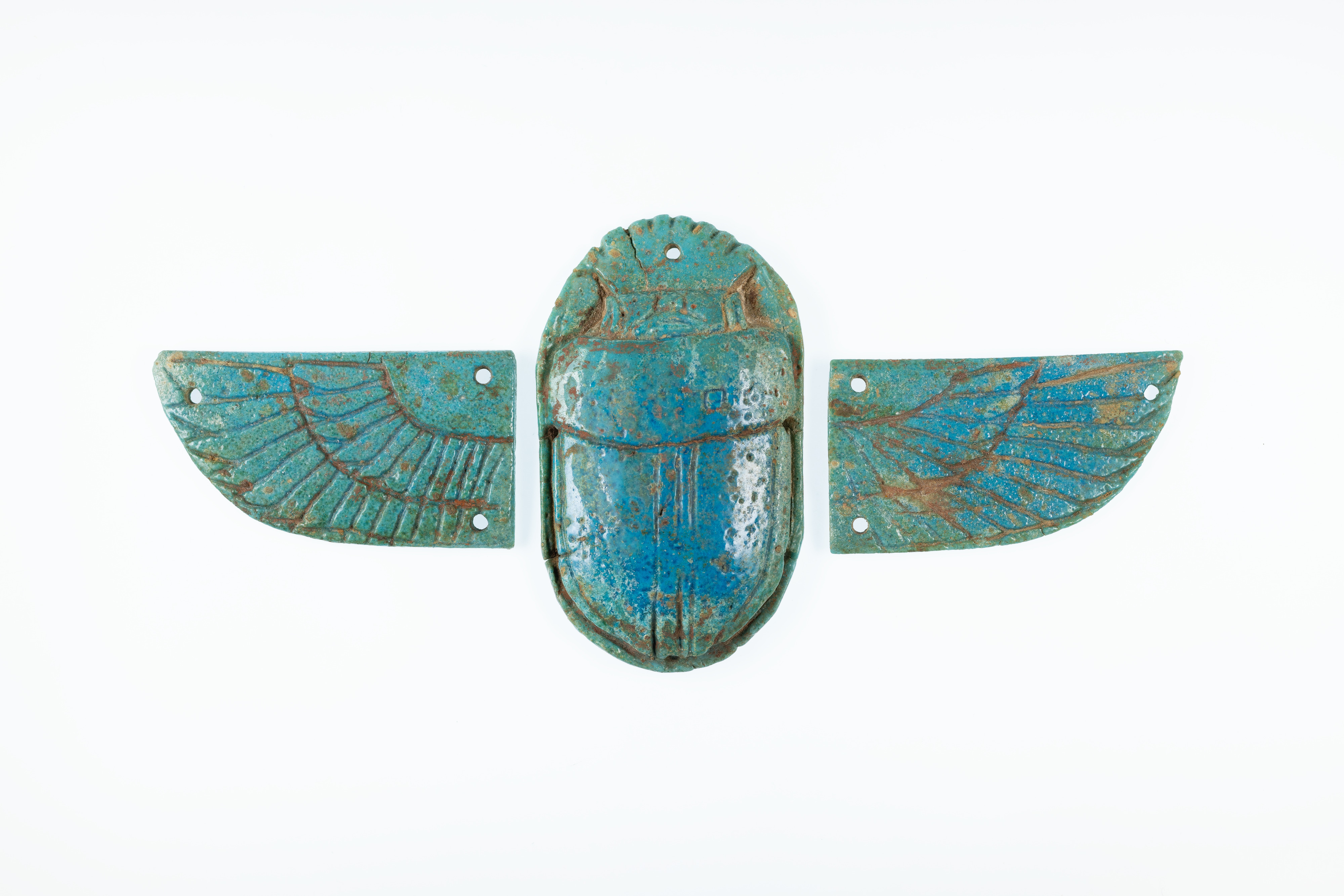
Executive Heritage Analysis: The Winged Scarab as a Strategic Luxury Archetype
This paper presents a comprehensive heritage analysis of the winged scarab, a motif deeply rooted in ancient civilization, specifically within the funerary and spiritual lexicon of Pharaonic Egypt. As Katherine Fashion Lab evaluates symbolic assets for a 2026 high-end luxury strategy, the winged scarab emerges not merely as an ornamental relic, but as a potent vector of transcendent power, rebirth, and protective authority. Its medium—faience—further amplifies its narrative of alchemical transformation, offering a rich tapestry for contemporary luxury brand positioning. This analysis dissects the scarab’s symbolic power, historical adornment practices, spiritual meaning, and proposes a strategic framework for its integration into a 2026 luxury collection.
Symbolic Power: The Scarab as a Cosmological Engine
Solar Resurrection and Transformative Agency
The winged scarab, or Khepri, is one of ancient Egypt’s most enduring symbols. In the Egyptian cosmogony, Khepri was the god of the rising sun, depicted as a scarab beetle pushing the solar disk across the sky. This daily act of rolling the sun from darkness into light imbued the winged scarab with profound symbolic power: resurrection, regeneration, and cyclical renewal. For the ancient Egyptians, the scarab beetle’s behavior—rolling dung balls containing its eggs—was a microcosm of the sun’s journey. The addition of wings transformed this terrestrial insect into a celestial being, granting it the capacity to traverse the heavens. This dual identity—earthly labor and celestial flight—positions the winged scarab as a symbol of transcendent agency, a motif that speaks to the luxury consumer’s desire for personal evolution and mastery over time.
Protective Authority and Amuletic Power
Beyond solar symbolism, the winged scarab functioned as a powerful protective amulet. In funerary contexts, it was placed over the heart of the deceased during mummification, specifically inscribed with Chapter 30B of the Book of the Dead. This “heart scarab” was intended to prevent the heart from testifying against the soul during the Weighing of the Heart ceremony. The wings, often outstretched, symbolized the soul’s ability to fly freely in the afterlife. This protective authority is critical for luxury brand positioning: the winged scarab is not merely decorative; it is an active guardian. In a 2026 high-end context, this translates to a narrative of empowerment and inviolability—a piece that shields its wearer from negative forces while elevating their status.
Historical Adornment: Faience as a Medium of Light and Status
The Alchemy of Faience
The medium of choice for these sacred objects was Egyptian faience, a non-clay ceramic material composed of crushed quartz, alkaline salts, and a copper-based glaze. Faience was not merely a material; it was an alchemical creation. The ancient Egyptians referred to it as tjehenet, meaning “dazzling” or “brilliant.” The firing process transformed a dull, sandy core into a luminous, glassy surface, often in shades of turquoise, blue, or green. This chromatic palette was explicitly chosen to mimic the colors of the sky and the Nile, connecting the wearer to the life-giving forces of the universe. For Katherine Fashion Lab, faience represents a historical precedent for sustainable luxury—a material born from earth and fire, yet capable of producing a finish that rivals precious stones. Its matte-gloss duality offers a tactile and visual experience that aligns with the 2026 trend toward textural minimalism and artisanal authenticity.
Adornment in Elite Contexts
Winged scarabs were not everyday jewelry. They were reserved for the elite—pharaohs, high priests, and nobility—and were often incorporated into broad collars, pectorals, and bracelets. The wings were frequently inlaid with lapis lazuli, carnelian, and gold, creating a chromatic contrast that signified divine authority. The placement of the scarab on the chest, near the heart, was intentional: it was a constant, intimate reminder of the wearer’s connection to the sun god and their own immortal soul. This historical context of exclusivity and ritual significance is directly transferable to modern luxury. The winged scarab, when rendered in high-end materials like platinum, enamel, or even advanced composites, signals a lineage of power and protection that transcends mere fashion.
Spiritual Meaning: The Soul’s Journey and the Concept of Ba
The Winged Scarab as the Ba
In Egyptian theology, the Ba was the aspect of the soul that represented personality and mobility, often depicted as a human-headed bird. The winged scarab, particularly in its funerary form, can be interpreted as a visual metaphor for the Ba’s journey. The beetle’s body anchors the soul to the physical world, while the wings enable it to ascend to the heavens. This spiritual duality—grounded yet transcendent—is a powerful narrative for high-end consumers seeking meaning in their acquisitions. The winged scarab becomes a talisman for self-actualization, a reminder that one can maintain their identity while evolving beyond their current state. For a 2026 luxury strategy, this spiritual dimension offers a counterpoint to the era’s digital saturation. It provides a tangible connection to ancient wisdom, a rare commodity in a market increasingly driven by ephemeral trends.
Ritual Function and Cosmic Order (Maat)
The winged scarab was also central to the concept of Maat, or cosmic order. By wearing or carrying this symbol, the individual aligned themselves with the natural cycles of the sun, death, and rebirth. This alignment was not passive; it was an active participation in maintaining universal balance. For the luxury brand, this translates to a commitment to ethical stewardship and timeless craftsmanship. A winged scarab piece, produced with sustainable materials and artisanal precision, embodies the principle of Maat: it honors the past while creating order for the future.
2026 High-End Luxury Strategy: From Artifact to Archetype
Positioning the Winged Scarab as a Signature Motif
For Katherine Fashion Lab, the winged scarab is not a trend; it is a strategic archetype. In a 2026 luxury landscape characterized by a return to heritage, storytelling, and symbolic depth, this motif offers a unique competitive advantage. The strategy should focus on three pillars:
1. Narrative of Transformation: Market the winged scarab as a symbol of personal and collective rebirth. In a post-pandemic world, consumers are seeking objects that represent resilience and hope. The scarab’s journey from dung beetle to solar deity is a powerful metaphor for overcoming adversity. Campaigns should emphasize this transformation, using visual storytelling that juxtaposes ancient Egyptian iconography with modern, minimalist design.
2. Material Innovation with Heritage Roots: While faience is historically significant, a 2026 luxury strategy must innovate. Consider developing a proprietary composite material that mimics faience’s luminosity but offers modern durability and sustainability. Alternatively, collaborate with contemporary ceramicists to create limited-edition pieces that honor the ancient technique while pushing its boundaries. The color palette should remain rooted in the original turquoise, lapis, and gold, but with subtle, contemporary updates—matte finishes, oxidized silver, or recycled gold.
3. Ritualized Consumer Experience: The winged scarab’s spiritual power can be leveraged through a ritualized purchase journey. Offer clients a “heart scarab” ceremony, where they select their piece in a private, meditative setting. Include a booklet explaining the symbolism of the scarab and its connection to their personal journey. This transforms the acquisition from a transaction into a rite of passage, aligning with the luxury sector’s shift toward experiential and meaningful consumption.
Product Architecture and Price Stratification
To maximize market penetration while maintaining exclusivity, Katherine Fashion Lab should develop a three-tier product architecture:
Haute Joaillerie: One-of-a-kind pieces featuring rare gemstones, platinum settings, and hand-painted enamel wings. Price point: $50,000+. Target: ultra-high-net-worth collectors seeking investment-grade art.
Fine Jewelry: Limited-edition collections in 18k gold, with faience inlays or modern composite materials. Price point: $5,000–$50,000. Target: affluent professionals and brand loyalists.
Accessories and Ready-to-Wear: Silk scarves, leather goods, and embroidered garments featuring the winged scarab motif as a discreet emblem. Price point: $500–$5,000. Target: aspirational luxury consumers seeking entry-level brand access.
Marketing and Digital Presence
In 2026, luxury marketing must balance digital reach with analog gravitas. Katherine Fashion Lab should produce a cinematic short film that explores the winged scarab’s journey from ancient tomb to modern atelier, narrated by a cultural historian. The film should be released exclusively on a dedicated microsite, followed by a private exhibition in a major global capital—Paris, New York, or Dubai. Social media content should focus on educational storytelling, such as “The Anatomy of a Symbol” series, breaking down the scarab’s iconography. Collaborations with Egyptologists and contemporary artists will lend intellectual credibility and cultural resonance.
Conclusion: The Winged Scarab as a Timeless Asset
The winged scarab, rendered in faience and imbued with the spiritual weight of ancient civilization, is more than a historical artifact. It is a strategic asset for Katherine Fashion Lab’s 2026 luxury strategy. Its symbolic power of transformation, its history of elite adornment, and its profound spiritual meaning offer a narrative that is both ancient and urgently contemporary. By positioning this motif as a signature archetype, Katherine Fashion Lab can transcend the ephemeral nature of fashion, creating objects that resonate with consumers’ deepest desires for protection, transcendence, and timeless beauty. The winged scarab is not merely a design—it is a legacy.