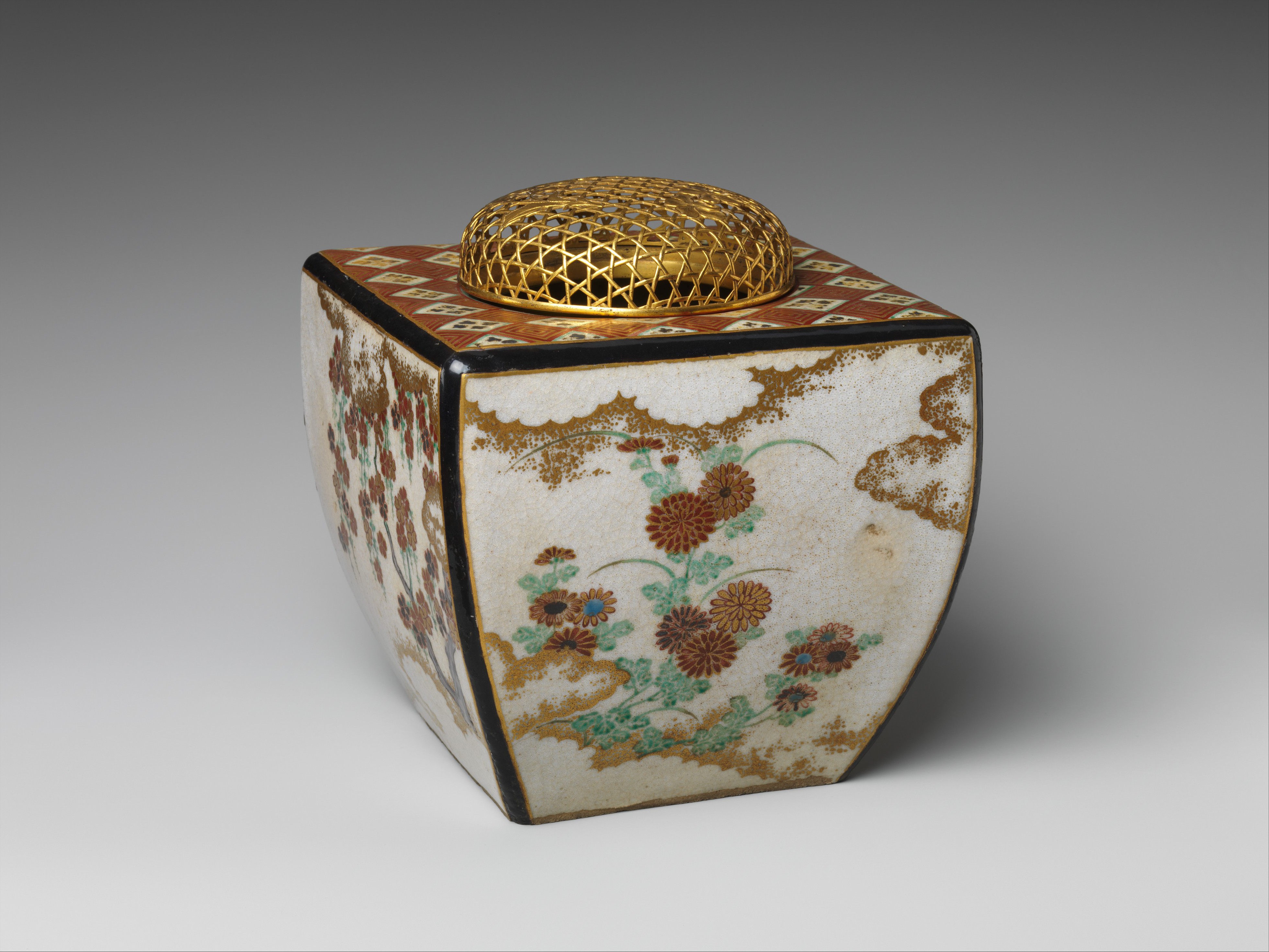
Heritage Analysis: Ninsei-Style Incense Burner with Flowers of the Four Seasons
Katherine Fashion Lab presents this strategic heritage analysis of the Ninsei-style Incense Burner with Flowers of the Four Seasons, a Japanese Kyoto ware artifact dating to the mid-17th century. This piece, crafted in stoneware with polychrome overglaze enamels, gold, and an openwork gilt-bronze cover, embodies a confluence of symbolic power, historical adornment, and spiritual meaning that offers profound insights for high-end luxury strategy in 2026. As a Lead Heritage Curator, I assess this object not merely as a decorative vessel but as a sophisticated emblem of cultural capital—one that can inform Katherine Fashion Lab’s positioning within the competitive luxury landscape.
Symbolic Power: The Four Seasons as a Lexicon of Prestige
Cyclical Mastery and Temporal Authority
The Flowers of the Four Seasons—cherry blossoms for spring, irises for summer, chrysanthemums for autumn, and plum blossoms for winter—represent a deliberate orchestration of nature’s rhythms. In Japanese aesthetics, this motif transcends mere seasonal celebration; it asserts control over time. For the 17th-century Kyoto elite, commissioning a Ninsei-style incense burner was an act of claiming dominion over the ephemeral. The polychrome enamels and gold overlay transform transient blooms into eternal symbols, mirroring how luxury brands today weaponize timelessness as a marker of exclusivity. Katherine Fashion Lab can leverage this by framing seasonal collections not as trend-driven but as curated cycles of permanence—a strategy that resonates with 2026’s demand for slow luxury and heritage-backed longevity.
Gilt-Bronze Cover: The Gaze of Power
The openwork gilt-bronze cover is a critical element of symbolic power. Its intricate perforations allowed incense smoke to escape, creating a visual and olfactory spectacle that signified the owner’s refined taste and social standing. The gold, a material historically reserved for imperial and religious contexts, elevates the object from utility to sacred commodity. In high-end luxury strategy, this translates into the use of precious metals and bespoke craftsmanship to signal authority. For 2026, Katherine Fashion Lab should consider limited-edition accessories or packaging that incorporate gold detailing or openwork designs—echoing the Ninsei burner’s ability to command attention through material hierarchy.
Historical Adornment: The Art of Kyoto Ware as Status Marker
Ninsei’s Innovation and the Kyoto Elite
The Ninsei style, pioneered by Nonomura Ninsei in the early Edo period, revolutionized Japanese ceramics by blending painted enamel decoration with stoneware—a technique borrowed from Chinese porcelain but adapted to local tastes. This fusion of foreign and indigenous elements made Kyoto ware a status symbol for the merchant class and samurai alike, who sought to display cosmopolitan sophistication. The incense burner’s polychrome palette—deep blues, vibrant greens, and lustrous gold—was not accidental; it mirrored the opulence of aristocratic kimono and lacquerware, creating a cohesive visual language of wealth. Katherine Fashion Lab can draw from this by integrating cross-cultural design motifs into its 2026 collections, positioning the brand as a bridge between tradition and modernity. For instance, a capsule line inspired by Kyoto ware’s enamel techniques—using jewel-toned embroidery or metallic thread—would appeal to clients who value cultural literacy as a form of distinction.
The Openwork Cover: Tactile and Visual Adornment
The openwork gilt-bronze cover is a masterclass in adornment as experience. Unlike solid lids, the perforations invited touch and light, creating a dynamic interplay of shadow and illumination. This aligns with the sensorial luxury trend of 2026, where consumers seek multi-sensory engagement—texture, scent, and visual depth. Katherine Fashion Lab should explore openwork or lattice-like patterns in ready-to-wear or jewelry, allowing the body to become a living canvas for light and movement. The incense burner teaches us that adornment is not static; it is a performance of identity.
Spiritual Meaning: The Incense Ritual as Transcendence
Kōdō and the Cultivation of Inner Luxury
In Japanese culture, incense burning (kōdō) is a meditative practice rooted in Zen Buddhism, designed to purify the mind and elevate the spirit. The Ninsei incense burner was not merely a decorative object but a ritual tool for achieving spiritual clarity. The Flowers of the Four Seasons motif reinforced this purpose, reminding the user of life’s impermanence (mujo) and the beauty of transience. For high-end luxury strategy, this spiritual dimension is invaluable. In 2026, affluent consumers are increasingly prioritizing wellness and mindfulness over conspicuous consumption. Katherine Fashion Lab can position itself as a purveyor of inner luxury—offering products that facilitate rituals of self-care, such as scented candles, incense holders, or meditation textiles inspired by Kyoto ware. The brand’s narrative should emphasize that true luxury lies in the experience, not the object.
Polychrome Enamels as Sacred Color Language
The use of gold and vibrant enamels on the incense burner was not purely decorative; it echoed the color symbolism of Buddhist iconography. Gold represented enlightenment, while blue and green evoked the natural world as a gateway to the divine. Katherine Fashion Lab can adopt a color strategy based on this spiritual palette for its 2026 flagship collections. For example, a “Ninsei Gold” colorway in accessories or a “Four Seasons” capsule using symbolic hues would create an emotional resonance that transcends fashion, tapping into the consumer’s desire for meaning.
2026 High-End Luxury Strategy: Lessons from the Ninsei Burner
Heritage as a Competitive Moat
The Ninsei-style incense burner demonstrates that heritage is not a relic but a strategic asset. In 2026, as the luxury market faces fragmentation from fast-fashion imitations and digital saturation, brands that anchor themselves in authentic cultural narratives will command premium pricing. Katherine Fashion Lab should develop a Heritage Narrative Framework that mines historical artifacts like this incense burner for storytelling cues. For instance, each piece in a collection could be accompanied by a digital “provenance card” explaining its symbolic roots—similar to how art galleries authenticate works. This builds trust and exclusivity.
Artisan Collaboration and Scarcity
Ninsei’s Kyoto ware was produced in small batches by master artisans, a model of scarcity-driven luxury. Katherine Fashion Lab can partner with contemporary Japanese ceramicists or metalworkers to create limited-edition accessories that echo the burner’s craftsmanship. For 2026, a collaboration titled “Flowers of the Four Seasons” featuring hand-painted silk scarves or gilt-bronze brooches would align with the trend toward artisanal, one-of-a-kind goods. The high price point would be justified by the labor intensity and cultural authenticity.
Experiential Retail: The Incense Ritual Reimagined
Finally, the incense burner’s spiritual function offers a blueprint for experiential retail. Katherine Fashion Lab could design flagship stores with kōdō-inspired scent stations where clients engage in a brief ritual—burning a custom fragrance while viewing the collection. This transforms shopping into a transcendent act, reinforcing brand loyalty. The 2026 luxury consumer seeks not just products but transformation; the Ninsei burner teaches us that the object is merely the vessel for a deeper journey.
Conclusion
The Ninsei-style Incense Burner with Flowers of the Four Seasons is a masterwork of symbolic power, historical adornment, and spiritual meaning. Its legacy offers Katherine Fashion Lab a strategic roadmap for 2026: leverage heritage as authority, embrace sensorial luxury, and position the brand as a curator of transcendent experiences. By channeling the deliberate elegance of Kyoto ware, Katherine Fashion Lab can redefine high-end luxury as an art of living—not just owning.