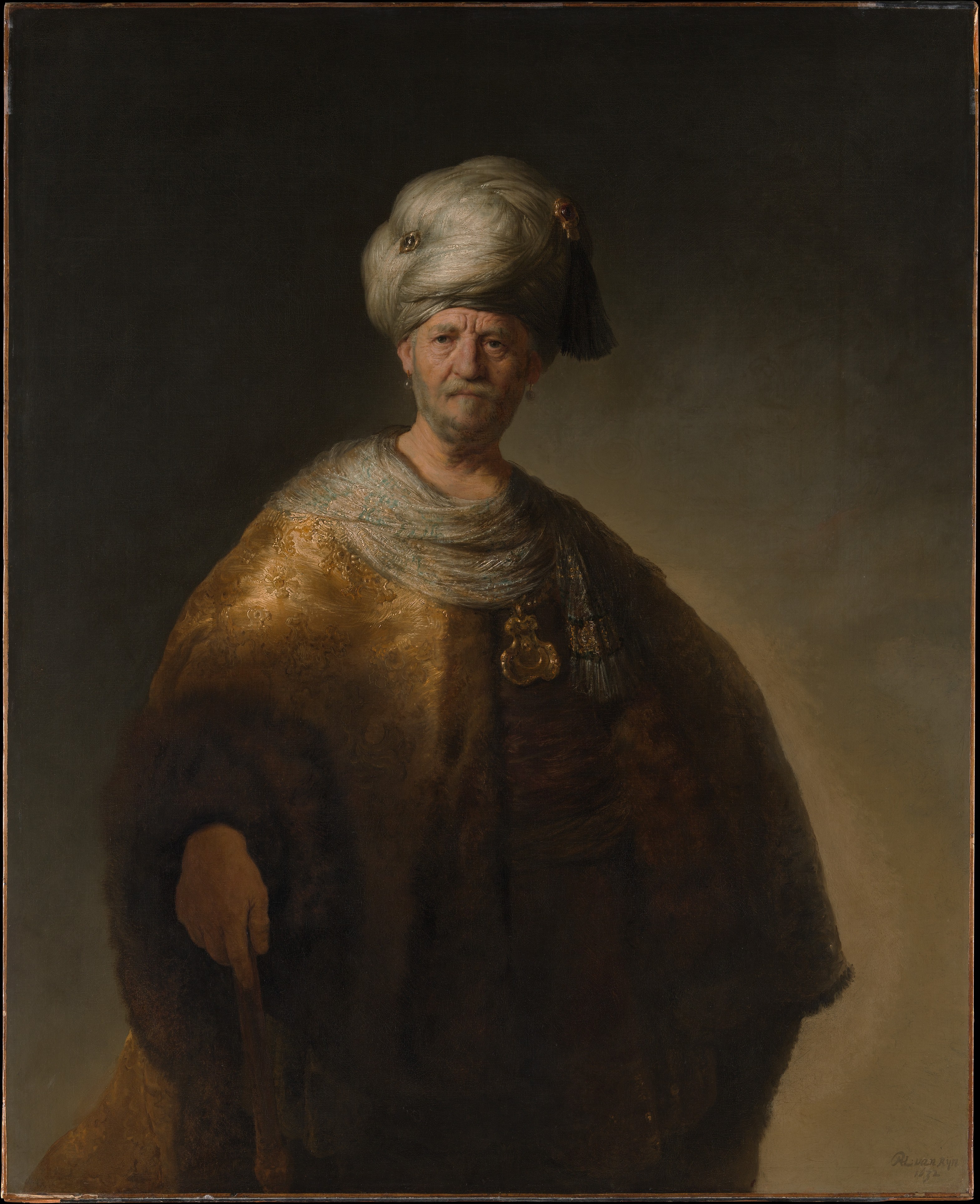
Heritage Analysis: The Man in a Turban as a Symbol of Sovereign Adornment
The subject of the Man in a Turban, rendered in oil on canvas from an ancient civilization, presents a profound opportunity for heritage-driven luxury strategy. At Katherine Fashion Lab, we approach this artifact not merely as a portrait, but as a codified document of symbolic power, historical adornment, and spiritual transcendence. This strategic standalone research deconstructs the turban’s layered significance to inform a 2026 high-end luxury positioning that is both culturally authoritative and commercially visionary.
Symbolic Power: The Turban as a Crown of Authority
In ancient civilizations—from the Indus Valley to the Mesopotamian courts—the turban was far more than a textile. It was a portable throne. The Man in a Turban depicted in this oil painting embodies a sovereign whose authority is woven into every fold of fabric. The turban’s height, volume, and the precision of its wrapping communicated rank, lineage, and territorial dominion. In strategic terms, this is the original power accessory—a non-verbal declaration of hierarchical control.
For Katherine Fashion Lab, this symbolism translates directly into a 2026 luxury strategy centered on reclaiming verticality and presence. The modern luxury consumer does not seek mere decoration; they seek artifacts that confer status without ostentation. The turban’s silhouette—tall, structured, and unapologetically commanding—offers a design language for headwear, collar architecture, and even garment silhouettes that project authority. The strategic insight is that power in luxury is not subtle; it is deliberately constructed. The Man in a Turban reminds us that the most enduring symbols of status are those that physically alter the wearer’s spatial presence.
Historical Adornment: The Art of Wrapped Identity
The oil medium captures the tactile richness of the turban—the interplay of light on tightly wound cotton or silk, the subtle variations in dye, and the deliberate asymmetry of folds. Historically, turban styles were regionally specific, acting as a visual passport. A certain twist of fabric could denote a warrior caste, a priestly order, or a merchant guild. The Man in a Turban is therefore a study in adornment as identity encryption.
From a heritage analysis perspective, the turban represents one of the earliest forms of bespoke personalization. Each wrap was unique, tailored to the individual’s head shape, social function, and aesthetic preference. This is the antithesis of mass production. For a 2026 luxury strategy, Katherine Fashion Lab can leverage this concept of wrapped individuality. The future of high-end adornment lies in customizable modularity—offering clients the ability to layer, knot, and drape luxury fabrics in ways that are personally significant. The turban’s historical precedent validates a business model where the garment is co-created with the wearer, reinforcing exclusivity and emotional investment.
Furthermore, the use of oil paint in this artifact underscores the permanence of status. Unlike digital or fast-fashion representations, this painting was crafted to endure. The strategic implication is clear: luxury in 2026 must return to material permanence. Fabrics that age gracefully, techniques that require artisan hours, and designs that transcend seasonal cycles—these are the modern equivalents of the turban’s enduring canvas.
Spiritual Meaning: The Turban as a Conduit for the Divine
Beyond temporal power, the Man in a Turban carries profound spiritual weight. In many ancient belief systems, the turban served as a protective vessel for the crown chakra—the energy center connecting the individual to the cosmos. The fabric was often blessed, infused with oils, or woven with sacred geometry. The act of wrapping was a ritual of containment and elevation, shielding the wearer from negative forces while channeling divine intention.
This spiritual dimension is critical for a 2026 luxury strategy that increasingly values conscious consumption. The modern affluent consumer is seeking products that offer not just beauty, but energetic resonance. Katherine Fashion Lab can position its heritage-inspired collections as ritual objects—pieces that are intentionally designed to support mindfulness, protection, and personal transcendence. The turban’s spiritual architecture suggests a design philosophy where every seam, fold, and fastening serves a higher purpose. For example, integrating natural fibers, meditation-friendly textures, and symbolic embroidery can transform a garment into a wearable sanctuary.
The oil painting’s static, eternal quality also speaks to the timelessness of the sacred. Unlike trends that fade, spiritual symbolism remains constant. A 2026 luxury line that incorporates the turban’s protective symbolism—through motifs, fabric choices, or construction techniques—creates a narrative of enduring value. The consumer is not buying a product; they are acquiring a talisman.
2026 High-End Luxury Strategy: The Sovereign Silhouette
Synthesizing these heritage insights, Katherine Fashion Lab’s 2026 luxury strategy must be built on three pillars: Authority, Authenticity, and Ascension.
Authority is reclaimed through design that commands space. The turban’s verticality inspires a collection of structured headpieces, elevated collars, and architectural outerwear. These pieces are not accessories; they are statements of presence. Marketing narratives should emphasize the lineage of power, positioning the wearer as a modern sovereign in their own domain.
Authenticity is delivered through bespoke wrapping and layering services. Just as the ancient Man in a Turban wore a uniquely tied piece, Katherine Fashion Lab can offer clients a personalized wrapping ceremony—a luxury experience where artisans teach the client the art of the fold, using heritage techniques adapted for contemporary fabrics. This creates a deep emotional bond and a product that cannot be replicated.
Ascension addresses the spiritual consumer. The 2026 line should include limited-edition pieces crafted from ethically sourced, blessed materials—such as handwoven silk from sacred regions or naturally dyed cottons. Each piece comes with a digital provenance certificate detailing its spiritual symbolism and artisan origin. This aligns with the growing demand for transparency and intentionality in luxury goods.
Finally, the oil-on-canvas medium reminds us of the value of permanence. Katherine Fashion Lab’s 2026 strategy should prioritize investment-grade craftsmanship—pieces that are heirloom-worthy, with a price point reflecting their cultural and spiritual weight. The Man in a Turban is not a fleeting image; it is a legacy. Our luxury strategy must mirror that enduring relevance, offering the modern elite not just a product, but a piece of history reimagined for their own sovereignty.
In conclusion, the Man in a Turban serves as a masterclass in symbolic branding. By decoding its power, adornment, and spirituality, Katherine Fashion Lab can construct a 2026 luxury strategy that is intellectually rigorous, culturally resonant, and commercially potent. The turban is not merely a head covering—it is a crown, a passport, and a prayer. Our task is to translate that into a language of modern luxury that feels both ancient and inevitable.